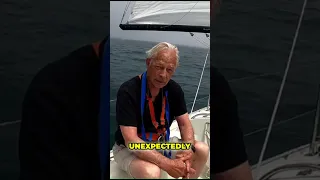
Christian Williams' Sailboat "Thelonious II" is For Sale
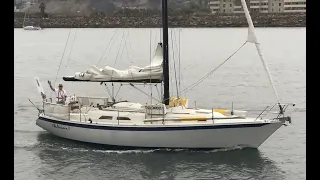
In Marina del Rey, California, Christian Williams steps aboard his 1984 Ericson 381 sloop, Thelonious II, to announce that he is offering the 38-foot vessel for sale with an asking price of $50,000 to initiate negotiations. Dry desert Santa Ana winds blow across the Los Angeles basin, leaving the harbor completely flat and windless under bright sun. Rather than casting off lines into calm waters, Williams conducts an exhaustive technical walkthrough of the vessel’s offshore rigging, navigational gear, and interior joinery before discussing the personal circumstances that prompted his decision to find a new owner.
The Ericson 381 represents a classic performance-cruising design by Bruce King, built to carry a family of four or five across the channel to Catalina Island or venture offshore to Hawaii and the South Seas. Over a decade of singlehanded sailing and maintenance, Williams systematically overhauled the vessel’s mechanical, electrical, and sail-handling gear to prepare for long singlehanded passages. The comprehensive documentation of every repair and upgrade across his sailing videos and the Ericson Yacht Forum provides prospective buyers with a verified record of the yacht’s operational condition.
Deck Hardware and Spar Rigging
Williams begins his topside walkthrough at the bow, pointing out the ground tackle and foresail inventory. Mounted on the bow roller is a 16-kg stainless steel Bruce anchor connected to a dedicated chain locker. Furling the headsail is handled by a Harken furler supporting a 130% Genoa, controlled by a Dyneema genoa halyard and guided through original 1980s sail tracks fitted with renewed hardware. Running along the stanchions are dedicated storage mounts that hold a 10-ft long cockpit cover on one side and a 16-ft long fixed carbon fiber whisker pole on the other, keeping bulky gear off the side decks to prevent lines from fouling.
Yellow jacklines run along both side decks to provide secure harness clipping points for offshore solo work. At the cabin trunk, an original Ericson dorade box fitted with two stainless steel scoops directs fresh air below decks even in heavy weather. Williams inspects the mast, which features a keel-stepped extrusion equipped with an aftermarket Tides track that allows easy mainsail hoisting and reefing. The cockpit sail controls combine original Barient winches, routinely cleaned every year or 18 months, alongside a newer Lewmar winch and deck clutches replaced about 3 years ago. Fresh canvas work installed within the past year includes custom line bags, weather cloths, and a protective binnacle cover.
Binnacle Navigation and Pendulum Self-Steering
Williams steps aft into the cockpit, where he added an elevated helmsman seat to improve visibility and seating when six or eight guests are aboard. Beneath the seat lies an Ericson stowage bin designed to house the mainsail cover and miscellaneous canvas underway. The helm station incorporates navigation electronics tailored for solo ocean voyaging, led by a Raymarine wheel pilot and a Garmin chartplotter that guided Williams during two voyages to Hawaii. A Raymarine anemometer and wind direction indicator is mounted on an adjustable binnacle arm that swings across the companionway, allowing Williams to monitor wind velocity directly from the main hatch:
“Well, we sure can’t go sailing today. We have we are afflicted with what we call Santa Ana winds which are dry desert winds which mean absolutely no wind here at the marina in Marina del Rey and no sailing possible.”
Williams highlights the auxiliary propulsion system and mechanical self-steering gear mounted on the transom:
“The diesel engine on this boat is a Universal 5432 of 32 horsepower.”
Aft of the rudder post sits a Cape Horn pendulum windvane, which operates without battery power to hold steady offshore courses:
“This is the famous Cape Horn pendulum steering vane which took me to Hawaii once and back with no trouble at all and of which I’m very proud because it’s not as ugly as other self-steering vanes.”
Cabin Accommodations and Electrical Systems
Moving below decks, where the cabin thermometer reads 92 degrees in the Santa Ana heat, Williams reviews the interior accommodations. The aft quarterberth serves as storage for cruising equipment, holding a West Marine PRU-3 inflatable dinghy and a modular electric outboard that breaks down into three separate pieces: an electric motor, a lithium battery, and a tiller arm with an LCD display. Also stowed in the quarterberth is an expired compact coastal liferaft, retained as an auxiliary spare alongside primary safety equipment.
The main electrical panel features completely updated wiring and modern circuit breakers. At the navigation desk, Williams demonstrates the communication suite, which includes a marine VHF radio, a backup GPS unit, and a Vesper Marine WatchMate AIS display that plots approaching vessel targets on a radar-like screen. In the galley, a gimbaled propane stove has handled cooking duties over months at sea, while a 6 cubic foot top-loading refrigerator operates on a replacement Isotherm cooling system. Williams explains that setting the thermostat dial to 3 keeps provisions chilled at 46 degrees, while turning the control up to dial 6 or 7 produces solid ice.
The main salon showcases Bruce King’s traditional interior styling, centered on warm teak bulkheads and joinery. The dining table accommodates four or five crew members, while a custom salon bookcase can be quickly removed with two screws to open up interior space. Williams sleeps on the starboard salon settee during ocean passages, keeping him close to the companionway and navigation desk. Forward, the vessel features an enclosed head with an offshore shower and a freshwater toilet designed to eliminate marine organism odor. The private V-berth cabin measures nearly 7 ft in length and six and a half feet in width, illuminated by replacement opening portlights and an overhead hatch that replaced older crazed acrylic.
Summary of Vessel Systems and Equipment
| Equipment and systems | Technical details | Operational notes | | – | – | – | | Hull and displacement | 38 ft length, 15,000 lb displacement | 1984 Bruce King designed Ericson 381 hull built for offshore and coastal cruising | | Diesel auxiliary engine | Universal 5432, 32 horsepower | Four-cylinder auxiliary diesel engine for harbor maneuvering and motoring | | Ground tackle gear | 16-kg stainless steel Bruce anchor | Primary bow anchor mounted on roller with dedicated foredeck locker | | Foresail and furler | 130% Genoa on Harken furler | Sail with Dyneema halyard, interior and exterior sheet tracks | | Self-steering systems | Cape Horn pendulum vane and Raymarine wheel pilot | Vane and electronic autopilot options for solo coastal and offshore passages | | Refrigerator unit | 6 cubic foot box with Isotherm system | Dial 3 maintains 46 degrees; dial 6 or 7 makes solid ice cubes |
Personal Circumstances and the Ericson Community
Williams explains that reaching 82 years of age and recovering from a major residential loss influenced his decision to place Thelonious II on the market. Eighteen months prior to filming, a catastrophic wildfire destroyed his household:
“our house burned down in the Palisades fire of 18 months ago. And we lost everything that we owned, including the toothbrushes.”
After living aboard Thelonious II for several days immediately following the fire and subsequently residing in two rental properties, Williams and his partner Tracy purchased a permanent residence scheduled for move-in before Christmas. Rebuilding a lifetime of household belongings left insufficient time for regular sailing, leaving the boat docked without use for four or five weeks. Rather than allowing the sloop to sit idle as a marina trophy, Williams elected to transfer ownership to an experienced sailor ready to assume stewardship of a seasoned offshore cruiser:
“I want to sell this boat, or give it if necessary, to somebody whose dreams were like mine.”
Comparing the Ericson 381 to newer production boats built 10 or 20 years later that command 120 or $150,000, Williams emphasizes that older yachts require dedicated maintenance knowledge:
“When you go into the bilge and find two wires that were put together with bubble gum, you your marriage may be in danger.”
As a long-standing moderator on the free, member-run Ericson Yachts forum, Williams notes that the platform’s 50 to 100 active members maintain 20 years of collective technical documentation covering part numbers, rig dimensions, and repair procedures. Because transporting a 15,000-pound sailboat across land is impractical, Williams hopes to locate a buyer along the Southern California coast between Santa Barbara and San Diego who shares his passion for offshore sailing:
“It doesn’t make much sense to try to ship a 15,000 lb 38-ft long sailboat across the country.”
Frequently Asked Questions
Christian Williams listed Thelonious II with an initial asking price of $50,000 to begin buyer negotiations.
The sailboat is powered by a Universal 5432 four-cylinder diesel engine rated at 32 horsepower.
At 82 years old, Williams faced severe time constraints after losing his home in the Palisades fire 18 months earlier. Having purchased a new home before Christmas, he lacked time to sail and chose to sell the boat rather than letting it sit idle.
The yacht features a Cape Horn pendulum windvane mounted on the transom, which steered Williams to Hawaii and back, as well as an electronic Raymarine wheel pilot at the binnacle.
The boat is berthed in Marina del Rey, California. Williams seeks a prospective buyer located along the Southern California coast between Santa Barbara and San Diego.
Book a trip where this was filmed — near Los Angeles

Support Christian Williams
At WeBoating.com, we profoundly acknowledge the unwavering dedication that Christian Williams invests in crafting each and every video or voyage. Their passion for delivering exceptional ocean content shines through every frame, and it's a labor of love that deserves your attention.
We invite you to watch their captivating videos here and actively engage with their content, including their social media links above. Liking, commenting, and sharing their work goes a long way in fueling their creative fire.
We're also inviting you to explore the gear, sponsorships, and boat partnerships highlighted in the "Christian Williams' Sailboat "Thelonious II" is For Sale" video description, or directly on YouTube. By engaging with these offerings or purchasing services and items, you directly support Christian Williams, their collaborators, and the brands they're associated with.
To ensure you never miss an offshore update, consider visiting their official YouTube Channel to subscribe, like, and join their community directly.
If you have any feedback, corrections, or additional information about Christian Williams or their videos, please use the comment form below to share your thoughts with us.
Thank you for being a part of our community and supporting the creators we cherish. Your time and support truly matter!
Contact Christian here: https://ericsonyachts.org/ie/threads/ericson-381-thelonious-ii-is-for-sale.22774/
Thelonious Blog for upgrade Details: https://ericsonyachts.org/ie/ubs/table-of-contents-for-thelonious-blog.469/
Illustrative Videos:
Family Cruising video: https://youtu.be/iEOORavJHZU
Thelonious offshore: https://youtu.be/Oz8wpl9YG1oCape Horn Self Steering: https://youtu.be/u-RJ4p4c4KY
Book on Thelonious: https://www.amazon.com/Philosophy-Sailing-Offshore-Search-Universe-ebook/dp/B07GFQB6FK/?_
Christian Williams
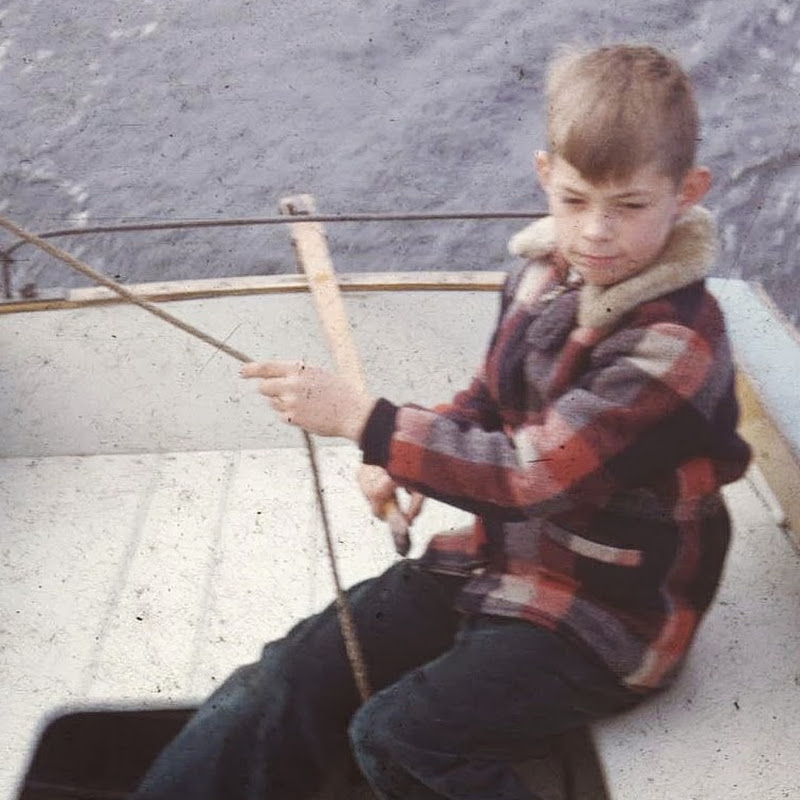
Former Washington Post editor Christian Williams defines the 'New Age of Sail' from the cockpit of his Ericson 38. Explore the philosophy of solo voyaging.
Channel Information:
Social Media Links:
Christian Williams' Sailboat "Thelonious II" is For Sale Location
- Marina del Rey, California (33.9803,-118.4517)
Latest Episodes from Christian Williams
Explore the most recent voyages. Subscribe to the channel to never miss an update!
Christian Williams’ Sailboat “Thelonious II” is For Sale
Christian Williams announces the sale of Thelonious II, his 1984 Ericson 381 sloop berthed in Marina del Rey. A complete systems audit covers rigging, self-steering gear, and interior joinery after a decade of solo offshore stewardship.
Man Overboard! Singlehanded Rescue Technique! #classicboat #sailing #boattrip
@ChristianWilliamsYachting