185.000 € für ein 32 Jahre altes Segelboot – und trotzdem eine gute Wahl?
On a dark early morning at the beginning of December in Italy, the BootsProfis surveyors arrive at the boatyard to conduct a pre-purchase inspection on Hachiko, a 1994 Contest 43 priced at € 185,000. After comparing the vessel against a Moody during his boat search, buyer Axel chose this Dutch-built cruiser from seller Holger—a viewer of the channel who connected with the team before the yacht ever reached the open market. Measuring around 13.50 m in length and displacing just under 13 tons, the conservative center-cockpit sailboat features hydraulic steering and a 100 hp Volvo engine on a shaft.
With the boat sitting on the hard prior to launching for a sea trial, the inspection begins beneath the waterline. Rather than simply walking through a fast overview, the surveyors work through several hundred checklist points to verify whether the 32-year-old sailboat justifies its asking price and whether its good first impression holds up when looking behind the panels.
Underwater Hull, Wing Keel, and Bow Thruster Grids
Sounding the fiberglass laminate and checking the hull with a moisture meter yields immediate relief: there is no scratching sound and the meter remains silent, confirming the underwater hull is dry.
“It’s always a shame when boats are great and well-maintained, but then the underwater hull is awful and you hold the moisture meter to it and it starts to beep.”
Built with a V-shape at the bow and a round bilge at the bottom, the heavy hull sits relatively deep in the water, preventing the crew from getting tossed around in rough seas and delivering a steady motion in waves. Comparing the vessel to Christoph’s Contest 46—the bulkier big sister built in the same generation despite only a three-foot difference in length—the surveyor affectionately dubs the Contest 43 a “sea cow” and the 46 a “sea elephant” as a positive tribute to the massive, seaworthy underwater profile. Beneath the hull sits a thick, typical Contest wing keel that trades sailing dynamics for heavy ballast and a relatively shallow draft, paired with a skeg-hung rudder for high structural stability on long-distance passages.
Two underwater details, however, go onto the maintenance list:
- Bow Thruster Grids: Protective grids mounted in front of the bow thruster tunnel to keep lines out of the propeller were bolted straight through the laminate with thick screws. Because the fasteners are no longer watertight, the surrounding gelcoat has started to flake off, creating a risk of long-term laminate damage.
- Past Grounding and 2021 Keel Coating: Marks at the front of the keel show a past grounding, though the hull and keel attachment are built so massively that no damage appears inside or outside. More annoying is the condition of the keel primer: according to records from Holland in 2021, the keel was sandblasted and primed for around 1160 to 70 net. Three years later, the surface is uneven and rough, especially on complicated contours and underneath the keel base where the boat sat on blocks without being lifted. Calling the previous job a half-measure limited to easily reachable flat surfaces, the surveyor estimates that lifting the yacht to properly sandblast and prime the entire keel will cost around 2,000 Euros.
Interior Craftsmanship and Balsa-Core Teak Deck Inspection
Once Hachiko is splashed back into the water, a weather front blows through with 30 knots of wind outside the harbor. Because rough sea state in 30 knots makes controlled testing difficult, the team waits an hour or two at the quay and shifts the survey to the interior and deck structure.
Below deck, the 1994 joinery reflects high-standard Dutch craftsmanship. Standing headroom is tested directly with Axel—who measures “89” (1 meter 89) compared to the surveyor’s 188.5 cm. While there is no standing headroom over the interior step, standing directly in front of the aft bed places the crew beneath the upward extension of the coachroof superstructure. That layout gives Axel full standing height to change clothes and pack the closet—an advantage over the Contest 46, where the superstructure ends abruptly behind the cockpit and leaves no standing headroom right in front of the bed despite having 2.10 meters of height elsewhere.
Having discussed long-distance sailing suitability and Axel’s model selection in episode 185, the surveyors focus closely on the known weak points of the Contest 43. Only about 50 units of this model were built, and like several Scandinavian yachts of the era, its primary vulnerability is a screwed-down teak deck over a balsa sandwich core. If deck seams or chainplates leak, water saturates and rots the balsa core—the exact defect that caused the team to reject another Contest 43 during a separate boat search. Looking behind the interior paneling around the chainplates confirms that Hachiko‘s teak deck has been kept properly sealed and dry.
24V Bow Thruster Circuit, Hidden Mechanics, and Ground Tackle
Moving into the technical compartments, the team examines systems that require clearing away panels to access:
- 24-Volt Bow Thruster and Gel Battery Bank: The bow thruster operates on 24 volts via a relay circuit borrowed from the trucking industry, which switches the battery bank into series the moment the thruster is engaged. While people would rarely wire a system that way today, it works reliably as long as the relay contacts receive regular corrosion protection. Power comes from 6 x 80 ampere-hours gel batteries arranged in two banks of three.
- Inaccessible Keel Bolts: The keel bolts are buried beneath structural flooring and the tank, meaning they cannot be reached without opening up the interior if a keel problem ever arises.
- Rudder Quadrant, Bearing, and Shaft Seal: Wear parts hidden in the stern—specifically the rudder quadrant, rudder shaft bearing, and stuffing box—are frequently neglected on older yachts. On Hachiko, however, the rudder bearing was recently replaced, a rubber stuffing box and replacement stainless steel propeller shaft were installed, and there is no trace of rust or water leakage.
- Reckmann Hydraulic Furling System: Both the genoa and the mainsail operate on a Reckmann hydraulic system. Inspecting the hydraulic pumps, valves, connections, and oil reservoirs beneath the floorboards reveals not a single drop of leaking oil.
“Bottom line, I have to say, the work done here—contrary to all prejudices—I found it better in Italy than in the North. For example, for this rudder bearing replacement, that is really top-notch work, I must say. And the rubber stuffing box with the replacement stainless steel propeller shaft—a boat is truly well maintained when the things that lie out of sight are also taken care of and serviced.”
Pausing on deck, Holger explains the story behind the yacht’s name, Hachiko: even though he is not a dog fan, he admired the account of the loyal dog in Tokyo who accompanied a Japanese professor to Shibuya train station and waited there for months after the professor suffered a heart attack during a lecture, cared for by surrounding station vendors. At the bow, the surveyors verify the ground tackle—a 33 kg Rocna anchor paired with a ten millimeter chain—noting that buyers often face an immediate thousand-euro expense when a boat comes with an undersized anchor, short chain, or mismatched bow fitting. Because Holger maintained the vessel so thoroughly and spent time on board giving Axel a detailed orientation, the yacht is ready to sail with minimal preparation.
Sea Trial in Heavy Swell and Final Survey Verdict
Once the weather front passes, the crew casts off and motors out of the harbor. Outside, the wind has died down almost completely, leaving behind huge swells. Axel takes the helm as the Contest 43 drives into the waves, demonstrating the difference between classic and modern hull shapes: instead of slamming like a flat-bottomed hull, the V-shaped bow dives gently into the swell.
Unfurling the sails with the hydraulic Reckmann system confirms smooth mechanical operation, though the surveyor nearly dunks his waterproof Insta 360 camera during the maneuver. Inspecting the cloth live under sail, the team notes two practical maintenance points: the sails are dirty and need to go to a sailmaker for cleaning, and the laminate sails lack taffeta protection, meaning direct sunlight exposure further south will wear them out faster than Dacron or Hydranet sails. With almost no wind and heavy leftover swell rolling the boat, they keep the test sail short, furl the canvas, and motor back toward the harbor.
On the return leg under power, the surveyor highlights the quiet exhaust system. Water is diverted beforehand from the aft water collector and routed downward beneath the boat, allowing only cooled exhaust gases to exit the above-waterline exhaust pipe without splashing (unless a bypass valve is closed). Because the main exhaust does not splash, the crew checks impeller cooling flow via a dedicated control outlet underneath the cockpit floor fed from the top gooseneck, where a small stream of water continuously splashes out.
Back in the berth as the sun finally comes out, the team tests the remaining winches and completes the engine check, finding only a minor oil leak in one spot that requires routine servicing. Axel confirms he is happy with the boat and ready to take over Hachiko.
“This day with the Contest was almost remarkably unspectacular. That’s personally how we like it best. It makes our job easiest when the boats are in good shape and the to-do list is as short as possible.”
Contest 43 Survey Specifications and Inspection Findings
| System / Metric | Specification / Measurement | Survey Finding |
|---|---|---|
| Vessel & Price | 1994 Contest 43 (Hachiko) — € 185,000 | About 50 built; matched off-market between seller Holger and buyer Axel |
| Dimensions & Weight | Approx. 13.50 m length; just under 13 tons | Dry moisture meter test; V-shaped bow, round bilge, wing keel, skeg rudder |
| Engine & Exhaust | 100 hp Volvo on stainless steel shaft | New rubber stuffing box; quiet underwater water discharge; minor oil leak in one spot |
| Keel Refit (2021) | 1160–70 Euros net (Holland, 3 years ago) | Underside missed while sitting on keel; proper lift and re-priming estimated at 2,000 Euros |
| Bow Thruster & Batteries | 24 volts via series relay; 6 x 80 Ah gel batteries | Two banks of three; outer bow thruster grids bolted through laminate with flaking gelcoat |
| Rig & Ground Tackle | Reckmann hydraulic furling; 33 kg Rocna with 10 mm chain | Hydraulic pumps and reservoirs completely oil-tight; dirty taffeta-free laminate sails |
Frequently Asked Questions
According to the BootsProfis surveyors, the most common cause of major problems on the Contest 43 (of which about 50 were built) is the screwed-down teak deck over a balsa sandwich core. If water leaks through the deck seams or chainplates, the balsa core gets wet and rots. On Hachiko, the teak deck and chainplates were verified to be properly sealed.
Although the keel was supposedly sandblasted and primed in Holland in 2021 for around 1160 to 70 net, only the easily accessible flat surfaces were treated while the boat sat on its keel. Because the yacht was never lifted to reach underneath the keel base or complicated contours, the coating became uneven after 3 years. Lifting the boat to redo the keel properly is estimated at around 2,000 Euros.
While there is no standing headroom over the interior step for the 188.5 cm surveyor or buyer Axel (1 meter 89), the Contest 43 extends its coachroof superstructure over the area directly in front of the aft bed. This gives full standing headroom for changing clothes or using the closet, whereas on the Contest 46 the superstructure ends abruptly behind the cockpit, leaving no standing height right in front of the bed despite having 2.10 meters elsewhere.
Out-of-sight components were in top condition, including a recently replaced rudder shaft bearing, a new rubber stuffing box with a replacement stainless steel propeller shaft, and leak-free Reckmann hydraulic pumps and oil reservoirs for the genoa and mainsail. The boat also features a 24-volt bow thruster wired via a series relay across two banks of three gel batteries (6 x 80 ampere-hours) and a 33 kg Rocna anchor on a 10 mm chain.
Book a trip where this was filmed — near Tuscany




Support BootsProfis
At WeBoating.com, we profoundly acknowledge the unwavering dedication that BootsProfis invests in crafting each and every video or voyage. Their passion for delivering exceptional ocean content shines through every frame, and it's a labor of love that deserves your attention.
We invite you to watch their captivating videos here and actively engage with their content, including their social media links above. Liking, commenting, and sharing their work goes a long way in fueling their creative fire.
We're also inviting you to explore the gear, sponsorships, and boat partnerships highlighted in the "185.000 € für ein 32 Jahre altes Segelboot – und trotzdem eine gute Wahl?" video description, or directly on YouTube. By engaging with these offerings or purchasing services and items, you directly support BootsProfis, their collaborators, and the brands they're associated with.
To ensure you never miss an offshore update, consider visiting their official YouTube Channel to subscribe, like, and join their community directly.
If you have any feedback, corrections, or additional information about BootsProfis or their videos, please use the comment form below to share your thoughts with us.
Thank you for being a part of our community and supporting the creators we cherish. Your time and support truly matter!
Du suchst Dein eigenes Segelboot und möchtest dabei nicht allein dastehen? Wir begleiten Dich von der Typfindung über die Bootssuche und Besichtigung bis zum Gutachten und Kauf. Alle Infos & unverbindliche Anfrage: https://bootsprofis.com
__
Axel hat sich entschieden! Nach der Bootssuche und dem Vergleich mit einer Moody soll es die Contest 43 von Holger werden. Doch bevor der Kauf abgeschlossen wird, steht das Gutachten an.
Wir nehmen die über 30 Jahre alte Segelyacht genau unter die Lupe, prüfen Rumpf, Kiel, Ruderanlage, Technik und viele Details, die man erst sieht, wenn man irgendwo dahinter schaut. Natürlich geht es auch raus zum Testsegeln. Hält die gut gepflegte Contest 43, was sie auf den ersten Blick bei der Besichtigung versprochen hat?
Kapitel:
00:00 Ein guter erster Eindruck
01:41 Ein schönes Unterwasserschiff mit To-Do's
07:15 Im Innenraum
09:16 Schwachstellen kennen
10:48 Bugstrahler
11:36 Die Details, bei denen man dahinter schauen muss
13:58 Was bedeutet der Name?
15:00 Ordentliches Ankergeschirr
16:00 Das passt gut!
17:05 Die weniger schöne Probefahrt
22:29 Für eine gemeinsame Bootssuche, gerne melden!
__
Der Weg zum passenden Segelboot ist oft komplex. Genau dabei unterstützen wir: von der Typfindung über die konkrete Bootssuche und Besichtigungen bis zur fundierten Entscheidungsfindung durch eine technische Inspektion. Auch beim Verkauf Deiner Yacht sowie beim Segeln lernen und Skippertraining stehen wir Dir gern zur Seite.
Schreib uns einfach eine kurze E-Mail mit ein paar Infos zu Dir – wir melden uns bei Dir.
👉 https://www.BootsProfis.com
__
Unsere Videos zum Thema Bootskauf und ZUDB-Folgen werden von Boat24.com unterstützt. Kleiner Tipp am Rande: Boat24.com ist für uns die erste Anlaufstelle, wenn wir nach Segelbooten suchen. Und das nicht ohne Grund, denn sie haben die besten Suchfunktionen und halten ihre Seite einfach sauber von alten, hinfälligen Inseraten und Betrugsversuchen. Und die Auswahl ist gewaltig…
HIER zur Plattform: https://www.boat24.com
__
DIE REISE DER 7seas:
⇒Website und Blog: http://www.sy7seas.com
⇒Facebook: https://www.facebook.com/SY7seas/
⇒Instagram http://instagram.com/bootsprofis
__
FAQ:
Schulpflicht und Reisen mit Kindern? https://bit.ly/2GcIjtN
Welcher Segelschein auf Langfahrt? https://bit.ly/333DWJW
Wie kann ich am Besten Segeln lernen? https://bit.ly/2XAzBy4
Womit machen wir unsere Videos?*
Hauptkamera: https://amzn.to/3MJ8bPK
Weitwinkelobjektiv: https://amzn.to/3IwUP6L
Zweitkamera: https://amzn.to/3Wn6drt
Mikrofon: https://amzn.to/3Wpnroq
Action: https://amzn.to/3MGKcko
Drohnenaufnahmen: https://amzn.to/3BI7tfn
360Grad-Kamera: https://amzn.to/45gwhZy
Woher nehmen wir unsere Musik? Sehr zu empfehlen für jeden, der Videos macht – egal ob für YouTube oder andere Projekte. Artlist. https://bit.ly/2nbnbwC *
Intro: Feel It in My Face - Andrew Applepie
https://soundcloud.com/andrewapplepie
www.patreon.com/andrewapplepie
Diese Segelkanäle solltest Du kennen:
Blue Horizon
RAN Sailing
Sailing Uma
Sailing Someday
Mit * gekennzeichnet: Affiliate-Links
#BootsProfis #contest #Langfahrt

BootsProfis
BootsProfis follows the maritime journey and professional expertise of Hendrik and Dominik, two sailors who turned a two-year blue water family sabbatical on their Comfortina 39 into a thriving yacht consulting and marine survey business. Based in Berlin, they now specialize in rigorous pre-purchase boat inspections, refit documentaries, and guiding prospective buyers through the realities of the European sailboat market.
Channel Information:
Social Media Links:
185.000 € für ein 32 Jahre altes Segelboot – und trotzdem eine gute Wahl? Location
- Contest 43 Survey and Sea Trial, Italy (42.7858,10.7885)
- Netherlands (Contest Yachts Builder & 2021 Keel Work) (52.7554,5.1069)
Latest Episodes from BootsProfis
Explore the most recent voyages. Subscribe to the channel to never miss an update!
Weltumsegelung geplant, 400.000 € Budget – ist das der richtige Katamaran?
Die im Video erwähnte Leopard 48 steht aktuell bei uns in Montenegro zum Verkauf: Roger und Cindy suchen einen Katamaran, auf dem sie mehrere Jahre leben und später um die Welt segeln können. Ihr Budget: maximal 400.000 Euro. Nach einer enttäuschenden ersten Besichtigung finden wir auf Lanzarote e...
Die 4. BootsProfis-Flottille in der Türkei – jetzt buchbar!
👉 Jetzt Deine Kabine buchen: Eine Woche mit uns segeln: Vom 15. bis 22. Mai 2027 geht’s bei unserer vierten BootsProfis-Flottille wieder ab Marmaris an der türkischen Küste entlang! Tagsüber segeln wir von einer tollen Location zur nächsten. Dabei kann sich die Zeit genommen werden, zu lernen, zu ...
BootsProfis-Flottille geht 2027 in die vierte Runde! ⛵️ Buchbar ab sofort!
BootsProfis-FLOTTILLE 2027 – DIE BUCHUNG IST ERÖFFNET! ⛵ Eine Woche segeln, neue Leute kennenlernen, gemeinsam lachen, baden, feiern und einfach eine richtig gute Zeit auf dem Wasser haben! Vom 15. bis 22. Mai 2027 geht unsere BootsProfis-Flottille wieder an den Start – schon zum vierten Mal! Kn...
349.000 € und sechs Monate Warten – jetzt muss die Outremer 45 beim Segeln liefern!
In La Grande-Motte, marine surveyor Hendrik Pilz inspects a refitted Outremer 45 catamaran with buyer Uwe, reviewing a new crossbeam and bulkhead repairs before validating sailing performance at 8.5 knots in the Mediterranean.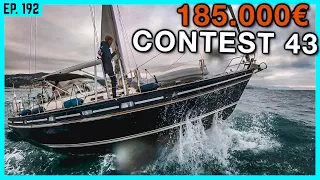
185.000 € für ein 32 Jahre altes Segelboot – und trotzdem eine gute Wahl?
Follow the BootsProfis team in Italy as they conduct a pre-purchase survey and sea trial on Hachiko, a 1994 Contest 43 sailboat priced at 185,000 euros, testing the hull, balsa-core teak deck, and Reckmann hydraulics.