Sailing Patagonia, Ep. 2 | Deeper Into a Remote Coastline Few Ever See
Allison McIsaac and James Stace of Allison & James push southward along the Chilean coastline aboard the Shannon 37 SV Landfall, facing nearly 2,000 nautical miles of remote waterways in Patagonia. Sailing with Allison’s mother Barbera McIsaac and captain Dennis Ommen, the expedition transitions from populated waterways south of Puerto Montt into isolated channels where vertical granite peaks meet swift tidal currents. Daily routines aboard the vessel start early, with lines singled up and the anchor hoisted well before Dennis’s crew pours the morning coffee.
Navigating through Canal Refugio, towering granite bluffs ascend straight out of the water while runoff streams spill over sheer stone cliffs directly into the sea. Within these narrow sheltered channels, active commercial aquaculture installations and working support vessels operate alongside uninhabited shorelines, requiring sharp vigilance from the helm.
Canal Refugio and Aquaculture in the Chilean Channels
Moving south under auxiliary power during light morning winds, SV Landfall encounters extensive commercial salmon installations situated in almost every sheltered bight. Allison observes the scale of aquaculture operations filling the waterways: “There are so many salmon farms here. Like, around every corner in every bay.” Chile stands as one of the largest producers of farmed salmon globally, filling the channels with hundreds of active net pens and continuous vessel traffic.
Navigating between these facilities introduces substantial operational complexity for the watch stander. Aquaculture support craft, locally known as salmoneros, maintain regular transits between shore bases and floating pens. Submerged fishing longlines and shellfish traps marked by floating flags extend across wide stretches of water, occasionally running for miles across open bays. The presence of these obstructions prevents relying on the electronic autopilot, obligating crew members to keep visual deck watches to detect gear before hull or rudder fouling occurs.
Alongside commercial traffic, marine wildlife populates the waterways. Penguins swim close to the boat, bobbing alongside the hull as Landfall motors through the passage. The crew also monitors the cliff lines and skies for the Andean condor, a scavenger sporting a wingspan capable of spanning the width of a small car. In the galley below deck, James prepares crew meals using regional provisions, frying onions, small peppers, chorizo sausage, carrots, and eggs in a skillet to fuel the passage.
Fjord Navigation, Eyeball Pilotage, and Williwaws
Following several long motoring days focused on logging miles, the crew consults their cruising guide for a sheltered anchorage. The standard nautical guide for southern Chile encompasses almost 700 pages of sketch charts, anchorage descriptions, and historical survey data compiled by local navigators. Because government hydrographic charts along this convoluted coast often rely on outdated surveys, charting cannot be blindly trusted. The crew maneuvers into the cove using eyeball navigation from the bow, cross-checking visual depth contours against the electronic sounder and guidebook coordinates. Dropping anchor off a sandy beach, the crew rows ashore to climb a muddy trail leading to an elevated waterfall overlook.
Returning to open water, favorable following winds arrive from astern. Running downwind through the deep fjord under clear skies, the crew hoists working canvas: “The 160 is pulled out. The full main is up, and we’re running wing on wing.” The cutter runs wing-on-wing in 10 to 12 knots of following breeze, carrying the large 160 headsail poled out to windward opposite the fully hoisted mainsail.
As the channel turns eastward toward the Chilean mainland, localized topographical funneling rapidly changes sailing dynamics: “We’ve got an inflow breeze following us in today as we head east in towards the mainland. We’ve got wind being sucked up into the fjord, and in these narrow bits, it funnels and accelerates.” Narrow fjord throats compress inflow breezes into sharp accelerations, creating overpowering gusts that force the crew to furl the headsail to protect the rig. In the waters of Patagonia, descending cold air masses off glaciated mountain tops frequently trigger williwaws—violent downdrafts that whip sea surfaces into white foam within seconds. Navigating safely through these channels demands constant vigilance for dark ruffled water and conservative reefing practices.
Galley Sourdough and the Unplanned Course Change
Off-watch hours center on shipboard baking. In the galley, James tends to a heritage sourdough starter passed down through Dennis’s family: “Just making some fresh sourdough for the passage. This one is made from a 150-year-old starter from Dennis’s family, which is pretty cool.” Operating without a cast-iron pot on board, the galley crew boils water to generate ambient oven steam, allowing the dough to rise evenly during the passage.
A critical logistical check shifts the voyage schedule. Although Landfall departed Puerto Montt with full provisions, the crew discovers that onboard propane reserves have depleted much faster than anticipated. Cooking hot meals and boiling daily drinking water for 4 crew members during extended passages demands dependable cooking fuel. With no alternative heating methods for cooking, the crew sets a new waypoint toward the island settlement of Puerto Aguirre to locate a propane refilling station.
Beating Through Squalls to Puerto Aguirre
Stable atmospheric conditions give way to heavy maritime squalls, forcing the crew to don heavy foul-weather gear. Exiting the fjord toward the island, wind conditions reverse into an adverse headwind: “We’ve got 15 to 20 knots of northwesterly wind blowing in it. We’ve just spent the last couple hours beating our way out of the inlet.” The crew faces an arduous beat to windward against steep chop.
Navigating out of the narrow inlet requires coordinated deck teamwork: “Quite a few tacks, probably at least 10 tacks for us to get out. And now that we’re free of the mouth of the inlet, we’re just barreled off the wind, and now we’re running down wind on the rear quarter, 135°.” With 4 crew members positioned in the cockpit, Landfall executes at least 10 tacks to clear headland shallows before bearing away onto a 135-degree course, sailing at 5 to 6 knots downwind into the sheltered bay of Puerto Aguirre.
Passage Data and Coastal Observations
The following passage legs document the diverse wind bands, sail trim adjustments, and coastal maneuvers executed by SV Landfall across this stage of the journey:
| Passage leg | Local wind conditions | Sail plan and course | Navigation notes | | Canal Refugio transit | 10 to 12 knots | Full main and 160 headsail | Wing on wing downwind run in misty fjords | | Inlet departure beat | 15 to 20 knots | Working canvas while beating out | 10 cockpit tacks through narrow channel entrance | | Run to Puerto Aguirre | Northwesterly breeze | 135 degrees on rear quarter | 5 to 6 knots boat speed downwind toward island |
Maritime Formalities and Island Life in Puerto Aguirre
Securing SV Landfall along the harbor pontoon in Puerto Aguirre, the crew seeks fuel, propane refills, and shore facilities. On the waterfront, the sailors meet local residents Elsa and Jane, taking in the tranquil atmosphere of the harbor: “Really cool little town, super colorful, very very peaceful.”
Prior to shore leave, the crew completes mandatory bureaucratic formalities with the Armada de Chile, the national naval maritime authority. Before commencing voyages through Chilean waters, skippers file an official route clearance known as a zarpe. Navigators submit daily position reports while underway and present ship credentials whenever entering an established naval station. This reporting structure provides an essential maritime safety network across isolated waterways lacking rapid emergency response services.
Constructed on a roadless island in the channels, Puerto Aguirre relies completely on waterborne transport for all food, fuel, and municipal materials. Along the shoreline, thick deposits of freshly shucked clam shells attest to regional seafood traditions. During the 1950s, Puerto Aguirre underwent rapid growth around commercial shellfish extraction and fish canneries, drawing fishing families across southern Chile and reaching a peak population of nearly 2,000 residents.
Stepping ashore to regain land legs, the crew hikes the steep gravel road winding from the harbor toward the island’s high summit. The summit viewpoint reveals extensive panoramas across neighboring waterways and forested islands. After several days exploring village lanes and purchasing stores as locals prepare for Christmas celebrations, the expedition looks ahead toward open ocean navigation across the Gulf of Sorrows toward Wager Island, where mariners shipwrecked nearly 300 years ago.
Frequently Asked Questions
The expedition is sailing aboard SV Landfall, a Shannon 37 cutter skippered by Dennis Ommen alongside Barbera McIsaac, Allison McIsaac, and James Stace.
The crew diverted into Puerto Aguirre after discovering their propane supply was running low, requiring a refill to cook meals and boil water for four crew members.
The cutter faced 15 to 20 knots of northwesterly wind requiring at least 10 tacks to beat out of the inlet before turning onto a 135-degree course at 5 to 6 knots.
A zarpe is an official sailing plan filed with the Chilean Navy (Armada de Chile) detailing the vessel route, requiring regular daily position reports and check-ins at naval offices.
Puerto Aguirre developed during the 1950s around shellfish harvesting and seafood canneries, housing nearly 2,000 residents at its peak.
Support Allison & James
At WeBoating.com, we profoundly acknowledge the unwavering dedication that Allison & James invests in crafting each and every video or voyage. Their passion for delivering exceptional ocean content shines through every frame, and it's a labor of love that deserves your attention.
We invite you to watch their captivating videos here and actively engage with their content, including their social media links above. Liking, commenting, and sharing their work goes a long way in fueling their creative fire.
We're also inviting you to explore the gear, sponsorships, and boat partnerships highlighted in the "Sailing Patagonia, Ep. 2 | Deeper Into a Remote Coastline Few Ever See" video description, or directly on YouTube. By engaging with these offerings or purchasing services and items, you directly support Allison & James, their collaborators, and the brands they're associated with.
To ensure you never miss an offshore update, consider visiting their official YouTube Channel to subscribe, like, and join their community directly.
If you have any feedback, corrections, or additional information about Allison & James or their videos, please use the comment form below to share your thoughts with us.
Thank you for being a part of our community and supporting the creators we cherish. Your time and support truly matter!
Get an exclusive 15% discount on Saily data plans! Use code allisonjames at checkout. Download Saily app or go to https://saily.com/allisonjames
A sailing journey through one of the most remote & spectacular coastlines on the planet...
Subscribe & join the voyage through Patagonia. New chapters of our sailing story every second Friday.
Join the Crew
Early access to new videos, exclusive content, add your name to our credits!
Patreon: https://www.patreon.com/allisonandjames
YouTube Memberships: https://www.youtube.com/@AllisonandJamesSailing/join
Support the Voyage
Help keep these films sailing with a one-time contribution.
https://paypal.com/paypalme/jamesandallison
Inside Passage Merch
Keep the spirit of art and adventure alive. Every purchase supports our film productions.
https://allisonandjamessailing.myshopify.com/
Follow Along on the Adventure
Facebook: https://www.facebook.com/AllisonandJames.Youtube/
Instagram: https://www.instagram.com/sailingallisonandjames
🎥Filmed & Produced by Allison McIsaac & James Stace
⛵️Vessel: SV Landfall, Shannon 37
Captain: Dennis Ommen
First Mate: Barbera McIsaac
Filmed November 2025 - January 2026
#sailing #highlatitudesailing #sailingpatagonia
Allison & James
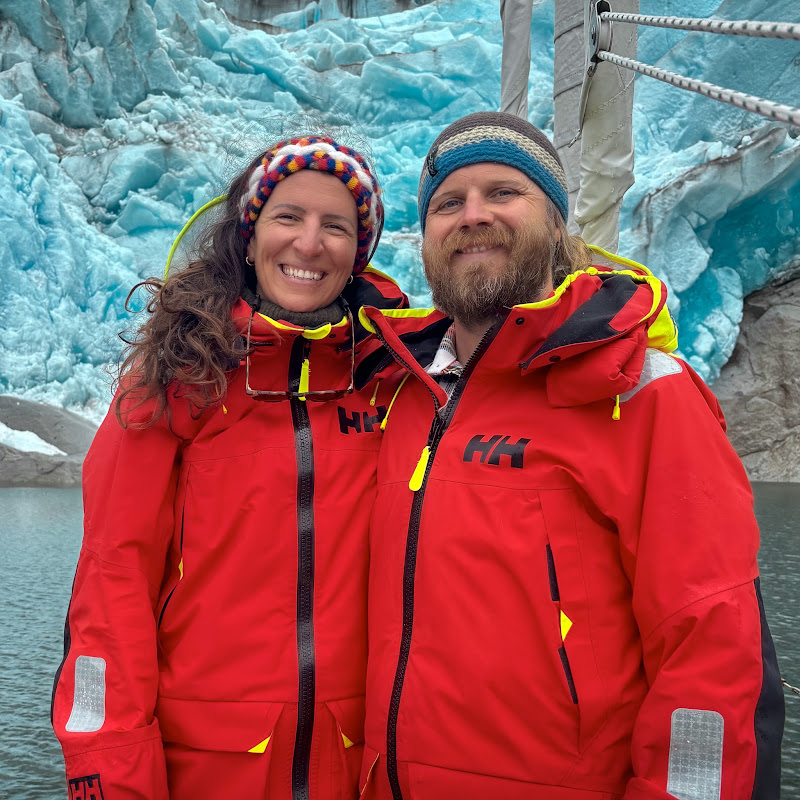
Canadian-Australian duo Allison & James prove you don't need a fancy boat to explore the wild. Discover their minimalist off-grid life in Alaska.
Channel Information:
Social Media Links:
Sailing Patagonia, Ep. 2 | Deeper Into a Remote Coastline Few Ever See Location
- Puerto Aguirre (-45.1641639,-73.522341)
Latest Episodes from Allison & James
Explore the most recent voyages. Subscribe to the channel to never miss an update!
GULF OF SORROWS | A Gruelling Offshore Passage Through Patagonia
Sailing aboard SV Landfall, Allison and James cross Chile's notorious Gulf of Penas, braving steep cross-swells, 28-knot gusts, and heavy fog to make landfall near historic Wager Island.
Sailing Patagonia, Ep. 2 | Deeper Into a Remote Coastline Few Ever See
Allison and James navigate Canal Refugio aboard the Shannon 37 SV Landfall, dodging aquaculture pens and managing williwaws before docking in Puerto Aguirre.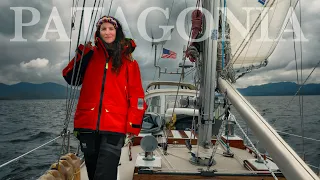
Sailing Patagonia on a 37ft Shannon | 56days, Sailing 2000nm to the Southernmost Town in the World
A sailing journey through one of the most remote & spectacular coastlines on the planet... Subscribe & join the voyage through Patagonia. 🎉LIVE PREMIER Saturday, October 10th, 10 AM PST 🎥Filmed & Produced by Allison McIsaac & James Stace ⛵️Vessel: SV Landfall, Shannon 37 Captain...
A Sailing Journey Through Patagonia.
A family’s sailing journey through one of the most remote and spectacular coastlines on the planet... Subscribe & join on the voyage through Patagonia. Coming Fall 2026 🎥Filmed & Produced by Allison McIsaac & James Stace ⛵️Vessel: SV Landfall, Shannon 37 Captain: Dennis Ommen First ...
The End of This.
Thank you for being along for the ride❤️ Listing for Uintah ⚓️ Add your Name to our Crew Credit List! Patreon: 🙏🏽Make a One-Time Contribution to our Production Get Your Inside Passage Merch 👉 👕 Every purchase supports our video production and Kate’s creative work — keeping the spirit of art ...