Lithium Powered Solar SAILING MACHINE! Installing Lithium Batteries Sailing to Alaska | A&J Sailing
Allison and James navigate their 30-foot sailboat Uintah along the 1,000-nautical-mile passage between Vancouver Island, Canada, and Southeast Alaska while executing an electrical overhaul of the vessel’s primary power systems. Facing the heavy power requirements of onboard electronics and coastal navigation, the crew strips out decades of prior wiring modifications to install a dedicated lithium iron phosphate battery bank.
Operating aboard a 1970s production cruiser through open swells and challenging tidal waters requires reliable direct-current power. On Allison & James, the sailors replace aging components with self-heating lithium technology, integrating modern battery monitoring while preserving a secondary lead-acid bank for auxiliary redundancy.
Stripping 45 Years of Marine Wiring Modifications
Before installing modern batteries, the crew addressed four decades of previous modifications that compromised Uintah’s electrical safety. Behind the bulkheads lay a tangled bird’s nest of inconsistent wire gauges and legacy splices accumulated over 45 years. James and Allison removed the outdated runs to protect against electrical fire hazards and bring the direct-current distribution up to modern ABYC safety standards.
The existing energy generation array consists of three 100-watt solar panels supplying up to 17 amps of solar charging current through dedicated controllers. Supplemental charging comes from an engine alternator driven by the boat’s 14-horsepower inboard diesel engine, which contributes approximately 30 amps while motoring, alongside an alternating-current shore charger for marina layovers. Upgrading to lithium chemistry required building a reliable foundation where each power source feeds into the boat with proper circuit protection.
Paralleling 400 Amp-Hours of LiFePO4 Power
The new house bank comprises two 200 amp-hour LiTime self-heating lithium iron phosphate (LiFePO4) batteries connected in parallel to deliver 400 amp-hours of usable storage at 12 volts. LiFePO4 chemistry provides thermal stability and eliminates the risk of thermal runaway associated with cobalt-based lithium formulations found in handheld tools or scooters. The cells are Grade A units matching standards utilized in modern electric vehicles.
Switching to lithium provides a significant weight reduction. The 400 amp-hour lithium bank weighs 40 kilograms, whereas an equivalent 1,200 amp-hour lead-acid bank would weigh 200 kilograms. With an energy density of 200 to 260 watt-hours per gram compared to 50 to 70 watt-hours per gram for lead-acid, lithium delivers three to five times more energy per unit of weight. Dock neighbor Brian assisted the refit by supplying heavy 2/0 non-tinned copper cable, which normally retails for 15 to 20 dollars per foot, while helping the crew reattach Uintah’s canvas Dodger. Allison and James crimped heavy lugs and applied heat shrink to construct clean parallel interconnects.
Energizing the Bus Bar and Commissioning the Shunt
Allison and James routed the positive 2/0 cable to the primary positive bus bar and ran the negative return through a digital smart shunt to track every milliamp entering and exiting the bank. When energizing the main switch, James observed, “nothing is blowing up yeah so that’s a good sign.” The shore-power charger immediately began delivering 25 amps of charge current, with the smart shunt confirming 24.5 amps entering directly into the lithium cells.
To safeguard the installation, the crew retained their original 200 amp-hour lead-acid battery bank. Because a standard marine alternator produces a native lead-acid charge profile that is incompatible with lithium parameters, the alternator charges the lead-acid bank directly. A dedicated DC-to-DC charger extracts current from the lead-acid reservoir and converts it to a multistage lithium charging profile for the house bank. The lead-acid bank also starts the 14-horsepower inboard diesel and provides immediate system redundancy if the lithium internal BMS ever disconnects. James cautioned that “they’re definitely not drop in replacements for lead acid” because proper wire gauges and overcurrent protection must be engineered throughout the entire vessel.
Technical Comparison: LiFePO4 vs. Traditional Lead-Acid
| System metric | LiTime 400 amp-hour bank | Lead-acid bank | | :— | :— | :— | | usable battery capacity | 400 amp-hours usable | 100 amp-hours usable | | Total battery weight | 40 kilos | 200 kilos | | Rated cycle life | 4,000 cycles at 100% (15,000 at 60%) | 1,000 discharge cycles | | Alternator charging setup | DC-to-DC charger with lithium profile | Alternator charging from 14 hp diesel | | Low temperature limit | BMS cutoff below 0 Celsius with heating pad | Standard cold performance |
Sea Trials to Petersburg and Sub-Zero Safeguards
Following the refit, Uintah departed Vancouver Island on an offshore passage northward, covering 600 nautical miles to reach Petersburg, Alaska, known as Little Norway. The voyage served as an extended shakedown cruise, pushing the battery installation through 25-knot headwinds and rolling downwind seas. The IP65 water-resistant casing proved vital when torrential rain soaked the battery units while the crew carried them down below before departure.
Sub-zero protection protects the battery cells in cold northern waters. The internal 100-amp BMS monitors cell temperatures, triggering built-in heating pads if temperatures fall below 0 degrees Celsius to permit safe charging. A secondary safety cutoff halts all battery discharge if internal temperatures drop below -20 degrees Celsius.
In Petersburg, the expanded battery bank transformed daily shipboard routines. The sailors no longer manage electrical loads with constant anxiety or worry about parasitic drain from inverters and navigation lights. James reflected on their surplus electrical power: “we’re pretty well lit up like a Christmas tree which is hilarious for two people who are eating by candle light for the last 3 years.” With reliable power secured, the crew prepares for upcoming passages through glacial fjords and iceberg fields.
Frequently Asked Questions
The crew retained the 200 amp-hour lead-acid bank to start their 14-horsepower inboard diesel engine, act as an emergency backup if the lithium BMS trips, and serve as an intermediate buffer charged by the alternator before power is transferred to lithium via a DC-to-DC charger.
Each battery incorporates an internal BMS with a heating pad that automatically warms the cells when temperatures fall below 0 degrees Celsius, alongside a low-temperature cutoff that halts discharge if temperatures drop below -20 degrees Celsius.
The crew used 2/0 copper battery cable supplied by dock neighbor Brian to parallel the two lithium batteries, wire to the positive bus bar, and connect the negative return to a DC smart shunt.
The battery charger delivered 25 amps of charging current from shore power, with the DC smart shunt verifying that 24.5 amps flowed directly into the lithium batteries.
The crew completed 600 nautical miles of open-water passage from Vancouver Island to Petersburg, Alaska, navigating through 25-knot winds and heavy swells to test the system.
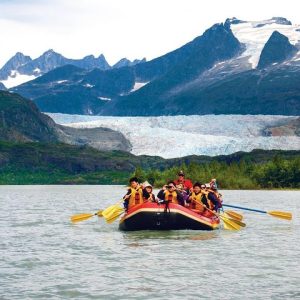
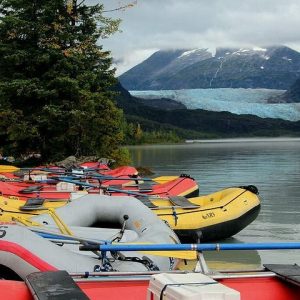
Book a trip where this was filmed — near Juneau

Juneau Shore Excursion: Mendenhall Glacier Canoe, Paddle and Hike
Sold by Above and Beyond Alaska

Support Allison & James
At WeBoating.com, we profoundly acknowledge the unwavering dedication that Allison & James invests in crafting each and every video or voyage. Their passion for delivering exceptional ocean content shines through every frame, and it's a labor of love that deserves your attention.
We invite you to watch their captivating videos here and actively engage with their content, including their social media links above. Liking, commenting, and sharing their work goes a long way in fueling their creative fire.
We're also inviting you to explore the gear, sponsorships, and boat partnerships highlighted in the "Lithium Powered Solar SAILING MACHINE! Installing Lithium Batteries Sailing to Alaska | A&J Sailing" video description, or directly on YouTube. By engaging with these offerings or purchasing services and items, you directly support Allison & James, their collaborators, and the brands they're associated with.
To ensure you never miss an offshore update, consider visiting their official YouTube Channel to subscribe, like, and join their community directly.
If you have any feedback, corrections, or additional information about Allison & James or their videos, please use the comment form below to share your thoughts with us.
Thank you for being a part of our community and supporting the creators we cherish. Your time and support truly matter!
Exploring far reaching fjords & remote anchorages of the Inside Passage charting a course North to Alaska (slowly), we're a Canadian Aussie duo documenting an adventure-based alternative life off-grid on a small 'no-frills' sailboat, Uintah! Adventuring off the beaten path with the purpose of living a more sustainable, self-sufficient life connected to nature
SUBSCRIBE! Join us on the journey North!
LINKS TO PRODUCTS IN THIS VIDEO
► LiTime 12V 400Ah LiFePO4 Battery https://ca.litime.com/?ref=Allison%20%26%20James
► WEGO SOLAR Panels & Victron Gear http://www.wegosolar.com
(when available, we use affiliate links and may earn a commission)
THANK YOU for considering supporting our film making so that we can continue to produce videos for you each week, as a small channel your generous support really goes a long way
►Become a Patron https://www.patreon.com/allisonandjames
►Buy us a nice tasty cold one! Here is our Paypal link to send a one time donation https://www.paypal.com/paypalme/james...
~We recognize & are grateful to the Kwakwaka'wakw and Tlingit people, as cultural & environmental stewards of the lands and waterways on which this film was created, here in the traditional unceded territory of the Namgis First Nations (Yalis BC) and Séet Ka (Petersburg AK) ~
Ahoy! We're Allison & James 👋 a Canadian Aussie duo who left the conventional life behind to live an adventure-based alternative lifestyle here in the Pacific Northwest! Continually chasing our dreams of adventuring off the beaten path & living a more sustainable, self-sufficient life.
We'd love for you to join us!
SUBSCRIBE so you don't miss the next episode!
🔔If you're into outdoor adventures sailing, skiing, hiking, tiny homes, off-grid living and DIY projects then you'll want to click that notification bell so you don't miss an episode!
Want MORE sailing content? Binge watch from the beginning!
https://youtube.com/playlist?list=PLnZU0VokI3bdr0eu6ttN04Vqgm_9O_xf7
Follow us on Facebook! https://www.facebook.com/AllisonandJames.Youtube
Connect with us on Instagram for real time updates
A Instagram https://www.instagram.com/allisonmcisaac
J Instagram https://www.instagram.com/james_stce
Music from Epidemic Sound
#sailingadventure #sailinglife #offgridliving
Allison & James
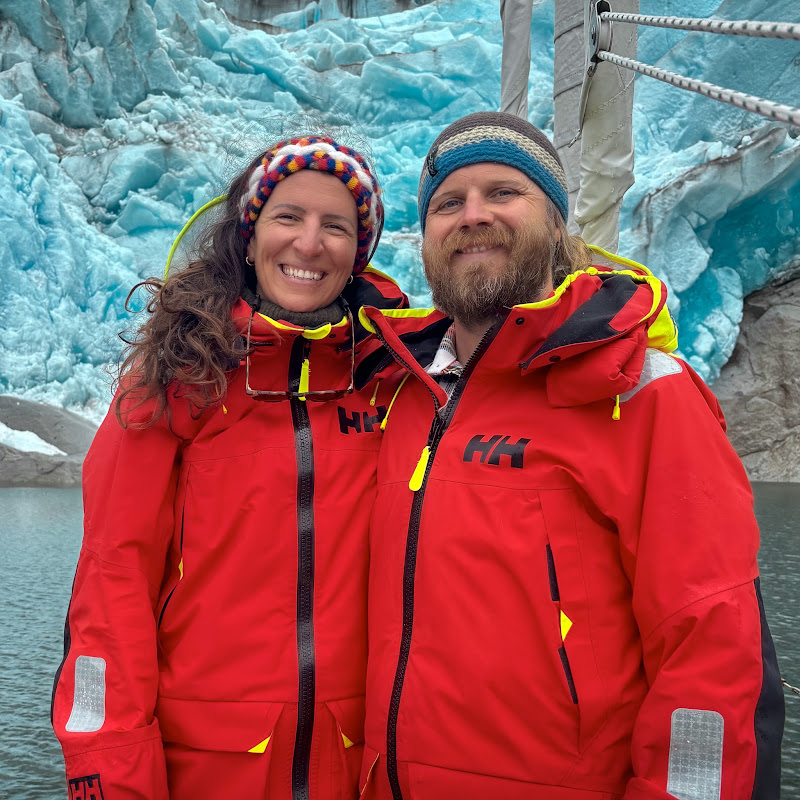
Canadian-Australian duo Allison & James prove you don't need a fancy boat to explore the wild. Discover their minimalist off-grid life in Alaska.
Channel Information:
Social Media Links:
Latest Episodes from Allison & James
Explore the most recent voyages. Subscribe to the channel to never miss an update!
GULF OF SORROWS | A Gruelling Offshore Passage Through Patagonia
Sailing aboard SV Landfall, Allison and James cross Chile's notorious Gulf of Penas, braving steep cross-swells, 28-knot gusts, and heavy fog to make landfall near historic Wager Island.
Sailing Patagonia, Ep. 2 | Deeper Into a Remote Coastline Few Ever See
Allison and James navigate Canal Refugio aboard the Shannon 37 SV Landfall, dodging aquaculture pens and managing williwaws before docking in Puerto Aguirre.
Sailing Patagonia on a 37ft Shannon | 56days, Sailing 2000nm to the Southernmost Town in the World
A sailing journey through one of the most remote & spectacular coastlines on the planet... Subscribe & join the voyage through Patagonia. 🎉LIVE PREMIER Saturday, October 10th, 10 AM PST 🎥Filmed & Produced by Allison McIsaac & James Stace ⛵️Vessel: SV Landfall, Shannon 37 Captain...
A Sailing Journey Through Patagonia.
A family’s sailing journey through one of the most remote and spectacular coastlines on the planet... Subscribe & join on the voyage through Patagonia. Coming Fall 2026 🎥Filmed & Produced by Allison McIsaac & James Stace ⛵️Vessel: SV Landfall, Shannon 37 Captain: Dennis Ommen First ...
The End of This.
Thank you for being along for the ride❤️ Listing for Uintah ⚓️ Add your Name to our Crew Credit List! Patreon: 🙏🏽Make a One-Time Contribution to our Production Get Your Inside Passage Merch 👉 👕 Every purchase supports our video production and Kate’s creative work — keeping the spirit of art ...