MY DAD'S BOAT
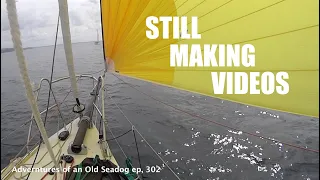
Swinging at anchor in Jennycliff Bay off Plymouth Sound, Barry looked up from his second morning coffee aboard Northern Rom as a large patrol vessel pulled alongside. Documenting his homecoming on Adventures of an old Seadog, the solo sailor found himself explaining his itinerary to British border patrol officers who were surprised to discover he had just completed a nine-year circumnavigation around the world.
As the officers departed on friendly terms, local weather conditions deteriorated rapidly. Gusting offshore winds kicked up white horses across the anchorage, prompting Barry to haul his tender Squeaky onto the foredeck using folding dinghy wheels. Radioing the marina for a transient berth, he motored into the sound against a powerful outgoing current:
“Bit of a bouncy trip over, but she’s on board. Getting ropes ready. Four ropes ready. Okay. Wh’s he going? Yeah, I called the uh the marina. They got me a birth and there’s traffic about. It’s not too bad, but uh yeah, it’s where we were.”
Navigating past commercial channel traffic with the tide racing, Barry realized mid-transit that his mooring fenders had not been deployed, requiring a quick pause in open water to rig protection before securing his mooring lines inside the sheltered basin.
Inspecting and Epoxying Peanut in Keith’s Yard
Ashore in his friend Keith’s boatyard, Barry pulled the protective winter tarp off Peanut, a classic plywood Mirror dinghy built by his late father back in the 70s. The small craft had remained stored on its side inside his father’s garage for thirty years before Barry originally recommissioned the hull for sailing across Plymouth Sound to Cornwall.
Constructed via traditional stitch-and-glue methods with copper wire ties and external fiberglass tape, the vulnerable marine plywood required careful structural sealing to prevent rainwater intrusion:
“I have to mention that peanut is a mirror dingy and they were made of plywood. And you can see here it’s plywood with epoxy coatings on the top. And in fact, the whole boat is stitched together and then fiberglass. I think the panels were originally stitched together using copper fastenings.”
Examining the chines, Barry located surface checks and hairline stress cracks where weathering had degraded the outer varnish coats. Using marine epoxy, he saturated exposed timber joints and sealed vulnerable seams along the cockpit sole:
“It’s all different color, so it’s hard to tell, but that that’s all epoxied now. There was a gap here, and I didn’t want water leeching in down there, because this is all plywood, and plywood is basically a laminate. That’s why plywood boats don’t last very long. We’re lucky so far. There’s no obvious rot.”
Gunter Rig Stowing and Plymouth Sound Departures
A defining design feature of the Mirror dinghy is its compact gunter rig. The two-piece timber spars utilize a short main mast and a sliding gaff yard, engineered to pack completely within the cockpit length for trailering and storage. Barry carefully stowed the spars, oars, and building trestles inside the boat, securing the canvas cover before returning to the marina.
Preparing to depart the marina pontoon, Barry inadvertently left a stern mooring line secured to the dock cleat. Spotting a helpful fisherman on the pontoon, he turned the vessel within the narrow fairway, retrieved his line, and motored out into Plymouth Sound. Making five knots over the ground with the outgoing tidal current on tickover, he kept sharp lookout for lobster pot markers:
“line over there where the the current is still doing five knots and she’s on tick over. That’s because we’re going out with the tide, which is what I planned. That’s why the other boat who was going in was going backwards against the tide. We don’t want that.”
Dropping ground tackle back in Jennycliff Bay ahead of an overnight wind shift, he watched an offshore seagull named Scruffy hitch a ride on the stern of Squeaky as sunset settled over the Devon coast.
Frequently Asked Questions
Peanut is a 70s Mirror dinghy built by Barry’s late father that sat in dry garage storage for 30 years before being restored and sailed across Plymouth Sound to Cornwall.
The dinghy was built using marine plywood panels stitched together with copper wire ties, reinforced along seams with fiberglass tape, and coated with epoxy.
The gunter rig pairs a short mast with a sliding gaff yard, allowing all spars and sails to fit completely inside the boat’s interior for trailering and storage.
Strong unforecasted winds created white horses and rolling chop in Jennycliff Bay, prompting Barry to haul his dinghy Squeaky on deck and seek a marina berth.
Book a trip where this was filmed — near London

Support Adventures of an old Seadog
At WeBoating.com, we profoundly acknowledge the unwavering dedication that Adventures of an old Seadog invests in crafting each and every video or voyage. Their passion for delivering exceptional ocean content shines through every frame, and it's a labor of love that deserves your attention.
We invite you to watch their captivating videos here and actively engage with their content, including their social media links above. Liking, commenting, and sharing their work goes a long way in fueling their creative fire.
We're also inviting you to explore the gear, sponsorships, and boat partnerships highlighted in the "MY DAD'S BOAT" video description, or directly on YouTube. By engaging with these offerings or purchasing services and items, you directly support Adventures of an old Seadog, their collaborators, and the brands they're associated with.
To ensure you never miss an offshore update, consider visiting their official YouTube Channel to subscribe, like, and join their community directly.
If you have any feedback, corrections, or additional information about Adventures of an old Seadog or their videos, please use the comment form below to share your thoughts with us.
Thank you for being a part of our community and supporting the creators we cherish. Your time and support truly matter!
My 'other' boat
Thank you for watching this episode, please give us a thumbs up and subscribe. Don't forget to click the bell next to the subscribe button to notify you of every new episode, that way you’ll never miss an adventure!!
On Facebook our page is ‘Adventures of an old Seadog’ and there you can find ‘realtime’ up-dates and news.
Facebook https://www.facebook.com/adventuresofanoldseadog/
If you’d like to help the Old Seadog Please checkout our Patreon page on the link below.
https://www.patreon.com/Adventuresofanoldseadog
Contributions to the project can be made at paypal.me/seadogadventures
Instagram https://www.instagram.com/adventuresofanoldseadog/
Twitter https://twitter.com/barryperrins
Thanks so much for your support,
The adventure continues.
Safe sailing.
Boat:
White Shadow is a Van De Stadt ‘Seal’ 36 (11 metres). She is hand made in steel, 2004, with a round bilge (hull) and a modified coach roof. This makes her a ‘one off’ and in my opinion the most beautiful Van De Stadt 36 ever built.
The camera gear:
Main camera is a Panasonic Hc- V700 with a Rode External mic with a sponge and dead kitten attached.
Action, underwater scenes and small blogging is done with two Osmo action cams. Some boat shots are done with a Dji gimbal camera.
Editing:
Final cut pro on a Macbook. Most of the material for each video is filmed over a period of several weeks or so and the editing of each episode is normally done over a day. This process can take longer if original music is used or permissions are needed for copyrighted materials etc. Much time is spent sorting out technical problems. In this case I normally get the help of a younger person who understands computerie stuff!
There are also times when filming, editing and uploading is not possible due to being at sea or in locations with no internet access.
Content:
I have found that filming and releasing material over a period of time is better than doing ‘vlog’ style videos and trying to make episodes out of whats happened in a week, regardless if it’s good content or not. By filming over a period of time I can be more selective in what goes into each video. My aim is to avoid ‘bland and mundane’ and have at least one or two exciting and interesting events in every video. Every video has to be entertaining.
Comments and being at sea:
I love reading your comments. Most weeks Im able to read everyone. I cant reply to everybody but I do read and enjoy them. Keep them coming! There are times that It might seem I'm not on the internet for certain periods, this is normally when Im at sea on passage. While Im out on the Ocean I have completely no communications with the outside World.
Disclaimers and copyrights :
All video content on this channel/page is copyright and must not be used without permission.
All music used in this series is original or, free to use, royalty free, used with permission. No copyright infringements intended.
All statements are personal opinions and need not necessarily represent fact.
Persons undertaking action from advice, instructions or information from this channel do so at their own risk

Adventures of an old Seadog
Join Barry Perrins of Adventures of an old Seadog as he documents his high-authority completion of a solo circumnavigation aboard his steel Van de Stadt 36.
Channel Information:
Social Media Links:
MY DAD'S BOAT Location
- Jennycliff Bay, Plymouth Sound, Devon, United Kingdom (50.355,-4.125)
- Plymouth, Devon, United Kingdom (50.366,-4.133)
Latest Episodes from Adventures of an old Seadog
Explore the most recent voyages. Subscribe to the channel to never miss an update!
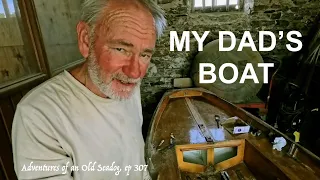
MY DAD’S BOAT
Barry encounters UK Border Patrol in Jennycliff Bay, docks Northern Rom in Plymouth, and restores Peanut, his late father's 70s Mirror dinghy.
IS THIS A NEW PLAN ?
Barry Perrins adapts a secondhand mainsail aboard the steel sloop White Shadow in Cornwall, cutting batten sliders and rigging lazy jacks before moving to Jennycliff ahead of an onshore gale.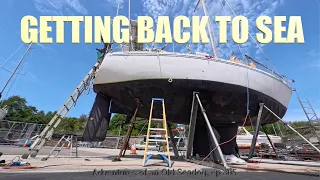
GETTING BACK TO SEA
Barry Perrins completes antifouling, sacrificial anode fitting, and chain stowing on White Shadow before splashing back into the water and navigating Plymouth Sound.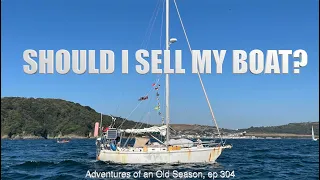
SHOULD I SELL MY BOAT
Barry Perrins hauls out his steel cutter White Shadow in Plymouth for critical hull maintenance, fighting persistent summer rain, grinding out corrosion, replacing anodes, and weighing the future of his global voyaging.
LIFEBOAT, A RETURN
Thank you for watching this episode, please give us a thumbs up and subscribe. Don't forget to click the bell next to the subscribe button to notify you of every new episode, that way you’ll never miss an adventure!! Info on the R.N.L.I. here www.rnli.org Also checkout my music channel ‘Barry ...