Sailing the Clipper Route: 44 Days at Sea Q&A
4300nm 44 Days from Banderas Bay Mexico, to Victoria, Canada.
Thanks for watching!
More info on the Race to Alaska:
www.r2akteamorca.com
Predict Wind Link:
https://forecast.predictwind.com/tracking/display/SV_Footloose_1/?mapMode=useGoogle&windSymbol=WindStreamlines&weatherSource=ECMWF&trackDuration=0

All About Spray Sailing
Tyler and Kayleen left Campbell River, BC summer 2022 on their 1981 Tartan 42’ after spending two years preparing for this journey! Tyler is a bilateral below knee amputee, adapting to the sailing lifestyle with humility. He is a gold medalist in the Beijing 2022 Snowboard Cross. Kayleen grew up cruising with her parents and comes from a family of Mariners. Although she comes from a marketing background, she now is a commercial scuba diver and writes sailing articles on the side. The sailing goal is to get south to Mexico and then we will see where the wind takes is. Thanks for following our journey! Patreon.com/allaboutspray Instagram: @fromsnowtosail @tyturner14
Channel Information:
Social Media Links:
Support All About Spray Sailing
At WeBoating.com, we profoundly acknowledge the unwavering dedication that All About Spray Sailing invests in crafting each and every video or voyage. Their passion for delivering exceptional ocean content shines through every frame, and it's a labor of love that deserves your attention.
We invite you to watch their captivating videos here and actively engage with their content, including their social media links above. Liking, commenting, and sharing their work goes a long way in fueling their creative fire.
We're also inviting you to explore the gear, sponsorships, and boat partnerships highlighted in the "Sailing the Clipper Route: 44 Days at Sea Q&A" video description, or directly on YouTube. By engaging with these offerings or purchasing services and items, you directly support All About Spray Sailing, their collaborators, and the brands they're associated with.
To ensure you never miss an offshore update, consider visiting their official YouTube Channel to subscribe, like, and join their community directly.
If you have any feedback, corrections, or additional information about All About Spray Sailing or their videos, please use the comment form below to share your thoughts with us.
Thank you for being a part of our community and supporting the creators we cherish. Your time and support truly matter!
Jessica, a professional sailor, sets sail on a 44-day adventure along the Clipper Route. In this episode, she answers questions from viewers about her challenging yet rewarding journey.
Facing the Unexpected on the Clipper Route
Jessica starts the episode by acknowledging the lack of voice-over narration in her previous video about the Clipper Route. She explains her decision to focus on capturing raw footage and plans to answer viewer questions in this follow-up video.
The most frequently asked question is about the route itself. Jessica admits she should have included a map in the previous video and promises to provide resources for viewers to explore the route in more detail.
Distance Traveled and Unexpected Detours
Jessica reveals that they traveled 4,300 nautical miles, significantly exceeding the expected 3,000 nautical miles. This extended journey resulted from encountering unexpected weather conditions.
They initially planned to cross the Pacific High, a recurring weather system, before it grew too large. Unfortunately, the Pacific High broke apart upon their arrival, forcing them to motor for several days and chase scattered winds for nearly a week.
Ideally, they would have motored across the Pacific High and picked up favorable winds on the other side. However, these winds never materialized.
In hindsight, Jessica acknowledges that leaving a few weeks earlier might have allowed them to avoid these unfavorable weather patterns.
Currents and Course Corrections
Another challenge arose from the currents near Mexico. These currents tended to pull the boat southwest, and initially, they tried to fight them by sailing close-hauled, a challenging point of sail in rough seas.
To improve comfort and efficiency, they adjusted their course to a close reach, a more relaxed point of sail that better aligned with the natural flow of the current.
Weather Routing and Information Sources
Viewers inquire about the weather routing software Jessica used. She mentions PredictWind as a primary resource for weather modeling and route tracking. She appreciates their user-friendly interface available on both phones and computers.
For backup, they relied on a Iridium GO subscription, which offered a wider range of weather data models but required more time to retrieve information.
With the help of their solar panels and reliable Starlink internet connection, they were able to access up-to-date weather forecasts through PredictWind throughout the trip. They found the automatic routing feature in PredictWind less helpful due to its tendency to recommend uncomfortable close-hauled sailing conditions.
Jessica emphasizes the importance of developing an understanding of weather patterns and interpreting various weather models to make informed course decisions, especially when faced with unexpected situations.
Water Woes and Creative Solutions
Jessica recounts a critical incident that occurred during the first few days of the trip. The water supply unexpectedly dropped to a third of its capacity within three days.
Initially suspecting a faulty sensor, they made water using the onboard water maker but observed no significant increase in the tank level.
A closer inspection revealed the culprit: a valve left open during previous maintenance on the water pump manifold. This error resulted in the main water tank continuously draining into a leaky backup tank and the bilge pump.
Fortunately, they were able to locate the malfunction and close the valve, preventing further water loss. This incident highlighted the importance of careful maintenance procedures and double-checking equipment.
Later in the trip, another mishap threatened their water supply. While enjoying a hot shower, a hose connected to the engine coolant lines burst due to vibrations. Luckily, the rapid water flow triggered by the burst hose did not cause any significant damage.
Prompt repairs and continued use of the water maker ensured they had sufficient water for the remainder of the journey.
Rigging Failure and Sailing Adjustments
One of the most concerning issues arose 364 days into the trip – a broken shroud in the rigging, the network of wires and supports that holds the mast upright. This unexpected failure, despite the recent investment in new rigging, was a major setback.
An inspection by professional riggers revealed a possible manufacturing defect in one of the shroud’s strands. While such failures are uncommon, they highlight the importance of being prepared for unforeseen circumstances.
In the face of this setback, Jessica and her crew had to adapt their sailing strategy. They reduced sail area significantly, relying primarily on the staysail instead of the larger jib. This resulted in slower progress, with average speeds dropping to around four knots for the remainder of the trip. Safety, however, remained the top priority.
Learning from sailing the Clipper Route
Despite the challenges, Jessica emphasizes the valuable lessons learned throughout the journey. The importance of:
- Double-checking maintenance procedures to avoid mishaps like the water pump malfunction.
- Understanding weather patterns and interpreting various models for informed course decisions.
- Being prepared for unforeseen circumstances with backup plans and tools for repairs.
After sailing the Clipper Route: Looking Ahead
The episode concludes with Jessica sharing updates on her life since returning home. After taking a well-deserved break, she’s back on the water with a new adventure on the horizon. She recently purchased a Santana 20 with a friend and will be participating in the Race to Alaska, a grueling competition that will test their skills once again.
Sailing the Clipper Route: 44 Days at Sea Q&A Location
- Vancouver Island (49.6506376,-125.4493906)
Latest Episodes from All About Spray Sailing
Explore the most recent voyages. Subscribe to the channel to never miss an update!

The Girls Go Boat Access Skiing in Canadian Wilderness
Sylvia and I are at it again. This time with an engine and a new goal in mind. Spring turns and finding a remote cabin in the BC wilderness.
Interviewing Josh Kali: Solo Sailing the McIntyre Mini Globe Race + Boat Tour
Interview with Josh Kali: Mini Globe Race 2025 Prep + Skookum Boat Tour Description: Join Sylvia and me as we drive to Seattle to interview sailor and boat builder Josh Kali, who’s preparing for the 2025 McIntyre Mini Globe Race. Get an in-depth tour of his boat, Skookum, and learn about Josh’s ins...
2 Girls vs. The Race to Alaska: Why We Quit. RAW UNEDITED SAILING
A huge thank you to our sponsors for helping us make it as far as we did. We are forever grateful for your support! Perhaps the Race to Alaska won this time around, but I have a feeling that won't be the last of it for us. Keen to know what we are wearing? A big thanks to Helly Hansen for kee...
Preparing for the 750nm Race to Alaska. No motor. Raw footage.
Witness Ken and Sylvia's preparation for the Race to Alaska, a 750 nautical-mile race from Port Townsend, Washington, to Juneau, Alaska. With no engine, they rely on their sailing abilities, teamwork, and determination as they practice in harsh conditions leading up to the main event.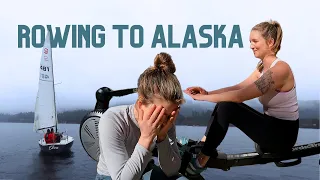
We Need Your HELP! Sailors Turned Rowers
Sylvia and I "sit" down and answer some of your questions about us and our set up with Orca for the Race to Alaska. We need your help with rowing advice and for you to join our support team! Blog and donations: www.r2akteamorca.com Instagram: @r2akteamorca