All in all, things are going much more smoothly this time around. We’ve made adjustments and learned from our mistakes, proving once again that even when something seems impossible at first, perseverance pays off! Key takeaways
- Check the temperature log before starting to laminate, as fluctuations can lead to unexpected challenges.
- When folding fiberglass cloth for difficult-to-reach areas, consider cutting it at the fold to minimize creases.
- Trust in your saturation table and skip using primer on the inside when using cedar planking.
We managed to complete three pieces of fiberglassing tonight and it went so much better than last time. We learned a lot from our mistakes and are now using different techniques that have made the process easier. For example, we’re cutting the cloth where we folded it, which helped reduce any creases or folds that might have caused issues previously. The process has become much smoother, with both of us working in harmony to achieve the desired result without the air bubbles that plagued our first attempt. All in all, things are going much more smoothly this time around. We’ve made adjustments and learned from our mistakes, proving once again that even when something seems impossible at first, perseverance pays off! Key takeaways
- Check the temperature log before starting to laminate, as fluctuations can lead to unexpected challenges.
- When folding fiberglass cloth for difficult-to-reach areas, consider cutting it at the fold to minimize creases.
- Trust in your saturation table and skip using primer on the inside when using cedar planking.
We managed to complete three pieces of fiberglassing tonight and it went so much better than last time. We learned a lot from our mistakes and are now using different techniques that have made the process easier. For example, we’re cutting the cloth where we folded it, which helped reduce any creases or folds that might have caused issues previously. The process has become much smoother, with both of us working in harmony to achieve the desired result without the air bubbles that plagued our first attempt. All in all, things are going much more smoothly this time around. We’ve made adjustments and learned from our mistakes, proving once again that even when something seems impossible at first, perseverance pays off! Key takeaways
- Check the temperature log before starting to laminate, as fluctuations can lead to unexpected challenges.
- When folding fiberglass cloth for difficult-to-reach areas, consider cutting it at the fold to minimize creases.
- Trust in your saturation table and skip using primer on the inside when using cedar planking.
After some reflection, Yuan believes that the main cause of our struggles is likely that the weather shifted yesterday, causing the temp to go up instead of down when it was supposed to [Music]. So we need to be more aware of temperature fluctuations in the future and plan accordingly. It’s time for round two today as Ver points out that the temperature has already started to go down at 4:00 today. We have high hopes that it will be easier this time around! The second attempt is much more successful We managed to complete three pieces of fiberglassing tonight and it went so much better than last time. We learned a lot from our mistakes and are now using different techniques that have made the process easier. For example, we’re cutting the cloth where we folded it, which helped reduce any creases or folds that might have caused issues previously. The process has become much smoother, with both of us working in harmony to achieve the desired result without the air bubbles that plagued our first attempt. All in all, things are going much more smoothly this time around. We’ve made adjustments and learned from our mistakes, proving once again that even when something seems impossible at first, perseverance pays off! Key takeaways
- Check the temperature log before starting to laminate, as fluctuations can lead to unexpected challenges.
- When folding fiberglass cloth for difficult-to-reach areas, consider cutting it at the fold to minimize creases.
- Trust in your saturation table and skip using primer on the inside when using cedar planking.
We’ve done two pieces already, and it’s really hard work. It’s exhausting, and we’re soaked in plastic. We need to think about this and find a better way next time. After some reflection, Yuan believes that the main cause of our struggles is likely that the weather shifted yesterday, causing the temp to go up instead of down when it was supposed to [Music]. So we need to be more aware of temperature fluctuations in the future and plan accordingly. It’s time for round two today as Ver points out that the temperature has already started to go down at 4:00 today. We have high hopes that it will be easier this time around! The second attempt is much more successful We managed to complete three pieces of fiberglassing tonight and it went so much better than last time. We learned a lot from our mistakes and are now using different techniques that have made the process easier. For example, we’re cutting the cloth where we folded it, which helped reduce any creases or folds that might have caused issues previously. The process has become much smoother, with both of us working in harmony to achieve the desired result without the air bubbles that plagued our first attempt. All in all, things are going much more smoothly this time around. We’ve made adjustments and learned from our mistakes, proving once again that even when something seems impossible at first, perseverance pays off! Key takeaways
- Check the temperature log before starting to laminate, as fluctuations can lead to unexpected challenges.
- When folding fiberglass cloth for difficult-to-reach areas, consider cutting it at the fold to minimize creases.
- Trust in your saturation table and skip using primer on the inside when using cedar planking.
We’ve done two pieces already, and it’s really hard work. It’s exhausting, and we’re soaked in plastic. We need to think about this and find a better way next time. After some reflection, Yuan believes that the main cause of our struggles is likely that the weather shifted yesterday, causing the temp to go up instead of down when it was supposed to [Music]. So we need to be more aware of temperature fluctuations in the future and plan accordingly. It’s time for round two today as Ver points out that the temperature has already started to go down at 4:00 today. We have high hopes that it will be easier this time around! The second attempt is much more successful We managed to complete three pieces of fiberglassing tonight and it went so much better than last time. We learned a lot from our mistakes and are now using different techniques that have made the process easier. For example, we’re cutting the cloth where we folded it, which helped reduce any creases or folds that might have caused issues previously. The process has become much smoother, with both of us working in harmony to achieve the desired result without the air bubbles that plagued our first attempt. All in all, things are going much more smoothly this time around. We’ve made adjustments and learned from our mistakes, proving once again that even when something seems impossible at first, perseverance pays off! Key takeaways
- Check the temperature log before starting to laminate, as fluctuations can lead to unexpected challenges.
- When folding fiberglass cloth for difficult-to-reach areas, consider cutting it at the fold to minimize creases.
- Trust in your saturation table and skip using primer on the inside when using cedar planking.
I know that a lot of people have commented on this with the worry that the cedar will Wick too much of the epoxy from the fiberglass so we get a starved laminate. But that’s not the case, actually, the cedar doesn’t Wick a lot of epoxy at all on this face of the wood. So you can’t really compare it to like balsa or anything like that. This behaves way different than that It’s time for Yan to make holes and suck out the air from the bubbles [Music]. He mixed some epoxy, but we don’t need it. It’s just enough to make the hole so the air can go out. There are so many ways I’m getting sweaty! Are you sweaty? You’re dripping. I’m totally soaked in this suit and wearing underwear underneath. The process is challenging but satisfying We’ve done two pieces already, and it’s really hard work. It’s exhausting, and we’re soaked in plastic. We need to think about this and find a better way next time. After some reflection, Yuan believes that the main cause of our struggles is likely that the weather shifted yesterday, causing the temp to go up instead of down when it was supposed to [Music]. So we need to be more aware of temperature fluctuations in the future and plan accordingly. It’s time for round two today as Ver points out that the temperature has already started to go down at 4:00 today. We have high hopes that it will be easier this time around! The second attempt is much more successful We managed to complete three pieces of fiberglassing tonight and it went so much better than last time. We learned a lot from our mistakes and are now using different techniques that have made the process easier. For example, we’re cutting the cloth where we folded it, which helped reduce any creases or folds that might have caused issues previously. The process has become much smoother, with both of us working in harmony to achieve the desired result without the air bubbles that plagued our first attempt. All in all, things are going much more smoothly this time around. We’ve made adjustments and learned from our mistakes, proving once again that even when something seems impossible at first, perseverance pays off! Key takeaways
- Check the temperature log before starting to laminate, as fluctuations can lead to unexpected challenges.
- When folding fiberglass cloth for difficult-to-reach areas, consider cutting it at the fold to minimize creases.
- Trust in your saturation table and skip using primer on the inside when using cedar planking.
I know that a lot of people have commented on this with the worry that the cedar will Wick too much of the epoxy from the fiberglass so we get a starved laminate. But that’s not the case, actually, the cedar doesn’t Wick a lot of epoxy at all on this face of the wood. So you can’t really compare it to like balsa or anything like that. This behaves way different than that It’s time for Yan to make holes and suck out the air from the bubbles [Music]. He mixed some epoxy, but we don’t need it. It’s just enough to make the hole so the air can go out. There are so many ways I’m getting sweaty! Are you sweaty? You’re dripping. I’m totally soaked in this suit and wearing underwear underneath. The process is challenging but satisfying We’ve done two pieces already, and it’s really hard work. It’s exhausting, and we’re soaked in plastic. We need to think about this and find a better way next time. After some reflection, Yuan believes that the main cause of our struggles is likely that the weather shifted yesterday, causing the temp to go up instead of down when it was supposed to [Music]. So we need to be more aware of temperature fluctuations in the future and plan accordingly. It’s time for round two today as Ver points out that the temperature has already started to go down at 4:00 today. We have high hopes that it will be easier this time around! The second attempt is much more successful We managed to complete three pieces of fiberglassing tonight and it went so much better than last time. We learned a lot from our mistakes and are now using different techniques that have made the process easier. For example, we’re cutting the cloth where we folded it, which helped reduce any creases or folds that might have caused issues previously. The process has become much smoother, with both of us working in harmony to achieve the desired result without the air bubbles that plagued our first attempt. All in all, things are going much more smoothly this time around. We’ve made adjustments and learned from our mistakes, proving once again that even when something seems impossible at first, perseverance pays off! Key takeaways
- Check the temperature log before starting to laminate, as fluctuations can lead to unexpected challenges.
- When folding fiberglass cloth for difficult-to-reach areas, consider cutting it at the fold to minimize creases.
- Trust in your saturation table and skip using primer on the inside when using cedar planking.
One challenge, though, is that it takes a bit longer to saturate the cloth because we’re using half the width. But then again, it’s summer now so compared to how it was to saturate the cloth in the winter, it’s much faster One of the key learnings from this experience is that a primer layer isn’t really needed on the inside, especially since we’re using a saturation table I know that a lot of people have commented on this with the worry that the cedar will Wick too much of the epoxy from the fiberglass so we get a starved laminate. But that’s not the case, actually, the cedar doesn’t Wick a lot of epoxy at all on this face of the wood. So you can’t really compare it to like balsa or anything like that. This behaves way different than that It’s time for Yan to make holes and suck out the air from the bubbles [Music]. He mixed some epoxy, but we don’t need it. It’s just enough to make the hole so the air can go out. There are so many ways I’m getting sweaty! Are you sweaty? You’re dripping. I’m totally soaked in this suit and wearing underwear underneath. The process is challenging but satisfying We’ve done two pieces already, and it’s really hard work. It’s exhausting, and we’re soaked in plastic. We need to think about this and find a better way next time. After some reflection, Yuan believes that the main cause of our struggles is likely that the weather shifted yesterday, causing the temp to go up instead of down when it was supposed to [Music]. So we need to be more aware of temperature fluctuations in the future and plan accordingly. It’s time for round two today as Ver points out that the temperature has already started to go down at 4:00 today. We have high hopes that it will be easier this time around! The second attempt is much more successful We managed to complete three pieces of fiberglassing tonight and it went so much better than last time. We learned a lot from our mistakes and are now using different techniques that have made the process easier. For example, we’re cutting the cloth where we folded it, which helped reduce any creases or folds that might have caused issues previously. The process has become much smoother, with both of us working in harmony to achieve the desired result without the air bubbles that plagued our first attempt. All in all, things are going much more smoothly this time around. We’ve made adjustments and learned from our mistakes, proving once again that even when something seems impossible at first, perseverance pays off! Key takeaways
- Check the temperature log before starting to laminate, as fluctuations can lead to unexpected challenges.
- When folding fiberglass cloth for difficult-to-reach areas, consider cutting it at the fold to minimize creases.
- Trust in your saturation table and skip using primer on the inside when using cedar planking.
Since we want to have everything wet in wet, we’re skipping the twill weave on top since it’s not really needed on the inside. The print-through isn’t really a problem here. So instead, the hull will be a little bit heavier on the inside, but we’ll have the correct amount of glass compared to the outside straight away. Actually, we will have 1,800 g/m² of glass per square meter on the inside and we have 2,400 g/m² on the outside. So a little bit more balanced. That’s not really an issue when you’re doing U-strip planking like we’re doing if it would’ve been PVC foam, then it’s more important to have a fully balanced sandwich like you have the same amount of glass on the outside and inside. The main advantage is that we can quite easily reach everywhere now One challenge, though, is that it takes a bit longer to saturate the cloth because we’re using half the width. But then again, it’s summer now so compared to how it was to saturate the cloth in the winter, it’s much faster One of the key learnings from this experience is that a primer layer isn’t really needed on the inside, especially since we’re using a saturation table I know that a lot of people have commented on this with the worry that the cedar will Wick too much of the epoxy from the fiberglass so we get a starved laminate. But that’s not the case, actually, the cedar doesn’t Wick a lot of epoxy at all on this face of the wood. So you can’t really compare it to like balsa or anything like that. This behaves way different than that It’s time for Yan to make holes and suck out the air from the bubbles [Music]. He mixed some epoxy, but we don’t need it. It’s just enough to make the hole so the air can go out. There are so many ways I’m getting sweaty! Are you sweaty? You’re dripping. I’m totally soaked in this suit and wearing underwear underneath. The process is challenging but satisfying We’ve done two pieces already, and it’s really hard work. It’s exhausting, and we’re soaked in plastic. We need to think about this and find a better way next time. After some reflection, Yuan believes that the main cause of our struggles is likely that the weather shifted yesterday, causing the temp to go up instead of down when it was supposed to [Music]. So we need to be more aware of temperature fluctuations in the future and plan accordingly. It’s time for round two today as Ver points out that the temperature has already started to go down at 4:00 today. We have high hopes that it will be easier this time around! The second attempt is much more successful We managed to complete three pieces of fiberglassing tonight and it went so much better than last time. We learned a lot from our mistakes and are now using different techniques that have made the process easier. For example, we’re cutting the cloth where we folded it, which helped reduce any creases or folds that might have caused issues previously. The process has become much smoother, with both of us working in harmony to achieve the desired result without the air bubbles that plagued our first attempt. All in all, things are going much more smoothly this time around. We’ve made adjustments and learned from our mistakes, proving once again that even when something seems impossible at first, perseverance pays off! Key takeaways
- Check the temperature log before starting to laminate, as fluctuations can lead to unexpected challenges.
- When folding fiberglass cloth for difficult-to-reach areas, consider cutting it at the fold to minimize creases.
- Trust in your saturation table and skip using primer on the inside when using cedar planking.
Since we want to have everything wet in wet, we’re skipping the twill weave on top since it’s not really needed on the inside. The print-through isn’t really a problem here. So instead, the hull will be a little bit heavier on the inside, but we’ll have the correct amount of glass compared to the outside straight away. Actually, we will have 1,800 g/m² of glass per square meter on the inside and we have 2,400 g/m² on the outside. So a little bit more balanced. That’s not really an issue when you’re doing U-strip planking like we’re doing if it would’ve been PVC foam, then it’s more important to have a fully balanced sandwich like you have the same amount of glass on the outside and inside. The main advantage is that we can quite easily reach everywhere now One challenge, though, is that it takes a bit longer to saturate the cloth because we’re using half the width. But then again, it’s summer now so compared to how it was to saturate the cloth in the winter, it’s much faster One of the key learnings from this experience is that a primer layer isn’t really needed on the inside, especially since we’re using a saturation table I know that a lot of people have commented on this with the worry that the cedar will Wick too much of the epoxy from the fiberglass so we get a starved laminate. But that’s not the case, actually, the cedar doesn’t Wick a lot of epoxy at all on this face of the wood. So you can’t really compare it to like balsa or anything like that. This behaves way different than that It’s time for Yan to make holes and suck out the air from the bubbles [Music]. He mixed some epoxy, but we don’t need it. It’s just enough to make the hole so the air can go out. There are so many ways I’m getting sweaty! Are you sweaty? You’re dripping. I’m totally soaked in this suit and wearing underwear underneath. The process is challenging but satisfying We’ve done two pieces already, and it’s really hard work. It’s exhausting, and we’re soaked in plastic. We need to think about this and find a better way next time. After some reflection, Yuan believes that the main cause of our struggles is likely that the weather shifted yesterday, causing the temp to go up instead of down when it was supposed to [Music]. So we need to be more aware of temperature fluctuations in the future and plan accordingly. It’s time for round two today as Ver points out that the temperature has already started to go down at 4:00 today. We have high hopes that it will be easier this time around! The second attempt is much more successful We managed to complete three pieces of fiberglassing tonight and it went so much better than last time. We learned a lot from our mistakes and are now using different techniques that have made the process easier. For example, we’re cutting the cloth where we folded it, which helped reduce any creases or folds that might have caused issues previously. The process has become much smoother, with both of us working in harmony to achieve the desired result without the air bubbles that plagued our first attempt. All in all, things are going much more smoothly this time around. We’ve made adjustments and learned from our mistakes, proving once again that even when something seems impossible at first, perseverance pays off! Key takeaways
- Check the temperature log before starting to laminate, as fluctuations can lead to unexpected challenges.
- When folding fiberglass cloth for difficult-to-reach areas, consider cutting it at the fold to minimize creases.
- Trust in your saturation table and skip using primer on the inside when using cedar planking.
Instead of 1270 mm, we will have half of that, which is 635 mm. That’s pretty easily to reach across with rollers so we can keep good pressure on rollers because that’s important not just to reach you need to have a lot of pressure as well and even pressure to get all the air out and get the cloth really saturated The cloth we’re using is actually lighter than the one we used on the outside, it’s 450g/m². Initially, the plan was to use three layers of this, which is just below 60% of the glass that we’ve been using on the outside and that was you know, on the limit. By folding it, we will have four layers instead of three Since we want to have everything wet in wet, we’re skipping the twill weave on top since it’s not really needed on the inside. The print-through isn’t really a problem here. So instead, the hull will be a little bit heavier on the inside, but we’ll have the correct amount of glass compared to the outside straight away. Actually, we will have 1,800 g/m² of glass per square meter on the inside and we have 2,400 g/m² on the outside. So a little bit more balanced. That’s not really an issue when you’re doing U-strip planking like we’re doing if it would’ve been PVC foam, then it’s more important to have a fully balanced sandwich like you have the same amount of glass on the outside and inside. The main advantage is that we can quite easily reach everywhere now One challenge, though, is that it takes a bit longer to saturate the cloth because we’re using half the width. But then again, it’s summer now so compared to how it was to saturate the cloth in the winter, it’s much faster One of the key learnings from this experience is that a primer layer isn’t really needed on the inside, especially since we’re using a saturation table I know that a lot of people have commented on this with the worry that the cedar will Wick too much of the epoxy from the fiberglass so we get a starved laminate. But that’s not the case, actually, the cedar doesn’t Wick a lot of epoxy at all on this face of the wood. So you can’t really compare it to like balsa or anything like that. This behaves way different than that It’s time for Yan to make holes and suck out the air from the bubbles [Music]. He mixed some epoxy, but we don’t need it. It’s just enough to make the hole so the air can go out. There are so many ways I’m getting sweaty! Are you sweaty? You’re dripping. I’m totally soaked in this suit and wearing underwear underneath. The process is challenging but satisfying We’ve done two pieces already, and it’s really hard work. It’s exhausting, and we’re soaked in plastic. We need to think about this and find a better way next time. After some reflection, Yuan believes that the main cause of our struggles is likely that the weather shifted yesterday, causing the temp to go up instead of down when it was supposed to [Music]. So we need to be more aware of temperature fluctuations in the future and plan accordingly. It’s time for round two today as Ver points out that the temperature has already started to go down at 4:00 today. We have high hopes that it will be easier this time around! The second attempt is much more successful We managed to complete three pieces of fiberglassing tonight and it went so much better than last time. We learned a lot from our mistakes and are now using different techniques that have made the process easier. For example, we’re cutting the cloth where we folded it, which helped reduce any creases or folds that might have caused issues previously. The process has become much smoother, with both of us working in harmony to achieve the desired result without the air bubbles that plagued our first attempt. All in all, things are going much more smoothly this time around. We’ve made adjustments and learned from our mistakes, proving once again that even when something seems impossible at first, perseverance pays off! Key takeaways
- Check the temperature log before starting to laminate, as fluctuations can lead to unexpected challenges.
- When folding fiberglass cloth for difficult-to-reach areas, consider cutting it at the fold to minimize creases.
- Trust in your saturation table and skip using primer on the inside when using cedar planking.
Instead of 1270 mm, we will have half of that, which is 635 mm. That’s pretty easily to reach across with rollers so we can keep good pressure on rollers because that’s important not just to reach you need to have a lot of pressure as well and even pressure to get all the air out and get the cloth really saturated The cloth we’re using is actually lighter than the one we used on the outside, it’s 450g/m². Initially, the plan was to use three layers of this, which is just below 60% of the glass that we’ve been using on the outside and that was you know, on the limit. By folding it, we will have four layers instead of three Since we want to have everything wet in wet, we’re skipping the twill weave on top since it’s not really needed on the inside. The print-through isn’t really a problem here. So instead, the hull will be a little bit heavier on the inside, but we’ll have the correct amount of glass compared to the outside straight away. Actually, we will have 1,800 g/m² of glass per square meter on the inside and we have 2,400 g/m² on the outside. So a little bit more balanced. That’s not really an issue when you’re doing U-strip planking like we’re doing if it would’ve been PVC foam, then it’s more important to have a fully balanced sandwich like you have the same amount of glass on the outside and inside. The main advantage is that we can quite easily reach everywhere now One challenge, though, is that it takes a bit longer to saturate the cloth because we’re using half the width. But then again, it’s summer now so compared to how it was to saturate the cloth in the winter, it’s much faster One of the key learnings from this experience is that a primer layer isn’t really needed on the inside, especially since we’re using a saturation table I know that a lot of people have commented on this with the worry that the cedar will Wick too much of the epoxy from the fiberglass so we get a starved laminate. But that’s not the case, actually, the cedar doesn’t Wick a lot of epoxy at all on this face of the wood. So you can’t really compare it to like balsa or anything like that. This behaves way different than that It’s time for Yan to make holes and suck out the air from the bubbles [Music]. He mixed some epoxy, but we don’t need it. It’s just enough to make the hole so the air can go out. There are so many ways I’m getting sweaty! Are you sweaty? You’re dripping. I’m totally soaked in this suit and wearing underwear underneath. The process is challenging but satisfying We’ve done two pieces already, and it’s really hard work. It’s exhausting, and we’re soaked in plastic. We need to think about this and find a better way next time. After some reflection, Yuan believes that the main cause of our struggles is likely that the weather shifted yesterday, causing the temp to go up instead of down when it was supposed to [Music]. So we need to be more aware of temperature fluctuations in the future and plan accordingly. It’s time for round two today as Ver points out that the temperature has already started to go down at 4:00 today. We have high hopes that it will be easier this time around! The second attempt is much more successful We managed to complete three pieces of fiberglassing tonight and it went so much better than last time. We learned a lot from our mistakes and are now using different techniques that have made the process easier. For example, we’re cutting the cloth where we folded it, which helped reduce any creases or folds that might have caused issues previously. The process has become much smoother, with both of us working in harmony to achieve the desired result without the air bubbles that plagued our first attempt. All in all, things are going much more smoothly this time around. We’ve made adjustments and learned from our mistakes, proving once again that even when something seems impossible at first, perseverance pays off! Key takeaways
- Check the temperature log before starting to laminate, as fluctuations can lead to unexpected challenges.
- When folding fiberglass cloth for difficult-to-reach areas, consider cutting it at the fold to minimize creases.
- Trust in your saturation table and skip using primer on the inside when using cedar planking.
It’s 1270 mm wide and that was a problem already on the outside. That was really hard work, reaching the other end because you couldn’t go on the other side because that was freshly laminated. Now that will be an even bigger problem since yeah, you can’t walk on the hull. What we’re going to do is to fold this cloth in the middle like so Instead of 1270 mm, we will have half of that, which is 635 mm. That’s pretty easily to reach across with rollers so we can keep good pressure on rollers because that’s important not just to reach you need to have a lot of pressure as well and even pressure to get all the air out and get the cloth really saturated The cloth we’re using is actually lighter than the one we used on the outside, it’s 450g/m². Initially, the plan was to use three layers of this, which is just below 60% of the glass that we’ve been using on the outside and that was you know, on the limit. By folding it, we will have four layers instead of three Since we want to have everything wet in wet, we’re skipping the twill weave on top since it’s not really needed on the inside. The print-through isn’t really a problem here. So instead, the hull will be a little bit heavier on the inside, but we’ll have the correct amount of glass compared to the outside straight away. Actually, we will have 1,800 g/m² of glass per square meter on the inside and we have 2,400 g/m² on the outside. So a little bit more balanced. That’s not really an issue when you’re doing U-strip planking like we’re doing if it would’ve been PVC foam, then it’s more important to have a fully balanced sandwich like you have the same amount of glass on the outside and inside. The main advantage is that we can quite easily reach everywhere now One challenge, though, is that it takes a bit longer to saturate the cloth because we’re using half the width. But then again, it’s summer now so compared to how it was to saturate the cloth in the winter, it’s much faster One of the key learnings from this experience is that a primer layer isn’t really needed on the inside, especially since we’re using a saturation table I know that a lot of people have commented on this with the worry that the cedar will Wick too much of the epoxy from the fiberglass so we get a starved laminate. But that’s not the case, actually, the cedar doesn’t Wick a lot of epoxy at all on this face of the wood. So you can’t really compare it to like balsa or anything like that. This behaves way different than that It’s time for Yan to make holes and suck out the air from the bubbles [Music]. He mixed some epoxy, but we don’t need it. It’s just enough to make the hole so the air can go out. There are so many ways I’m getting sweaty! Are you sweaty? You’re dripping. I’m totally soaked in this suit and wearing underwear underneath. The process is challenging but satisfying We’ve done two pieces already, and it’s really hard work. It’s exhausting, and we’re soaked in plastic. We need to think about this and find a better way next time. After some reflection, Yuan believes that the main cause of our struggles is likely that the weather shifted yesterday, causing the temp to go up instead of down when it was supposed to [Music]. So we need to be more aware of temperature fluctuations in the future and plan accordingly. It’s time for round two today as Ver points out that the temperature has already started to go down at 4:00 today. We have high hopes that it will be easier this time around! The second attempt is much more successful We managed to complete three pieces of fiberglassing tonight and it went so much better than last time. We learned a lot from our mistakes and are now using different techniques that have made the process easier. For example, we’re cutting the cloth where we folded it, which helped reduce any creases or folds that might have caused issues previously. The process has become much smoother, with both of us working in harmony to achieve the desired result without the air bubbles that plagued our first attempt. All in all, things are going much more smoothly this time around. We’ve made adjustments and learned from our mistakes, proving once again that even when something seems impossible at first, perseverance pays off! Key takeaways
- Check the temperature log before starting to laminate, as fluctuations can lead to unexpected challenges.
- When folding fiberglass cloth for difficult-to-reach areas, consider cutting it at the fold to minimize creases.
- Trust in your saturation table and skip using primer on the inside when using cedar planking.
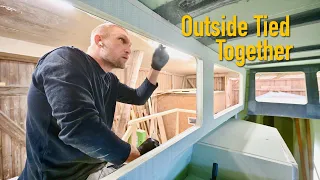
It’s the middle of summer, Ver is on summer holiday, and he’s spending a few days with Yan’s mother. I was sending the epoxy Yuan added last week, and Yuan was measuring for the fiberglass [Music]. We’re almost ready now to start laminating the first section of the inside of the hull [Music]. Yesterday, we did a lot of prep work and today I still have some prep work to do. The plan is to start laminating once the temp is going down so around 3:00 or so this afternoon. I have changed the way we’re going to do this slightly compared to how we did it on the outside of the hull. The main problem now working on the inside of the hull is to reach all the areas with the cloth It’s 1270 mm wide and that was a problem already on the outside. That was really hard work, reaching the other end because you couldn’t go on the other side because that was freshly laminated. Now that will be an even bigger problem since yeah, you can’t walk on the hull. What we’re going to do is to fold this cloth in the middle like so Instead of 1270 mm, we will have half of that, which is 635 mm. That’s pretty easily to reach across with rollers so we can keep good pressure on rollers because that’s important not just to reach you need to have a lot of pressure as well and even pressure to get all the air out and get the cloth really saturated The cloth we’re using is actually lighter than the one we used on the outside, it’s 450g/m². Initially, the plan was to use three layers of this, which is just below 60% of the glass that we’ve been using on the outside and that was you know, on the limit. By folding it, we will have four layers instead of three Since we want to have everything wet in wet, we’re skipping the twill weave on top since it’s not really needed on the inside. The print-through isn’t really a problem here. So instead, the hull will be a little bit heavier on the inside, but we’ll have the correct amount of glass compared to the outside straight away. Actually, we will have 1,800 g/m² of glass per square meter on the inside and we have 2,400 g/m² on the outside. So a little bit more balanced. That’s not really an issue when you’re doing U-strip planking like we’re doing if it would’ve been PVC foam, then it’s more important to have a fully balanced sandwich like you have the same amount of glass on the outside and inside. The main advantage is that we can quite easily reach everywhere now One challenge, though, is that it takes a bit longer to saturate the cloth because we’re using half the width. But then again, it’s summer now so compared to how it was to saturate the cloth in the winter, it’s much faster One of the key learnings from this experience is that a primer layer isn’t really needed on the inside, especially since we’re using a saturation table I know that a lot of people have commented on this with the worry that the cedar will Wick too much of the epoxy from the fiberglass so we get a starved laminate. But that’s not the case, actually, the cedar doesn’t Wick a lot of epoxy at all on this face of the wood. So you can’t really compare it to like balsa or anything like that. This behaves way different than that It’s time for Yan to make holes and suck out the air from the bubbles [Music]. He mixed some epoxy, but we don’t need it. It’s just enough to make the hole so the air can go out. There are so many ways I’m getting sweaty! Are you sweaty? You’re dripping. I’m totally soaked in this suit and wearing underwear underneath. The process is challenging but satisfying We’ve done two pieces already, and it’s really hard work. It’s exhausting, and we’re soaked in plastic. We need to think about this and find a better way next time. After some reflection, Yuan believes that the main cause of our struggles is likely that the weather shifted yesterday, causing the temp to go up instead of down when it was supposed to [Music]. So we need to be more aware of temperature fluctuations in the future and plan accordingly. It’s time for round two today as Ver points out that the temperature has already started to go down at 4:00 today. We have high hopes that it will be easier this time around! The second attempt is much more successful We managed to complete three pieces of fiberglassing tonight and it went so much better than last time. We learned a lot from our mistakes and are now using different techniques that have made the process easier. For example, we’re cutting the cloth where we folded it, which helped reduce any creases or folds that might have caused issues previously. The process has become much smoother, with both of us working in harmony to achieve the desired result without the air bubbles that plagued our first attempt. All in all, things are going much more smoothly this time around. We’ve made adjustments and learned from our mistakes, proving once again that even when something seems impossible at first, perseverance pays off! Key takeaways
- Check the temperature log before starting to laminate, as fluctuations can lead to unexpected challenges.
- When folding fiberglass cloth for difficult-to-reach areas, consider cutting it at the fold to minimize creases.
- Trust in your saturation table and skip using primer on the inside when using cedar planking.
Welcome back to RAN Sailing! Last week, we did a little garden project and then continued preparing for laminating the inside of the boat hall. Yan also built a platform stairs to get in and out of the boat easier. It’s topscore five strawberries out of five [Music]. It’s the middle of summer, Ver is on summer holiday, and he’s spending a few days with Yan’s mother. I was sending the epoxy Yuan added last week, and Yuan was measuring for the fiberglass [Music]. We’re almost ready now to start laminating the first section of the inside of the hull [Music]. Yesterday, we did a lot of prep work and today I still have some prep work to do. The plan is to start laminating once the temp is going down so around 3:00 or so this afternoon. I have changed the way we’re going to do this slightly compared to how we did it on the outside of the hull. The main problem now working on the inside of the hull is to reach all the areas with the cloth It’s 1270 mm wide and that was a problem already on the outside. That was really hard work, reaching the other end because you couldn’t go on the other side because that was freshly laminated. Now that will be an even bigger problem since yeah, you can’t walk on the hull. What we’re going to do is to fold this cloth in the middle like so Instead of 1270 mm, we will have half of that, which is 635 mm. That’s pretty easily to reach across with rollers so we can keep good pressure on rollers because that’s important not just to reach you need to have a lot of pressure as well and even pressure to get all the air out and get the cloth really saturated The cloth we’re using is actually lighter than the one we used on the outside, it’s 450g/m². Initially, the plan was to use three layers of this, which is just below 60% of the glass that we’ve been using on the outside and that was you know, on the limit. By folding it, we will have four layers instead of three Since we want to have everything wet in wet, we’re skipping the twill weave on top since it’s not really needed on the inside. The print-through isn’t really a problem here. So instead, the hull will be a little bit heavier on the inside, but we’ll have the correct amount of glass compared to the outside straight away. Actually, we will have 1,800 g/m² of glass per square meter on the inside and we have 2,400 g/m² on the outside. So a little bit more balanced. That’s not really an issue when you’re doing U-strip planking like we’re doing if it would’ve been PVC foam, then it’s more important to have a fully balanced sandwich like you have the same amount of glass on the outside and inside. The main advantage is that we can quite easily reach everywhere now One challenge, though, is that it takes a bit longer to saturate the cloth because we’re using half the width. But then again, it’s summer now so compared to how it was to saturate the cloth in the winter, it’s much faster One of the key learnings from this experience is that a primer layer isn’t really needed on the inside, especially since we’re using a saturation table I know that a lot of people have commented on this with the worry that the cedar will Wick too much of the epoxy from the fiberglass so we get a starved laminate. But that’s not the case, actually, the cedar doesn’t Wick a lot of epoxy at all on this face of the wood. So you can’t really compare it to like balsa or anything like that. This behaves way different than that It’s time for Yan to make holes and suck out the air from the bubbles [Music]. He mixed some epoxy, but we don’t need it. It’s just enough to make the hole so the air can go out. There are so many ways I’m getting sweaty! Are you sweaty? You’re dripping. I’m totally soaked in this suit and wearing underwear underneath. The process is challenging but satisfying We’ve done two pieces already, and it’s really hard work. It’s exhausting, and we’re soaked in plastic. We need to think about this and find a better way next time. After some reflection, Yuan believes that the main cause of our struggles is likely that the weather shifted yesterday, causing the temp to go up instead of down when it was supposed to [Music]. So we need to be more aware of temperature fluctuations in the future and plan accordingly. It’s time for round two today as Ver points out that the temperature has already started to go down at 4:00 today. We have high hopes that it will be easier this time around! The second attempt is much more successful We managed to complete three pieces of fiberglassing tonight and it went so much better than last time. We learned a lot from our mistakes and are now using different techniques that have made the process easier. For example, we’re cutting the cloth where we folded it, which helped reduce any creases or folds that might have caused issues previously. The process has become much smoother, with both of us working in harmony to achieve the desired result without the air bubbles that plagued our first attempt. All in all, things are going much more smoothly this time around. We’ve made adjustments and learned from our mistakes, proving once again that even when something seems impossible at first, perseverance pays off! Key takeaways
- Check the temperature log before starting to laminate, as fluctuations can lead to unexpected challenges.
- When folding fiberglass cloth for difficult-to-reach areas, consider cutting it at the fold to minimize creases.
- Trust in your saturation table and skip using primer on the inside when using cedar planking.
Welcome back to RAN Sailing! Last week, we did a little garden project and then continued preparing for laminating the inside of the boat hall. Yan also built a platform stairs to get in and out of the boat easier. It’s topscore five strawberries out of five [Music]. It’s the middle of summer, Ver is on summer holiday, and he’s spending a few days with Yan’s mother. I was sending the epoxy Yuan added last week, and Yuan was measuring for the fiberglass [Music]. We’re almost ready now to start laminating the first section of the inside of the hull [Music]. Yesterday, we did a lot of prep work and today I still have some prep work to do. The plan is to start laminating once the temp is going down so around 3:00 or so this afternoon. I have changed the way we’re going to do this slightly compared to how we did it on the outside of the hull. The main problem now working on the inside of the hull is to reach all the areas with the cloth It’s 1270 mm wide and that was a problem already on the outside. That was really hard work, reaching the other end because you couldn’t go on the other side because that was freshly laminated. Now that will be an even bigger problem since yeah, you can’t walk on the hull. What we’re going to do is to fold this cloth in the middle like so Instead of 1270 mm, we will have half of that, which is 635 mm. That’s pretty easily to reach across with rollers so we can keep good pressure on rollers because that’s important not just to reach you need to have a lot of pressure as well and even pressure to get all the air out and get the cloth really saturated The cloth we’re using is actually lighter than the one we used on the outside, it’s 450g/m². Initially, the plan was to use three layers of this, which is just below 60% of the glass that we’ve been using on the outside and that was you know, on the limit. By folding it, we will have four layers instead of three Since we want to have everything wet in wet, we’re skipping the twill weave on top since it’s not really needed on the inside. The print-through isn’t really a problem here. So instead, the hull will be a little bit heavier on the inside, but we’ll have the correct amount of glass compared to the outside straight away. Actually, we will have 1,800 g/m² of glass per square meter on the inside and we have 2,400 g/m² on the outside. So a little bit more balanced. That’s not really an issue when you’re doing U-strip planking like we’re doing if it would’ve been PVC foam, then it’s more important to have a fully balanced sandwich like you have the same amount of glass on the outside and inside. The main advantage is that we can quite easily reach everywhere now One challenge, though, is that it takes a bit longer to saturate the cloth because we’re using half the width. But then again, it’s summer now so compared to how it was to saturate the cloth in the winter, it’s much faster One of the key learnings from this experience is that a primer layer isn’t really needed on the inside, especially since we’re using a saturation table I know that a lot of people have commented on this with the worry that the cedar will Wick too much of the epoxy from the fiberglass so we get a starved laminate. But that’s not the case, actually, the cedar doesn’t Wick a lot of epoxy at all on this face of the wood. So you can’t really compare it to like balsa or anything like that. This behaves way different than that It’s time for Yan to make holes and suck out the air from the bubbles [Music]. He mixed some epoxy, but we don’t need it. It’s just enough to make the hole so the air can go out. There are so many ways I’m getting sweaty! Are you sweaty? You’re dripping. I’m totally soaked in this suit and wearing underwear underneath. The process is challenging but satisfying We’ve done two pieces already, and it’s really hard work. It’s exhausting, and we’re soaked in plastic. We need to think about this and find a better way next time. After some reflection, Yuan believes that the main cause of our struggles is likely that the weather shifted yesterday, causing the temp to go up instead of down when it was supposed to [Music]. So we need to be more aware of temperature fluctuations in the future and plan accordingly. It’s time for round two today as Ver points out that the temperature has already started to go down at 4:00 today. We have high hopes that it will be easier this time around! The second attempt is much more successful We managed to complete three pieces of fiberglassing tonight and it went so much better than last time. We learned a lot from our mistakes and are now using different techniques that have made the process easier. For example, we’re cutting the cloth where we folded it, which helped reduce any creases or folds that might have caused issues previously. The process has become much smoother, with both of us working in harmony to achieve the desired result without the air bubbles that plagued our first attempt. All in all, things are going much more smoothly this time around. We’ve made adjustments and learned from our mistakes, proving once again that even when something seems impossible at first, perseverance pays off! Key takeaways
- Check the temperature log before starting to laminate, as fluctuations can lead to unexpected challenges.
- When folding fiberglass cloth for difficult-to-reach areas, consider cutting it at the fold to minimize creases.
- Trust in your saturation table and skip using primer on the inside when using cedar planking.
Fiberglassing In Winter Was Way Easier – Ep. 403 RAN Sailing
Welcome back to RAN Sailing! Last week, we did a little garden project and then continued preparing for laminating the inside of the boat hall. Yan also built a platform stairs to get in and out of the boat easier. It’s topscore five strawberries out of five [Music]. It’s the middle of summer, Ver is on summer holiday, and he’s spending a few days with Yan’s mother. I was sending the epoxy Yuan added last week, and Yuan was measuring for the fiberglass [Music]. We’re almost ready now to start laminating the first section of the inside of the hull [Music]. Yesterday, we did a lot of prep work and today I still have some prep work to do. The plan is to start laminating once the temp is going down so around 3:00 or so this afternoon. I have changed the way we’re going to do this slightly compared to how we did it on the outside of the hull. The main problem now working on the inside of the hull is to reach all the areas with the cloth It’s 1270 mm wide and that was a problem already on the outside. That was really hard work, reaching the other end because you couldn’t go on the other side because that was freshly laminated. Now that will be an even bigger problem since yeah, you can’t walk on the hull. What we’re going to do is to fold this cloth in the middle like so Instead of 1270 mm, we will have half of that, which is 635 mm. That’s pretty easily to reach across with rollers so we can keep good pressure on rollers because that’s important not just to reach you need to have a lot of pressure as well and even pressure to get all the air out and get the cloth really saturated The cloth we’re using is actually lighter than the one we used on the outside, it’s 450g/m². Initially, the plan was to use three layers of this, which is just below 60% of the glass that we’ve been using on the outside and that was you know, on the limit. By folding it, we will have four layers instead of three Since we want to have everything wet in wet, we’re skipping the twill weave on top since it’s not really needed on the inside. The print-through isn’t really a problem here. So instead, the hull will be a little bit heavier on the inside, but we’ll have the correct amount of glass compared to the outside straight away. Actually, we will have 1,800 g/m² of glass per square meter on the inside and we have 2,400 g/m² on the outside. So a little bit more balanced. That’s not really an issue when you’re doing U-strip planking like we’re doing if it would’ve been PVC foam, then it’s more important to have a fully balanced sandwich like you have the same amount of glass on the outside and inside. The main advantage is that we can quite easily reach everywhere now One challenge, though, is that it takes a bit longer to saturate the cloth because we’re using half the width. But then again, it’s summer now so compared to how it was to saturate the cloth in the winter, it’s much faster One of the key learnings from this experience is that a primer layer isn’t really needed on the inside, especially since we’re using a saturation table I know that a lot of people have commented on this with the worry that the cedar will Wick too much of the epoxy from the fiberglass so we get a starved laminate. But that’s not the case, actually, the cedar doesn’t Wick a lot of epoxy at all on this face of the wood. So you can’t really compare it to like balsa or anything like that. This behaves way different than that It’s time for Yan to make holes and suck out the air from the bubbles [Music]. He mixed some epoxy, but we don’t need it. It’s just enough to make the hole so the air can go out. There are so many ways I’m getting sweaty! Are you sweaty? You’re dripping. I’m totally soaked in this suit and wearing underwear underneath. The process is challenging but satisfying We’ve done two pieces already, and it’s really hard work. It’s exhausting, and we’re soaked in plastic. We need to think about this and find a better way next time. After some reflection, Yuan believes that the main cause of our struggles is likely that the weather shifted yesterday, causing the temp to go up instead of down when it was supposed to [Music]. So we need to be more aware of temperature fluctuations in the future and plan accordingly. It’s time for round two today as Ver points out that the temperature has already started to go down at 4:00 today. We have high hopes that it will be easier this time around! The second attempt is much more successful We managed to complete three pieces of fiberglassing tonight and it went so much better than last time. We learned a lot from our mistakes and are now using different techniques that have made the process easier. For example, we’re cutting the cloth where we folded it, which helped reduce any creases or folds that might have caused issues previously. The process has become much smoother, with both of us working in harmony to achieve the desired result without the air bubbles that plagued our first attempt. All in all, things are going much more smoothly this time around. We’ve made adjustments and learned from our mistakes, proving once again that even when something seems impossible at first, perseverance pays off! Key takeaways
- Check the temperature log before starting to laminate, as fluctuations can lead to unexpected challenges.
- When folding fiberglass cloth for difficult-to-reach areas, consider cutting it at the fold to minimize creases.
- Trust in your saturation table and skip using primer on the inside when using cedar planking.