Buying a Boat as a US Citizen
Boat taxes, registration, use tax, Coast Guard documentation… this side of sailboat ownership catches a lot of people off guard. Let's break down the realities of buying a boat in the U.S., taking it offshore, and what happens when you bring it back.
📗 Get My Book:
https://bethecaptain.com

Sailing Zingaro
Join James Evenson of Sailing Zingaro as he documents his 2026 technical refit of his Crowther Spindrift 38 in Colombia and his 'Sailing Truth' mission.
Channel Information:
Social Media Links:
Support Sailing Zingaro
At WeBoating.com, we profoundly acknowledge the unwavering dedication that Sailing Zingaro invests in crafting each and every video or voyage. Their passion for delivering exceptional ocean content shines through every frame, and it's a labor of love that deserves your attention.
We invite you to watch their captivating videos here and actively engage with their content, including their social media links above. Liking, commenting, and sharing their work goes a long way in fueling their creative fire.
We're also inviting you to explore the gear, sponsorships, and boat partnerships highlighted in the "Buying a Boat as a US Citizen" video description, or directly on YouTube. By engaging with these offerings or purchasing services and items, you directly support Sailing Zingaro, their collaborators, and the brands they're associated with.
To ensure you never miss an offshore update, consider visiting their official YouTube Channel to subscribe, like, and join their community directly.
If you have any feedback, corrections, or additional information about Sailing Zingaro or their videos, please use the comment form below to share your thoughts with us.
Thank you for being a part of our community and supporting the creators we cherish. Your time and support truly matter!
Buying a boat in the United States is often romanticized as a gateway to freedom, but for the unprepared, that dream can quickly become a bureaucratic quagmire of sales tax, use tax, and conflicting registration requirements. In this tactical breakdown, James Evenson of Sailing Zingaro pulls back the curtain on the fiscal realities of boat ownership for U.S. citizens. Whether you are eyeing a local coastal cruiser or a blue-water beast like an Oyster 485, understanding the ’90-day rule’ and the distinction between state registration and federal documentation is the difference between a smooth departure and a legal headache that could cost you thousands in unexpected levies.
Key Takeaways
- The 90-Day Departure Mandate: To avoid state sales tax on a new purchase, the vessel must typically exit the state waters within 90 days, or you become liable for the full tax amount.
- State vs. Federal Documentation: While state registration is sufficient for local lakes, international cruising requires USCG Documentation (Certificate of Documentation) to avoid being ‘misunderstood’ by foreign port authorities.
- The ‘Use Tax’ Trap: Bringing a boat back into the U.S. after an international purchase doesn’t always grant a free pass; many states impose a ‘Use Tax’ equivalent to their sales tax percentage.
| Metric | Detail |
|---|---|
| Focus | Maritime Law & Taxation |
| Primary Vessel | Oyster 485 (Zingaro II) |
| Key Document | Certificate of Documentation (COD) |
| Critical Window | 90 Days (Tax Exemption) |
Navigating the Tax Latitudes: The 90-Day Rule
The most immediate hurdle in the boat-buying process is the state sales tax. In the U.S., if you purchase a vessel and remain in that state’s waters for longer than 90 days, you are legally obligated to pay sales tax. For a high-end cruising yacht, this can represent a five or six-figure expense. As Evenson emphasizes, ‘you need to get the hell out of that state’ before that clock runs out. This creates a high-pressure environment for new owners who may still be performing essential refits or awaiting weather windows. It is a strategic dance where the cost of a few extra weeks in a marina could equal the price of a new set of sails.
The Oyster 485: A Blueprint for Offshore Capability
While the legalities apply to all vessels, the complexities multiply when dealing with offshore-capable yachts like Zingaro II, an Oyster 485. These boats are designed for the very international voyages that demand federal documentation. Understanding the specs of such a vessel helps ground the tax discussion in reality—larger displacements and complex systems often require longer ‘stay’ periods for commissioning, which directly conflicts with the 90-day tax window.
| Feature | Specification (Oyster 485) |
|---|---|
| LOA | 48 ft 6 in (14.78 m) |
| Beam | 14 ft 0 in (4.27 m) |
| Draft | 7 ft 1 in (2.16 m) |
| Displacement | ~40,000 lbs |
| Designer | Holman and Pye |
| Fuel Capacity | 135 US Gallons |
Federal Documentation vs. The ‘State Registration’ Pitfall
For many new boaters, state registration seems like the standard path. However, for those planning a ‘big trip around the world,’ state stickers are essentially meaningless once you cross international boundaries. Foreign customs officials and port authorities recognize national flags and federal documentation. This is where the US Coast Guard’s Certificate of Documentation (COD) becomes your most valuable asset. Attempting to clear into a foreign port with nothing but a state-issued numbers card often leads to lengthy delays, as officials struggle to understand the vessel’s national status. Federal documentation is the ‘passport’ for your boat, and without it, your international voyage is dead in the water.
The ‘Use Tax’ and the International Re-entry
A common misconception is that buying a boat outside of the U.S. and waiting 90 days to bring it back allows you to bypass the taxman entirely. While you might avoid ‘Sales Tax,’ you often run straight into the ‘Use Tax.’ Most states have closed this loophole by mandating a use tax that mirrors the sales tax percentage. If you bring the vessel back for a refit or an extended stay, the state will demand its cut based on the vessel’s current value. The takeaway is clear: maritime taxation is a global game, and whether you are in Florida, the Sacramento Delta, or the Caribbean, the tax man has a long reach.
Sailing Zingaro: Frequently Asked Questions
In most US states, you must remove a newly purchased boat from state waters within 90 days to avoid paying that state’s sales tax. Staying beyond this window makes the owner liable for the full tax amount.
US Coast Guard Documentation (Certificate of Documentation) is a federal form of registration recognized by foreign governments. State registration is often not recognized or understood by international port authorities, leading to customs issues.
Use Tax is a tax imposed by a state on the storage, use, or consumption of a boat that was purchased outside of that state. It is usually equal to the sales tax rate and is designed to prevent tax avoidance by buying out-of-state.
While you may avoid immediate sales tax, you will likely be liable for Use Tax when the boat enters a US state’s jurisdiction for more than a temporary period (usually 30-90 days depending on the state).
As of 2026, Sailing Zingaro (James Evenson) sails an Oyster 485 named Zingaro II, a robust center-cockpit cruiser designed for blue-water offshore voyages.
Federal documentation serves as a national form of registration and evidence of nationality, but it also acts as a preferred ship mortgage platform. Many states do not issue titles for vessels that are federally documented.
Buying a Boat as a US Citizen Location
- USCG Documentation Center (39.3512,-77.8347)
Latest Episodes from Sailing Zingaro
Explore the most recent voyages. Subscribe to the channel to never miss an update!
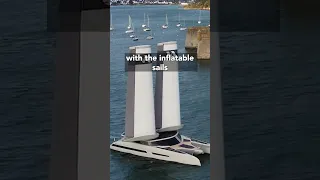
The MODX 70: Clever Design or Too Complicated?
The MODX 70 combines electric propulsion with inflatable wing sails, but that complexity raises questions about offshore repairs and long-term maintenance. Moving parts and inflatable systems make for an unusual catamaran, with plenty to consider beyond the boat-show appeal. Full Stream: 📗 Get My...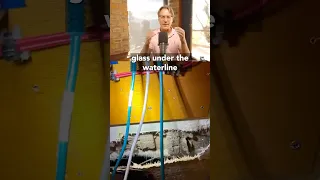
What This Collision Exposed Inside the Hull
A catamaran backed into an HR 42, destroying the nav station and exposing the hull’s construction. The damaged fiberglass appears dry in places, raising questions about how thoroughly it was saturated with resin during the build. Full Stream: 📗 Get My Book:
What REALLY Sank the Bayesian? | LIVE
Get my award-winning offshore manual📘 Be The Captain: bethecaptain.com MAIB REPORT: Two years after the superyacht Bayesian capsized at anchor off Porticello, Sicily, taking the lives of seven people—including Mike Lynch and his daughter Hannah—the maritime world is still waiting for official cl...
Fighting Orcas Is the Wrong Approach
Finding ways to discourage orcas without harming them has sailors looking for alternatives to diesel, fireworks, and guns. One unusual story involves playing Jimi Hendrix through the hull, part of the search for a peaceful way to get orcas to leave a boat alone. Full Stream: 📗 Get My Book:
New Orleans to Costa Rica: What to Watch For
A passage from New Orleans toward Costa Rica comes with more to consider than distance. Unlit oil structures make a careful watch essential in the Gulf, while the choice between Costa Rica’s Caribbean and Pacific coasts brings very different exposure and anchorage options. Full Stream: 📗 Get My B...