Luna Rossa Prada Pirelli Launch, Splash and Tow. Vittorio d'Albetas Quantum Sails Italy's Review
The crane lowers Luna Rossa Prada Pirelli’s silver-hulled AC75 into the water at Molo Ichnusa in Cagliari as World On Water tracks the technical rollout for the 37th America’s Cup campaign in 2024. Vittorio d’Albertas of Quantum Sails Italy examines the stripped platform alongside shore engineers, focusing on the aerodynamic chrome finish that defines the Italian challenger’s hydrofoiling platform.
To prepare the vessel for preliminary commissioning, the shore team guided the hull into the basin while evaluating flight controller stations and bare cockpit recesses before stepping the rig. By scrutinizing the bare deck and underwater appendages, naval architects and observers gathered initial data on the structural choices underpinning the syndicate’s challenge representing Circolo della Vela Sicilia.
Hull Geometry and Te Rehutai Design Lineage
Technical analysis of the hull form reveals that the platform inherits key naval architecture concepts pioneered by Emirates Team New Zealand’s winning boat Te Rehutai from the 36th America’s Cup match in 2021. Vittorio d’Albertas identified this evolutionary lineage directly, describing the Kiwi hull as “la mamma di tutte le barche che abbiamo visto da lei in poi” for modern foiling monohull development. The forward hull section opens with a pronounced V-shape that transitions progressively into an entirely flat aft section near the transom.
Rather than carrying a deadrise V-section through the stern, the centerline keel skeg terminates abruptly before the rudder housing. The squared-off skeg carries an ultra-thin profile that mounts the elevator rudder beneath, with the carbon rake adjustment mechanism partially exposed above deck in a streamlined housing. Along the lower aft topsides, a distinctive chine bevel angled at approximately 45 degrees breaks the flat underbody. When the platform accelerates in displacement mode, this angled chine sheds water cleanly, and the sudden termination of the keel bustle releases hydrodynamic suction the moment the hull rights itself to take flight.
Concave Deck Aerodynamics and Porsche Cockpit Profiles
Deck analysis demonstrates a bold departure from rival design philosophies. While competing syndicates such as Alinghi favored flat horizontal decks that function like wing profiles to generate low-pressure suction, Luna Rossa sculpted a deeply concave transverse channel across the working deck. Running aft from the flat bow, this depression resembles a concrete drainage canal or skatepark bowl designed to guide high-velocity airflow cleanly between the cockpit bulwarks toward the sail plan.
The crew cockpits emerge as sculpted aerodynamic pods integrated directly into the sheerline, featuring bulbous forward fairings reminiscent of classic Porsche headlights. The forward stations accommodate the helmsmen and flight controllers who regulate flight altitude and platform pitch. Directly aft, the grinding stations house the cyclors who generate hydraulic power. These pods are tailored to human anatomy, positioning the cyclors head-down inside deep oval recesses to minimize aerodynamic resistance. Vittorio noted in jest that the pod for cyclor Enrico Voltolini might require extra beam, but emphasized that concealing athletes below the deck edge reduces aerodynamic drag to near zero at racing speeds.
Hydraulic Systems, Foil Discretion, and Spar Rigging
Because the yacht entered the water stripped of sails, several key control mechanisms remain concealed below deck. Vittorio examined the mainsheet track arrangement, noting that it appears to employ a direct lead to a traveling hydraulic cylinder rather than the complex dual system seen on competitor yachts. The jib sheet exits through a single opening in the foredeck, pointing to an internal diagonal hydraulic ram that eliminates above-deck barber haulers.
Regarding the foil appendages, d’Albertas pointed out that all syndicates guard their racing profiles during initial rollouts. Teams like Alinghi chose to shield their foils from view, whereas Luna Rossa fitted legacy presentation foils for the dockside launch. While these older appendages allow the boat to sit in the water and conduct baseline tow tests, the team will install dedicated high-aspect foils as testing progresses toward Barcelona. Examining the chrome finish, Vittorio emphasized that visual impact must translate to regatta performance, questioning whether “argento vivo veramente poi sarà presente sul campo di regata” once official racing begins.
High-Speed Tow Trials and the Cagliari Splash Incident
Following crane operations, support tenders towed the monohull into the Gulf of Cagliari for systems calibration and hydrofoil ride-height verification. During high-speed tow runs across the harbor, the platform experienced a sudden ventilation splash that sent water over the deck.
Dockside at the slipway, a shore technician provided direct context on the milestone and the ongoing commissioning schedule, affirming that it was a “great job from all the shore crew working on it and part of the yard people also involved” to prepare the vessel for sea. Addressing the harbor incident, the crew member explained that the splash occurred while testing ride-height stability when one of the control systems disengaged, clarifying that the event was minor and produced no significant damage.
When asked about the design trade-off between bustle depth and hull sealing angles, the technician emphasized the universal engineering priority across all syndicates: “everybody all the teams are investing on that how you close how you seal yourself with sea level” to minimize aerodynamic and hydrodynamic drag. He concluded that static dock trials represent only the first phase of testing: “one of the taking the boxes when when we are there with sails up and pushing hard is going to give us other answers as well” as the Italian team prepares for competitive racing in 2024.
Frequently Asked Questions
The team installed older presentation foils solely for dockside unveiling and initial tow trials, reserving their dedicated race foil designs for later development ahead of the 37th America’s Cup in 2024.
A shore crew technician confirmed that the splash occurred while evaluating ride-height behavior when one of the control systems disengaged, clarifying that the event was minor.
The centerline keel bustle terminates abruptly near the stern alongside a 45 degree chine bevel, allowing the hull to release hydrodynamic suction and surface drag the instant the yacht rights itself.
Unlike flat decks that mimic an aircraft wing profile, Luna Rossa sculpted a deep concave deck channel running aft from the bow to direct airflow smoothly between the cockpit fairings.
The cyclor stations are set inside ovalized cockpit recesses behind Porsche headlight-style fairings where athletes pedal facing downwards to eliminate aerodynamic drag.
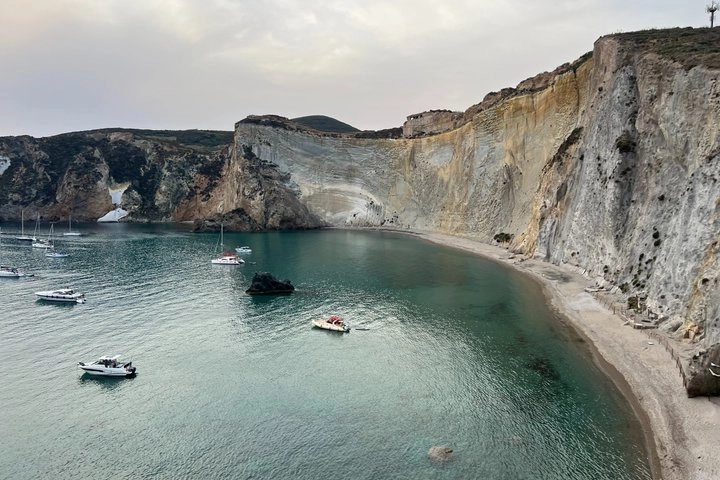
Book a trip where this was filmed — near Italy
Support World On Water
At WeBoating.com, we profoundly acknowledge the unwavering dedication that World On Water invests in crafting each and every video or voyage. Their passion for delivering exceptional ocean content shines through every frame, and it's a labor of love that deserves your attention.
We invite you to watch their captivating videos here and actively engage with their content, including their social media links above. Liking, commenting, and sharing their work goes a long way in fueling their creative fire.
We're also inviting you to explore the gear, sponsorships, and boat partnerships highlighted in the "Luna Rossa Prada Pirelli Launch, Splash and Tow. Vittorio d'Albetas Quantum Sails Italy's Review" video description, or directly on YouTube. By engaging with these offerings or purchasing services and items, you directly support World On Water, their collaborators, and the brands they're associated with.
To ensure you never miss an offshore update, consider visiting their official YouTube Channel to subscribe, like, and join their community directly.
If you have any feedback, corrections, or additional information about World On Water or their videos, please use the comment form below to share your thoughts with us.
Thank you for being a part of our community and supporting the creators we cherish. Your time and support truly matter!
LUNA ROSSA PRADA PIRELLI TEAM
The Luna Rossa team was born in 1997 from the meeting between the entrepreneur Patrizio Bertelli and the Argentine yacht designer German Frers, who proposed them to launch a challenge at the 30th America's Cup in 2000. Since then the team has taken part in five editions of the 'America's Cup, winning the Challenger selection regattas twice - the Louis Vuitton Cup in 2000 and the PRADA Cup in 2021 - and competing in the final in 2007 and 2013. In the final match of the 36th America's Cup presented by PRADA against the Defender Emirates Team New Zealand, the Luna Rossa Prada Pirelli team recorded the best score by an Italian challenger in the history of the America's Cup. Luna Rossa will once again represent the Circolo della Vela Sicilia yacht club in the challenge at the 37th edition of the America's Cup to be held in Barcelona, Spain, in September and October 2024.

World On Water
World On Water (WoW TV / Boats on TV) is the premier weekly sailing news show hosted by Geoff Waller from Sydney Harbour. Explore in-depth coverage of America's Cup, Rolex Sydney Hobart, Vendée Globe, and grand prix regattas.
Channel Information:
Social Media Links:
Luna Rossa Prada Pirelli Launch, Splash and Tow. Vittorio d'Albetas Quantum Sails Italy's Review Location
- Molo Ichnusa, Cagliari, Sardinia, Italy (39.2117,9.1238)
Latest Episodes from World On Water
Explore the most recent voyages. Subscribe to the channel to never miss an update!
Report #2 2027 America’s Cup Naples. The whole picture. Prepared by the World on Water
Please Subscribe if you like our Global Sailing content, Like and Share. It helps us show our content to more sailors. Thank you.
Francesca Clapcich of 11th Hour Racing awarded Winner of 2026 IMOCA Globe Series World on Water
Francesca Clapcich wins the 2026 IMOCA Globe Series championship, becoming the first female sailor to claim the title after an eighth place finish in the Route du Rhum.
The IMOCA Podium 2026 Route du Rhum Guadeloupe World on Water
Corentin Horeau captures IMOCA victory in the 2026 Route du Rhum aboard MACSF, with Boris Herrmann and Élodie Bonafous completing the podium at Pointe-à-Pitre.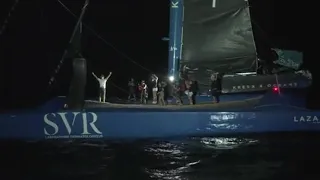
(English) SVR Lazartigue Spectularly Wins Route du Rhum in Record Style. Tom Laperche Champion!
Tom Laperche guides the Ultim multihull SVR Lazartigue across the Route du Rhum finish line off Pointe-à-Pitre, Guadeloupe, establishing a new transatlantic race record of six days, thirteen hours, twenty-seven minutes, and forty seconds.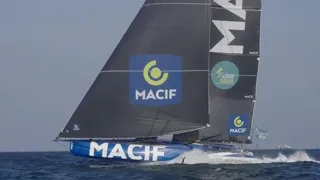
Route du Rhum Fleet Still CRASHING Through the Atlantic Headed West. EXCLUSIVE from World on Water.
The 2026 Route du Rhum turns into a battle of survival across the Atlantic as severe gale-force squalls trigger dismastings, cockpit injuries, and retirements across the IMOCA and Class 40 fleets while leaders push toward Guadeloupe.