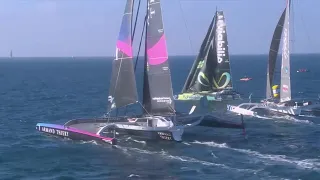
Alinghi Red Bull AC75 Launch, Splash, Tow and Sail.Quantum Sails Italy Vittorio d'Albertas Reviews.
Silvio Arrivabene and the Alinghi Red Bull Racing team marked a milestone moment at their base in Barcelona as Boat 1 completed its launch, splash, harbor tow, and subsequent sea trials. Documenting the campaign’s progression, World On Water followed the sailors, boat builders, and shore crew as they rolled the newly engineered AC75 into the harbor and began initial testing.
The occasion marked the culmination of an intensive design and build cycle. Speaking with the joint reconnaissance team following the official unveiling and an initial harbor spin, technical director Silvio Arrivabene acknowledged the emotional significance of the milestone. He described the achievement as “a bit of a relief after a long journey to build this boat to design and build it” while emphasizing that the sailing team was already focusing on the demanding testing chapter ahead.
Radical Hull Interpretation and Aerodynamic Pod Architecture
When questioned by reconnaissance observers about whether the new AC75 was a radical or conservative build, Arrivabene made the syndicate’s design intentions clear. The team chose an aggressive design path to maximize the parameters of the class rule rather than relying on cautious iterations.
“the plan was not for conservative the plan was to you know explore further this beautiful ac75 rule and um yeah I’d say it’s certainly not on the conservative side”
Unlike rival syndicates that launched boats fitted with legacy components, Alinghi Red Bull Racing entered the cycle as a new challenger without a prior America’s Cup campaign with this boat. As a result, the majority of Boat 1 is completely new. Arrivabene confirmed the vessel carries newly designed four-wing foils, departing sharply from the foil configurations tested on BoatZero.
The foredeck of the AC75 exhibits pronounced aerodynamic bulges, often referred to by pit observers as speed bumps. Arrivabene explained that these deck contours reflect the team’s interpretation of strict bow volume regulations combined with aerodynamic airflow management across the yacht. In addition, the forward crew cockpit features a transparent clear aerodynamic canopy. This enclosure was developed as an experimental fairing to protect the flight controller, who operates extensive electronic systems, while shielding the crew position from wind and maintaining forward visibility.
Harbor Tow Testing and Structural Systems Checks
Following the official christening, Rodney Ardern and the sailing operations team moved Boat 1 onto the water for tow trials behind the syndicate chase boat. The session served to evaluate the yacht’s structural behavior, towline dynamics, and early foil responses across harbor waves.
Ardern noted that watching the AC75 lift free of the water on foils was an exciting milestone for the entire squad. While the sea conditions outside created an uneven surface, the boat responded cleanly to the tow. As Ardern recounted, “the first takeoff was straight into the wave so a little bit challenging but managed to get it up and probably a harder ride on the chase boat than it was on the yacht” while the sailors onboard remained comfortable.
During the towing session, the crew conducted two controlled stops on the water. Technicians and systems specialists boarded the yacht to inspect hydraulic lines, control linkages, and electronic sensors across the platform. With all checks completed down the course and the yacht towed safely back, Ardern confirmed tow testing was ticked off, clearing the platform for sailing trials.
Mainsail Hoisting and Jib Sizing Evaluations
With towing completed, the focus shifted to trial sail hoists inside the harbor basin. The shore team and sailing crew rigged a new mainsail alongside legacy headsails to evaluate geometries and hoist mechanics.
Hoisting and locking in the new mainsail presented a learning curve for the crew, requiring adjustments to stay lengths and rigging lines as the team established new deck procedures. Ardern explained that “we could have done one more jib but the day was dragging on and the guys were confident they got enough information about the sizing of the first two jibs” before concluding the deck checks.
Addressing technical questions regarding the mainsheet arrangement, Ardern confirmed that the system was not a new experiment. Instead, the team retained the identical mainsheet system developed and tested under load on BoatZero. Relying on a tried and tested layout allowed the team to eliminate unnecessary variables and trust a proven system under full sailing tensions.
Maiden Flight Under Canvas and Foiling Maneuvers
The campaign reached a critical peak when helmsman Arnaud Psarofaghis took the controls alongside trimmer Bryan Mettraux for Boat 1’s maiden sail under full canvas off Barcelona. After conducting final onboard electronic and control checks, the sailors built hull speed, sheeted the sails on, and watched the AC75 lift cleanly onto its foils.
Psarofaghis praised the collective effort of the syndicate, stating that the “boat builder designer and shore team did a fantastic job to create this weapon that we have in our hand now” as performance immediately aligned with team expectations.
During the session, the crew executed their first foiling gybe. Psarofaghis acknowledged that maiden maneuvers on a new race boat carry natural challenges, but noted the yacht handled predictably throughout the turn. He credited extensive preparation in the team simulator for making the transition to the water intuitive:
“we did train a lot in the simulator as well so the boat behaved pretty well”
Psarofaghis explained that hundreds of hours in the virtual simulator established vital muscle memory, allowing the sailors to board the live boat with immediate confidence. Comparing Boat 1 to BoatZero, Psarofaghis highlighted that the new platform represents a third-generation evolution specifically tailored for Barcelona’s wave patterns, bearing closer design maturity to Team New Zealand’s Boat 2 than to earlier test platforms.
Hull Flap Retrieval and Post-Trial Wrap-Up
As the sailing session drew to a close, the team paused the yacht on the water when a component fairing along the hull worked loose. Crew members quickly gathered to address the issue before towing the yacht back to the base.
Rather than allowing the fairing to break free or damage the carbon structure, the crew implemented a practical recovery. Psarofaghis explained that “we just decide to hold Jack Taylor by the feet just to remove it instead of losing it” in the water. With the hull flap secured on board, the crew concluded a productive opening phase of trials and returned to the harbor to prepare for upcoming sessions on the race course.
Frequently Asked Questions
Technical director Silvio Arrivabene confirmed the syndicate pursued a radical, non-conservative design, incorporating four-wing foils, aerodynamic foredeck bulges, and a custom protective canopy for the flight controller.
The transparent covering protects the flight controller and complex electronic equipment from aerodynamic drag and spray while maintaining forward visibility.
Rodney Ardern reported that the yacht achieved foiling lift directly into harbor waves, providing a comfortable ride on the yacht while technicians verified onboard systems during planned pauses.
The sailing team retained the mainsheet system from BoatZero because it was a tried and tested setup that had already proven reliable under high mechanical loads during previous testing.
Arnaud Psarofaghis noted that hundreds of simulator hours built muscle memory, allowing the crew to comfortably step onto the live yacht and successfully complete a foiling gybe on day one.
Crew members held Jack Taylor by his feet over the side of the hull to safely retrieve a loose hull flap before it could detach, get damaged, or be lost in the sea.
Book a trip where this was filmed — near Barcelona
Support World On Water
At WeBoating.com, we profoundly acknowledge the unwavering dedication that World On Water invests in crafting each and every video or voyage. Their passion for delivering exceptional ocean content shines through every frame, and it's a labor of love that deserves your attention.
We invite you to watch their captivating videos here and actively engage with their content, including their social media links above. Liking, commenting, and sharing their work goes a long way in fueling their creative fire.
We're also inviting you to explore the gear, sponsorships, and boat partnerships highlighted in the "Alinghi Red Bull AC75 Launch, Splash, Tow and Sail.Quantum Sails Italy Vittorio d'Albertas Reviews." video description, or directly on YouTube. By engaging with these offerings or purchasing services and items, you directly support World On Water, their collaborators, and the brands they're associated with.
To ensure you never miss an offshore update, consider visiting their official YouTube Channel to subscribe, like, and join their community directly.
If you have any feedback, corrections, or additional information about World On Water or their videos, please use the comment form below to share your thoughts with us.
Thank you for being a part of our community and supporting the creators we cherish. Your time and support truly matter!
YouTube has demonetised this channel so if you want us to continue and help us email [email protected] this is after 17 years of uploading over 1,250 videos and weekly uploads since 2008..
Alinghi Red Bull launched their new AC75 Race Boat, took it for a test tow then their first sail.
Interviews and a review by Quantum Design Sail Italy's Vittorio d'Albertas.

World On Water
World On Water (WoW TV / Boats on TV) is the premier weekly sailing news show hosted by Geoff Waller from Sydney Harbour. Explore in-depth coverage of America's Cup, Rolex Sydney Hobart, Vendée Globe, and grand prix regattas.
Channel Information:
Social Media Links:
Alinghi Red Bull AC75 Launch, Splash, Tow and Sail.Quantum Sails Italy Vittorio d'Albertas Reviews. Location
- Alinghi Red Bull Racing Base, Port Vell, Barcelona, Spain (41.3784,2.188)
Latest Episodes from World On Water
Explore the most recent voyages. Subscribe to the channel to never miss an update!
Report #2 2027 America’s Cup Naples. The whole picture. Prepared by the World on Water
World On Water analyzes the 2027 America's Cup in Naples, examining AC75 hydrofoil dynamics, flight control systems, and challenger match-racing tactics.
Francesca Clapcich of 11th Hour Racing awarded Winner of 2026 IMOCA Globe Series World on Water
Francesca Clapcich wins the 2026 IMOCA Globe Series championship, becoming the first female sailor to claim the title after an eighth place finish in the Route du Rhum.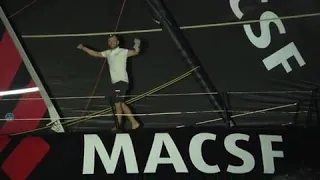
The IMOCA Podium 2026 Route du Rhum Guadeloupe World on Water
Corentin Horeau captures IMOCA victory in the 2026 Route du Rhum aboard MACSF, with Boris Herrmann and Élodie Bonafous completing the podium at Pointe-à-Pitre.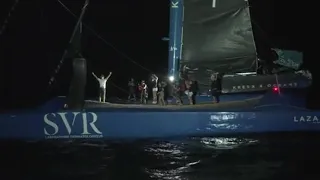
(English) SVR Lazartigue Spectularly Wins Route du Rhum in Record Style. Tom Laperche Champion!
Tom Laperche guides the Ultim multihull SVR Lazartigue across the Route du Rhum finish line off Pointe-à-Pitre, Guadeloupe, establishing a new transatlantic race record of six days, thirteen hours, twenty-seven minutes, and forty seconds.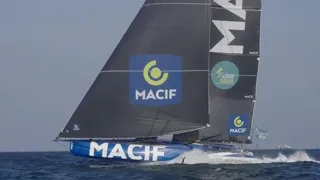
Route du Rhum Fleet Still CRASHING Through the Atlantic Headed West. EXCLUSIVE from World on Water.
The 2026 Route du Rhum turns into a battle of survival across the Atlantic as severe gale-force squalls trigger dismastings, cockpit injuries, and retirements across the IMOCA and Class 40 fleets while leaders push toward Guadeloupe.