Product reviews Smaco, Poclink, magicycle, oleap, topump
Arriving at his family residence in Florida ahead of an upcoming sailing voyage in Malaysia, mariner Sam Holmes of Sam Holmes Sailing sets up a temporary workbench to review newly delivered marine and travel gear. Preparing for long-range cruising requires dependable secondary systems, ranging from hull-cleaning dive gear and reliable ship-to-shore communications to efficient shore transport and tender inflation. Rather than stowing untested equipment directly into boat lockers, Holmes conducts systematic bench evaluations and open-water trials to identify mechanical strengths and real-world limitations.
Across a comprehensive testing session, Holmes unpacks and evaluates five distinct products: an affordable full-face scuba diving mask paired with a miniature tank, push-to-talk cellular walkie-talkies configured with global SIM service, a high-torque step-through electric utility bike, an open-ear noise-cancelling communications headset, and a dual-powered high-pressure stand-up paddleboard inflator. Each piece of hardware is scrutinized for build quality, ease of deployment, and practical utility for liveaboard sailors navigating remote coastal anchorages.
Smaco M8058 Full-Face Dive Mask and 2L Mini Scuba Tank
The primary item on the workbench is the Smaco M8058 full-face scuba mask, designed to integrate regulator breathing directly into a wide-vision tempered glass viewing envelope. For cruising sailors who routinely inspect propellers, scrub fouled hulls, or untangle fouled ground tackle, full-face systems offer distinct visibility advantages over conventional separate mask-and-snorkel combinations. However, cost has historically presented a major hurdle for recreational mariners. Holmes highlights the stark pricing contrast right away:
“Next cheapest full face regulator thing is like $800. So that has got me really interested.”
At approximately $150, the Smaco M8058 introduces an accessible alternative to expensive commercial diving regulators. Holmes unpacks the mask alongside a matching high-pressure 2L mini dive tank finished in bright protective coloring. While the tank arrives with an insulated zippered storage case, Holmes discovers an immediate design flaw in the packaging integration. Because the first-stage regulator is permanently combined into the main tank valve assembly, the cylinder cannot be stowed inside the case once assembled. As Holmes notes during the bench inspection:
“The dive tank does not fit in the case with the regulator on it.”
Beyond the case limitation, the hardware kit includes both standard yoke and DIN cylinder adapters, enabling mariners to refill the 2L mini tank from conventional scuba cylinders found worldwide. The mask features five adjustable harness straps with an integrated quick-release mechanism for emergency removal, dual one-way purge valves to clear inadvertent water intrusion, a secondary port suited for underwater communications, and a modular bracket for mounting action cameras.
Taking the assembled rig to open water for underwater trials, Holmes tests the breathing envelope beneath the surface. Navigating without an initial snorkel depleted early air supply, yet the full-face seal performed reliably once submerged. Holmes summarizes the dive parameters and sensations directly:
“Once I got over there, I dove down to 40 ft.”
“It was pretty cool being able to breathe through my mouth or my nose and not have a regulator in my mouth.”
Although the compact 2L volume provides limited bottom time compared to a full-sized standard diving cylinder, the mask demonstrated that cruising sailors can accomplish short-duration underwater maintenance tasks without fighting jaw fatigue or water leakage around facial hair.
Poclink Cellular Walkie-Talkies for Offshore and Shore Comms
Transitioning from diving gear to mobile electronics, Holmes unboxes a pair of Poclink handheld push-to-talk communicators. Unlike traditional marine VHF transceivers that broadcast over shared public channels and line-of-sight radio waves, the Poclink units operate across public cellular networks utilizing pre-installed SIM cards with international data access.
Inspecting the hardware reveals several user-friendly features reminiscent of classic electronics design. The radios feature removable lithium battery packs, allowing mariners to swap power cells in the field, alongside modern USB-C charging receptacles. Upon initial power-up, the radios automatically paired over the cellular network within three to four minutes without complex manual programming.
Testing audio fidelity and network latency, Holmes verifies the onboard speaker volume, which verbally announces output steps up to volume level 3. Voice transmissions across cellular networks introduce minor data buffering compared to direct analog radio, leading Holmes to observe:
“There seems to be a bit of a delay.”
Despite the slight transmission pause, the units deliver clean, intelligible audio. Holmes performs a practical field radio check simulating coordination tasks:
“Do you have a visual on the Walmart?”
“This is 19 core. I have a visual on the entrance to the Walmart. Right turn ahead over.”
In a cruising context, these cellular communicators provide functional utility for buddy-boating vessels cruising within coastal cell coverage or for crew members coordinating shore provisioning runs back to an anchored vessel. Because communications remain private and do not monopolize VHF calling or local working frequencies, they serve as a practical secondary channel when mobile network towers are within range.
Magicycle Ocelot Pro 2.0 Step-Through E-Bike Field Bench Test
For shore-side transportation and provisioning runs across island anchorages, electric bicycles provide essential mobility. Holmes unpacks the Magicycle Ocelot Pro 2.0, a compact utility electric bike shipped in packaging illustrated with mountain artwork. Assembled at the Florida workshop, the bicycle features an eye-catching satin purple finish with subtle metallic sparkle, tailored as a stable step-through transport option for his mother to replace an older white electric bike.
The mechanical and electrical build of the Ocelot Pro 2.0 incorporates several high-utility components designed for heavy-duty riding. The frame features front suspension forks to absorb road imperfections, wide fat tires for traction on loose gravel and sand, integrated front headlights, rear cargo racks with functional brake taillights, full coverage fenders, and hydraulic oil disc brakes for positive stopping power. Handlebar controls feature ergonomic click-button gear shifters, a responsive twist throttle, an integrated warning bell, and a vibrant color digital display.
The critical technological distinction of the Ocelot Pro 2.0 is its integrated bottom-bracket torque sensor, which measures rider pedaling force rather than basic cadence rotations. Holmes tests power delivery on open pavement, verifying acceleration curves and top speeds across 7 selectable pedal assist modes:
“That is showing 999 watts. 24 seems to be about the max speed.”
“It is just like a nice smooth transition. It is not really trying to out pedal me.”
Testing the bike on moderate uphill climbs, Holmes observes that pedal assist mode 1 delivers mild motor support, while modes 3, 4, and 5 provide substantial power assistance to climb grades without excessive rider strain. The low center of gravity and step-through geometry make the frame accessible and confidence-inspiring for daily provisioning rides around coastal harbors.
Oleap P200b Pro Open-Ear Headset and Wind Noise Bench Test
Clear audio recording and hands-free voice communication are continuous operational challenges on open water, where persistent breezes routinely overwhelm standard microphones. Holmes unpacks the Oleap P200b Pro, a wireless open-ear headset engineered with 50 dB environmental call noise cancellation.
Finished in a tactile rubberized metallic purple-and-black chassis, the headset utilizes an over-ear hanging architecture rather than invasive silicone ear tips that seat inside the auditory canal. Three physical tactile buttons control playback, call answering, and volume adjustments. By keeping the ear canal open, the device allows mariners to maintain acute situational awareness of engine sounds, wind shifts, and navigation alarms while participating in phone calls or shipboard recording.
Holmes conducts an audio benchmark, switching from an iPhone built-in microphone to the Oleap boom microphone to assess voice clarity and wind rejection. While the short boom microphone rests along the cheek rather than directly in front of the mouth, the integrated processing actively filters background buffeting, offering mariners an effective tool for offshore phone calls and engine-room communication.
Topump TPS300 20 PSI SUP and Dinghy Air Pump
The final piece of equipment tested on the bench is the Topump TPS300 high-pressure electric inflator, a dedicated air compressor designed for stand-up paddleboards, inflatable tenders, and water toys. Despite shipping in a heavily battered cardboard carton, the inflator hardware emerged completely undamaged.
Cruising vessels rely heavily on inflatable watercraft, yet manual dual-action hand pumps demand exhausting physical effort under tropical heat. The TPS300 addresses this need with an internal compressor rated to deliver up to 20 PSI of air pressure, sufficient to achieve rigid operating pressure on modern drop-stitch paddleboards.
A notable operational strength of the Topump unit is its dual-charging capability. While many economy inflators operate exclusively on direct 12V vehicle cords, the TPS300 features a built-in storage nook for its 12V direct current vehicle and boat accessory plug, alongside standard AC wall power charging and a USB port. An integrated elastic strap secures inflation hoses and nozzle fittings directly to the housing.
Concluding the testing session, Holmes tidies the workshop bench in preparation for his return to Southeast Asian waters:
“Next video I will be back on the boat sailing in Malaysia.”
Tested Cruising Gear Specifications and Bench Metrics
| Product Tested | Equipment Category | Bench Specifications & Field Data |
|---|---|---|
| Smaco M8058 & 2L Tank | Scuba Diving Apparatus | $150 unit cost tested against $800 alternatives; submerged to 40 ft depth |
| Poclink Cellular Walkie-Talkies | Handheld Push-to-Talk Communicators | Tested audio volume level 3 with integrated SIM network |
| Magicycle Ocelot Pro 2.0 Step-Through | Electric Cargo Utility Bike | 999 watts peak power on display, 24 mph top speed, 7 assist modes |
| Oleap P200b Pro Over-Ear Headset | Wireless Audio Headset | 50 dB call noise cancellation rating with 3 physical control buttons |
| Topump TPS300 SUP Air Pump | Portable High-Pressure Inflator | 20 PSI maximum output rating with 12V direct current vehicle and boat plug |
Frequently Asked Questions
Sam Holmes notes that the Smaco M8058 full face dive mask retails for approximately $150, whereas alternative full face scuba regulators typically cost around $800.
Holmes dove down to a depth of 40 ft using the Smaco full face mask paired with a 2L mini dive tank during his open-water test in Florida.
During bench and throttle testing, the Magicycle Ocelot Pro 2.0 display registered a peak output of 999 watts and reached a top speed of 24 mph across its 7 pedal assist levels.
Cellular walkie-talkies provide push-to-talk communication over cellular networks without congesting marine VHF radio frequencies, making them practical for buddy boating or communicating between shore and an anchored vessel.
The Topump TPS300 inflator features dual power options, charging from standard household AC wall outlets as well as 12V DC vehicle or vessel accessory sockets.
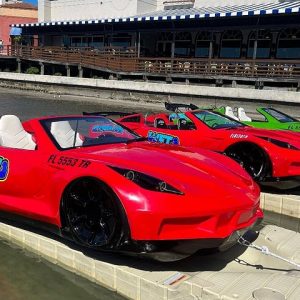
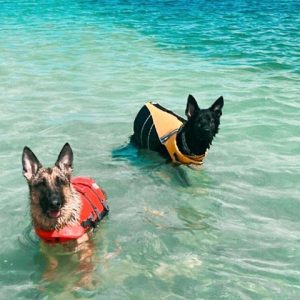
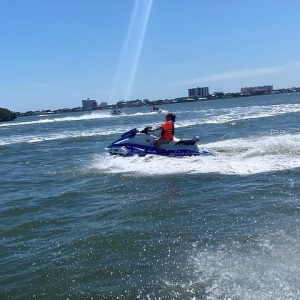
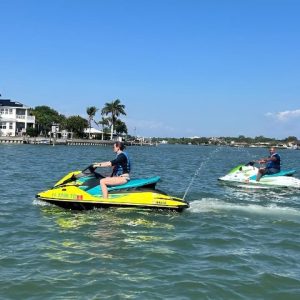
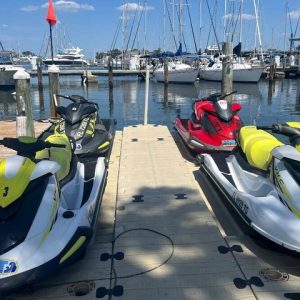
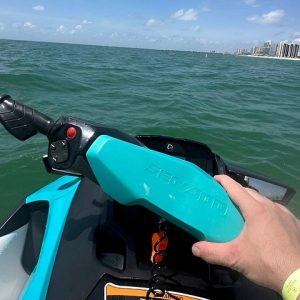
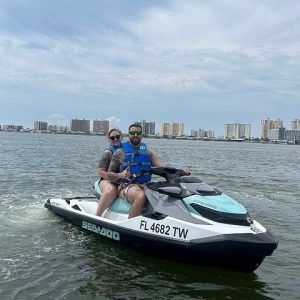
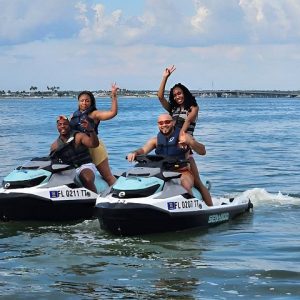
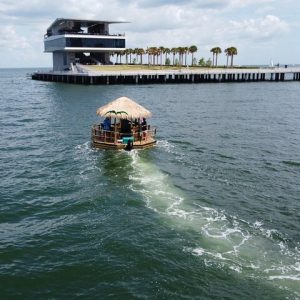
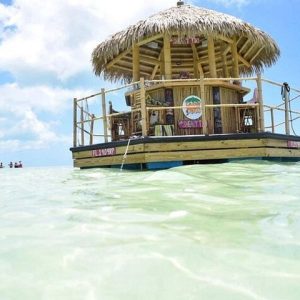
Book a trip where this was filmed — near St Petersburg

Support Sam Holmes Sailing
At WeBoating.com, we profoundly acknowledge the unwavering dedication that Sam Holmes Sailing invests in crafting each and every video or voyage. Their passion for delivering exceptional ocean content shines through every frame, and it's a labor of love that deserves your attention.
We invite you to watch their captivating videos here and actively engage with their content, including their social media links above. Liking, commenting, and sharing their work goes a long way in fueling their creative fire.
We're also inviting you to explore the gear, sponsorships, and boat partnerships highlighted in the "Product reviews Smaco, Poclink, magicycle, oleap, topump" video description, or directly on YouTube. By engaging with these offerings or purchasing services and items, you directly support Sam Holmes Sailing, their collaborators, and the brands they're associated with.
To ensure you never miss an offshore update, consider visiting their official YouTube Channel to subscribe, like, and join their community directly.
If you have any feedback, corrections, or additional information about Sam Holmes Sailing or their videos, please use the comment form below to share your thoughts with us.
Thank you for being a part of our community and supporting the creators we cherish. Your time and support truly matter!
Smaco
https://www.smacodive.com/product/smaco-m8058-scuba-diving-full-face-mask-respiratory-masks-diving-equipment/?ref=samholmessailing
Walkie talkie
https://poclink.com/?srsltid=AfmBOoo02IEv3UaF4yXH3dHs6GFNXEM89DGHllnkPzJ5_iU5SWzd4kcE
Ebike
https://www.magicyclebike.com/products/magicycle-ocelot-pro-2-0-torque-sensor
Headset
https://www.oleapai.com/products/open-ear-headphones-with-noise-cancelling-mic-bluetooth-5-3-oleap-p200b-pro
Pump
topump.net

Sam Holmes Sailing
From crossing the Pacific in a 23ft Ranger to navigating a 43ft catamaran through the Malacca Strait, Sam Holmes defines the technical grit of solo-turned-duo voyaging.
Channel Information:
Social Media Links:
Product reviews Smaco, Poclink, magicycle, oleap, topump Location
- St. Petersburg, Florida - Equipment Bench & Water Testing (27.767,-82.633)
Latest Episodes from Sam Holmes Sailing
Explore the most recent voyages. Subscribe to the channel to never miss an update!
Sailing 650nm to the Pacific Island Nation of Palau
Sam Holmes navigates a 650-nautical-mile passage from Sorong, Indonesia, to Palau aboard his catamaran, dropping anchor against severe reef currents before diving historic wrecks and encountering giant manta rays.
Catamaran vs monohull after 1.5yrs on catamaran
Sam Holmes and Alene break down thousands of miles of catamaran cruising across Micronesia, discussing bridge deck slamming, engine repairs, and upcoming New Zealand plans.
Hundreds of miles of rough sailing only to be turned away from our dream destination
Sam Holmes tackles a grueling 450nm upwind passage across the Halmahera Sea to Raja Ampat, navigating fouled anchors, heavy seas, and sudden conservation permit closures.
Making big miles offshore sailing through Indonesia
We depart Manado to scuba dive the pristine Indonesian reefs of the outer islands. Ann-Elin eats the world’s smallest banana. A boat ties up and its crew let themselves onboard. The tide strands us high and dry during a scuba tank filling run. We temporarily overstay our visa due to a processing pro...
Celebes sea. A long slow 500nm passage through the doldrums.
We depart Maratua Indonesia for a long and slow 500 mile passage across the Celebes Sea to Manado Indonesia. During the long glass calm periods I do some work on our engines and damaged dagger boards. After finally repairing the dagger board we snap the other board in half creating more work for the...