
The Most Expensive Canal In the World!!! S09E21
Departing a remote anchorage off the Greek island of Kythnos, Jordan and Desiree of Sailing Project Atticus steered their 40-foot cutter Atticus II west across the Aegean Sea. Bound for Montenegro to reset their Schengen visas before sailing across the Mediterranean, the crew aimed for a direct shortcut across mainland Greece via the Corinth Canal.
With high summer temperatures settling across the Aegean, the initial passage required balancing long watches against intense heat. Desiree managed severe morning sickness during her ninth week of pregnancy, resting below deck with their young daughter Isabella while Jordan tended the helm through active shipping lanes.
Motoring the Aegean Shipping Corridors to Poros
The passage began with light air, forcing Atticus II to motor across calm waters for about 6 hours. Heavy commercial maritime traffic crowded the approaches toward Athens, where major shipping lanes converge for vessels routing toward Istanbul, the Aegean, and the Black Sea. Jordan maintained constant watch on the helm as hazy, muggy conditions settled over the water. When a light breeze finally developed, the crew hoisted sails to relieve the diesel engine before the wind faded back into oppressive summer heat.
Approaching the narrow channel that separates the island of Poros from mainland Greece, the crew evaluated their anchoring options. Poros town presented dense congestion, its harbor packed with charter boats. Seeking relief from the crowded fleet, Jordan motored past the waterfront and dropped anchor in a quiet, protected bay 5 nautical miles outside of town.
High Summer Temperatures and Anchor Life
At 8:00 the following morning, the enclosed bay offered total protection but little relief from the regional heat wave. The still water held warmth, driving cabin temperatures up in the absence of wind. Jordan lowered the dinghy to take their dog Oso ashore for exercise and a swim, noting that the dog had gone 2 days without walking on land. The early timing allowed Desiree to step ashore before 9:00, when her morning sickness typically intensified.
The severe conditions prompted Jordan to reflect on vessel cooling systems. While installing marine air conditioning would offer comfort, running AC at anchor demanded an impractical volume of power and battery reserves for their cruising setup. Rather than overhaul the electrical system, the crew relied on shaded cockpit spaces, sea swims, and personal endurance to navigate the high summer weather.
Family Reunions and Crew Support in Athens
Planning ahead for the offshore miles toward Montenegro, the crew took the passenger ferry into Athens for two key rendezvous. Jordan and Isabella first met Jordan’s childhood friend Josh from Santa Cruz County, California, who was visiting Athens during a Mediterranean cruise with his partner Melissa and daughter Mila. Jordan and Josh, longtime friends from high school film projects they termed “The Brotherhood,” reunited inside the Acropolis Museum while Desiree rested outside with sleeping Isabella. The families shared lunch before Josh returned to his cruise ship.
The following day, Jordan and Isabella returned to the ferry terminal in Piraeus to welcome Desiree’s mother Xiomara, known affectionately as Ciara and Abuelita. She boarded the ferry for the two-and-a-half-hour return journey to Poros to join the boat for the next couple of weeks. With Desiree weakened by pregnancy nausea and a cold that developed after Athens, having her mother aboard provided vital support. Stepping onto the deck of Atticus II underway in the Saronic Gulf for her first sailing passage, Xiomara smiled at the sun, remarked “I could live here,” and joked: “Where are we going?”
Approaching the Isthmus of Corinth
Setting course northwest across the Saronic Gulf toward the Isthmus of Corinth, the crew monitored charts that noted an active naval mine laying practice area. Crossing the gulf without incident, Atticus II arrived outside the eastern canal entrance, dropping anchor in refreshing winds that finally cooled the vessel.
Jordan went ashore by tender to the canal administration office to register the vessel and pay the transit fee. Passage through the 4-mile waterway cost $236, making the passage the most expensive canal transit per nautical mile on the globe. After settling the account, Jordan returned to the boat to stand by for approximately 20 minutes while awaiting traffic clearance. Operating without locks, the narrow cutting permits only one-way convoy traffic, alternating direction once each group of vessels completes the transit.
Navigating Between 260-Foot Vertical Rock Cuts
Canal traffic control signaled the westbound convoy to enter, and Atticus II motored into the narrow rock trench. Jordan aligned the bow between sheer limestone cliffs rising 260 feet above the water. A steady headwind and countering current pushed against the hull, requiring active helm corrections to keep the cutter centered in the narrow trench. Jordan allowed toddler Isabella to place her hands on the wheel, sharing the helm as the family took in the unusual canyon perspectives.
Jordan detailed the ancient history of the crossing, explaining that ancient mariners hauled vessels across the isthmus along the paved stone trackway known as the Diolkos as early as the 6th century BCE. Although Roman Emperor Nero broke ground with a ceremonial golden shovel, excavation stalled after his death, leaving the route uncompleted for almost another 2,000 years until engineers formally opened the waterway in 1893. By providing a sea-level cut through the isthmus, the 4-mile canal saves cruising boats nearly 400 nautical miles around the southern Peloponnese peninsula. Observing the rock cut from the cockpit, Xiomara called out: “Look at the little caves over there”.
Full Throttle Demands from Canal Traffic Control
As Atticus II maintained cruising speed through the central section of the canal, a larger motor yacht closed the distance rapidly from behind. Canal traffic controllers monitored the convoy closely to maximize vessel throughput, and Jordan’s VHF radio suddenly crackled with a direct call from the canal authority.
Jordan answered the call: “This is sailing vessel Atticus 2 go ahead”. The traffic controller issued an immediate directive: “increase your speed please increase your speed”. Jordan promptly acknowledged the instruction: “Copy that increasing our speed”, and advanced the throttle. When the authority radioed back urging even more speed to accommodate the following vessel, Jordan confirmed the mechanical limits of their diesel: “This is Atticus 2 this is Full Throttle for us I repeat this is our top speed”. Running at maximum power against the current, Atticus II cleared the western cutting smoothly and emerged into the wide waters of the Gulf of Corinth.
| Metric | Value | Detail |
|---|---|---|
| Canal Trench Length | 4 miles | Sea-level cut through the Isthmus of Corinth |
| Limestone Wall Height | 260 feet | Vertical rock cutting flanking the transit channel |
| Route Distance Saved | 400 nautical miles | Bypass distance avoiding passage around Peloponnese |
| Canal Opening Year | 1893 | Completed almost 2,000 years after ancient Roman attempts |
| Atticus II Transit Cost | $236 | Official one-way toll paid at the canal office |
| Convoy Standby Time | 20 minutes | Waiting period for opposing eastbound convoy to clear |
Frequently Asked Questions
Jordan paid $236 at the canal authority office to transit the 4-mile Corinth Canal aboard their 40-foot cutter Atticus II, ranking it among the most expensive waterways per nautical mile in the world.
Because the Corinth Canal is a narrow sea-level ditch without locks, traffic moves in alternating one-way convoys. Vessels wait at anchor while opposing ships clear the cut before proceeding in sequence.
Transiting the Corinth Canal cuts across the Isthmus of Corinth and saves sailing vessels nearly 400 nautical miles compared to navigating around the southern Peloponnese peninsula.
Jordan evaluated the electrical demands and determined that running air conditioning at anchor would require an impractical amount of battery capacity and solar generation for their setup.
Desiree’s mother Xiomara joined the crew in Athens to assist with childcare for Isabella and boat operations while Desiree experienced severe morning sickness at 9 weeks pregnant and recovered from a cold.
Canal authorities radioed Atticus II to increase speed because a motor yacht was closing in from behind. Jordan confirmed over VHF radio that the sailboat was already running at full throttle and maximum engine output.
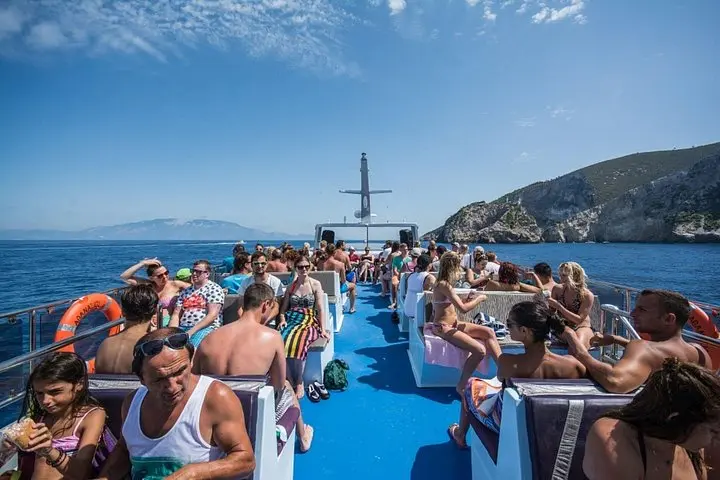
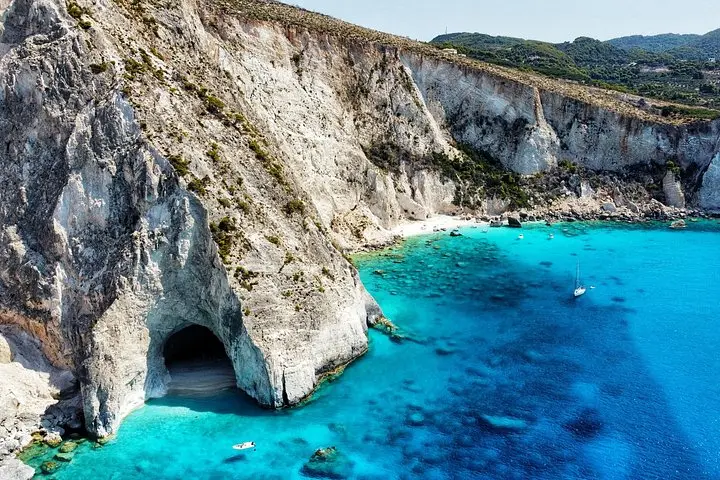
Book a trip where this was filmed — near Zakynthos
Support Sailing Project Atticus
At WeBoating.com, we profoundly acknowledge the unwavering dedication that Sailing Project Atticus invests in crafting each and every video or voyage. Their passion for delivering exceptional ocean content shines through every frame, and it's a labor of love that deserves your attention.
We invite you to watch their captivating videos here and actively engage with their content, including their social media links above. Liking, commenting, and sharing their work goes a long way in fueling their creative fire.
We're also inviting you to explore the gear, sponsorships, and boat partnerships highlighted in the "The Most Expensive Canal In the World!!! S09E21" video description, or directly on YouTube. By engaging with these offerings or purchasing services and items, you directly support Sailing Project Atticus, their collaborators, and the brands they're associated with.
To ensure you never miss an offshore update, consider visiting their official YouTube Channel to subscribe, like, and join their community directly.
If you have any feedback, corrections, or additional information about Sailing Project Atticus or their videos, please use the comment form below to share your thoughts with us.
Thank you for being a part of our community and supporting the creators we cherish. Your time and support truly matter!
Let our sponsor BetterHelp connect you to a therapist who can support you - all from
the comfort of your own home. Visit https://betterhelp.com/atticus and enjoy a
special discount on your first month.
If you have any questions about the brand relating to how the therapists are licensed,
their privacy policy, or therapist compensation model, check out this FAQ:
https://www.betterhelp.com/your-questions-answered/
Something that most people don’t realize about sailing the world is that the surface of the open ocean is a relatively desolate place. Don’t get me wrong, it can be beautiful, but for the vast majority of the time its just a whole lotta blue… or grey. Now typically our goal of sailing through open ocean is to arrive at beautiful and exotic destination. But this week the journey is definitely more important than the destination because we’re going to be sailing through the Corinth Canal, a man made ditch that cuts through 260 foot tall hills in the heart of Greece.
The word ditch makes it sound way less cool than it actually is. We’ll be cruising through a super narrow waterway with cliffs extending straight up on either side. It’s one of the coolest experiences we’ve had while sailing the world and I’m super stoked to take you along for the ride. Now for the past couple of weeks we’ve been sailing across the Aegean Sea on our way to Montenegro where we need to recharge our Schengen Visa before sailing the rest of the way across the Mediterranean. But this week our story begins in a small remote anchorage off the Greek island of Kythnos.
[ SUPPORT OUR VIDEOS - PATREON ]
Hop over to our Patreon Page where our biggest fans help make these videos possible.
https://www.patreon.com/ProjectAtticus
[ MAKE A ONE TIME CONTRIBUTION ]
http://bit.ly/2Mg0GCN
[ MERCH ]
https://www.projectatticus.com/support
[ SAILING GEAR WE LOVE ]
Sunglasses: https://shrsl.com/35iim Discount Code HPATTICUS
Dinghy: https://www.highfieldboats.com/ultralite-290/
Boom, Furler, Whisker Pole: https://bit.ly/2DfSqPw
Sails: https://www.precisionsailloft.com/
Primary Anchor: https://www.mantusmarine.com/
Edson Marine Emergency Pump: https://edsonmarine.com/
Weather Forecasting: https://www.predictwind.com/affiliate/atticus
Keen Footwear: http://bit.ly/2GSEMjt
[ MUSIC ]
Epidemic Sound

Sailing Project Atticus
From restoring a 1963 Allied Seawind to building an off-grid mountain home, Jordan and Desiree of Project Atticus define the modern DIY adventure.
Channel Information:
Social Media Links:
The Most Expensive Canal In the World!!! S09E21 Location
- Corinth Canal, Greece (37.927,22.983)
Latest Episodes from Sailing Project Atticus
Explore the most recent voyages. Subscribe to the channel to never miss an update!

Atticus II FOR SALE – Ultimate Bluewater Cruiser
If you're interested in buying Atticus II checkout the listing here: Four years ago, after years of cruising the Caribbean on a very small boat, Desiree and I set out to find the perfect used Bluewater boat. We traveled up and down the US East Coast, interviewed experts, and got to see a ton...
We’re Ending It All & Moving Home (Not Clickbait)
Travel better with better coffee. Head to and save 20% off your order! Thanks to AeroPress for sponsoring today’s video! Jordan and I have been attempting to sail around the world for 10 years now, and we live an exceptional life which we’re so grateful for. We sail across oceans in our safe and b...
War in a Mediterranean Paradise | S09E26
Start speaking a new language in 3 weeks with Babbel 🎉. Get up to 60% OFF your subscription ➡Here: Sailing to beautiful remote anchorages and exploring small Mediterranean towns has been our MO for the past couple of months as we’ve island hopped our way through much of Turkey and Greece. But afte...
I Feel So Alone… | S09E25
Thanks to Lumen for sponsoring! To get 15% off go to and start improving your health today. Sailing the world as a family has been extremely rewarding but it’s also been insanely difficult at times. Last week we sailed into one of the most stunning places in the Mediterranean. The Bay of Kotor in ...
48 Hours Offshore – Mediterranean’s Most Beautiful Landfall | S09E24
Let our sponsor BetterHelp connect you to a therapist who can support you - all from the comfort of your own home. Visit and enjoy a special discount on your first month. If you have any questions about the brand relating to how the therapists are licensed, their privacy policy, or therapist compen...