We Finally Stopped Rushing… Life Aboard Got Quiet
After a week of illness swept through the crew aboard Sailing Big Lost, daily life at Tahiti’s Airport Anchorage slowed down. While neighboring cruising boats began scattering back toward the Tuamotus, the family chose to pause and regroup. Instead of rushing to keep pace with the fleet, they enjoyed quiet days watching turtles swim past the hull, playing games, and completing small chores before crossing over to Moorea.
Cruising routines in the anchorage brought both community and minor obstacles. Sleepovers with neighboring cruising boats were arranged by dinghy, with daughter Maddie heading to shore in foul weather gear. However, an attempted dinghy run into town had to be called off due to heavy chop and strong tidal current in the lagoon. As Connor observed after turning the small tender back toward the catamaran, “Our dinghy is just too small to battle big waves and current.”
With cruising season progressing and plans underway to leave the boat in French Polynesia for a month while flying home to the United States—their first trip back in more than two years—the family focused on getting Big Lost shipshape.
Departing Tahiti Airport Anchorage
Departing the Airport Anchorage in Tahiti requires clear coordination with aviation traffic control. Because the navigation channel passes directly across the extended runway threshold of Tahiti’s International Airport, vessels must contact Port Authority via VHF radio to request crossing clearance before proceeding toward the Papeete Marina channel.
Big Lost hailed the port controllers as the catamaran reached the midpoint of the airfield, requesting clearance to cross in roughly 20 minutes. As an incoming aircraft approached, the port controller gave clear instructions: “The runway position you are right now. You stop everything they call you back. Do you copy?”
Connor immediately brought both engines to idle and acknowledged over the radio: “I copy. I have stopped. Full stop. Standing by.”
Once the flight landed and clearance was granted, the catamaran motored through the pass and out into open water.
Crossing to Moorea and Spotting Whales
The passage between Tahiti and Moorea covers a distance of 20 nautical miles toward Moorea. With near-calm wind conditions, the crew kept the diesel engines running to power across the channel. Without a tight passage deadline or an overnight schedule to meet, the family relaxed on deck as the high volcanic peaks of Moorea grew steadily larger on the horizon.
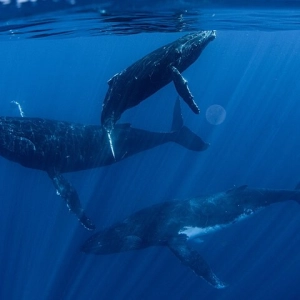
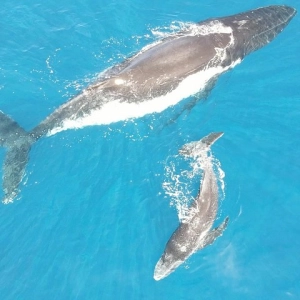
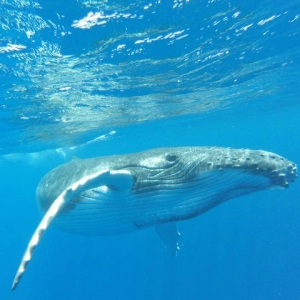
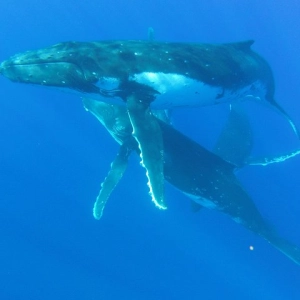
Midway through the crossing, humpback whales surfaced right in the vessel’s path, blowing spouts off the bows. Swimming with humpback whales had been a top goal for the family since arriving in French Polynesia, and seeing them surface in open water confirmed that the pods were active in the waters surrounding Moorea.
Measuring and Calibrating the Anchor Chain
Once tucked safely behind the reef under the mountains of Moorea, the crew tackled an essential maintenance job: recalibrating the ground tackle. In a few weeks, the family plans to move Big Lost south to Phaeton Bay, where she will sit on anchor for a month under the care of a local boat sitter while the family travels back to the United States. Knowing the precise scope deployed on the seabed is vital for leaving the vessel safely unattended.
The electric chain counter had failed earlier after the anchor chain backed up against the windlass, knocking off the counting magnets. To resolve the discrepancy, Connor hopped into the water with a 100-foot measuring tape to physically verify the rode. While exactly 100 feet of chain had been fed out into the water, the digital chain counter display read only 50 feet. Armed with the true manual measurement, the crew recalibrated the instrument display and planned a more secure mounting location for the magnets to keep them from being knocked off during future chain jams.
Dinghy Errands and Watermaker Troubleshooting
Living on the hook in Moorea meant running all domestic errands by tender over the shallow coral bommies. The crew made the trip across the lagoon to an office dock, paying a 5-dollar disposal fee to drop off a bag of trash before heading off to pick up groceries. Transporting provisions, balancing full bags into the dinghy, and handing supplies up to the deck completed the routine provisioning run.
Back aboard the catamaran, an unexpected equipment failure disrupted the quiet afternoon. The vessel’s Schenker watermaker shut down abruptly due to a high-pressure block. Fresh water self-sufficiency is critical while living at anchor, particularly ahead of a month-long haulout or unattended mooring. Connor and the crew remarked on the untimely hiccup: “Because apparently Big Lost didn’t get the memo that this was supposed to be our slow week.”
Working in the forward sail locker compartment, the crew manually released all residual pressure from the reverse-osmosis system, cleared the high-pressure lock, and restarted the pump cycle. The pressure valve adjusted as the system came back up to normal working pressure, and production settled steadily at 102 liters per hour. Relieved that the desalinator was functioning properly again, the crew left the sail compartment hatch unlatched for observation while settling in to enjoy their remaining days in Moorea.
Voyage and Maintenance Metrics
| Parameter | Recorded Detail |
|---|---|
| Tahiti to Moorea Distance | 20 nautical miles |
| Manual Chain Measurement | 100 feet |
| Uncalibrated Counter Reading | 50 feet |
| Shore Trash Disposal Fee | 5 dollars |
| Watermaker Output Flow | 102 liters per hour |
| Planned Absence Duration | 1 month |
Frequently Asked Questions
Vessels departing Airport Anchorage in Tahiti must cross the extended runway path of the international airport, requiring radio permission from Port Authority to ensure airplanes have safe clearance.
The passage between Tahiti and Moorea is approximately 20 nautical miles toward Moorea.
The chain backed up on the windlass and knocked off the magnetic sensors that track revolutions, causing the counter to show 50 feet when 100 feet of chain was actually deployed.
The watermaker suffered a high-pressure block. The crew depressurized the system, executed a restart, and verified output returned to normal at 102 liters per hour.
The boat will be anchored down at Phaeton Bay in Tahiti for about a month under the supervision of a boat sitter.
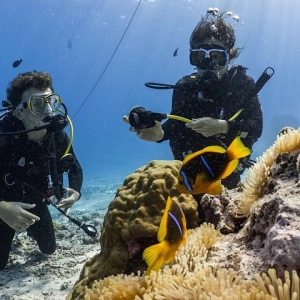
Book a trip where this was filmed — near Tahiti
Support Sailing Big Lost
At WeBoating.com, we profoundly acknowledge the unwavering dedication that Sailing Big Lost invests in crafting each and every video or voyage. Their passion for delivering exceptional ocean content shines through every frame, and it's a labor of love that deserves your attention.
We invite you to watch their captivating videos here and actively engage with their content, including their social media links above. Liking, commenting, and sharing their work goes a long way in fueling their creative fire.
We're also inviting you to explore the gear, sponsorships, and boat partnerships highlighted in the "We Finally Stopped Rushing… Life Aboard Got Quiet" video description, or directly on YouTube. By engaging with these offerings or purchasing services and items, you directly support Sailing Big Lost, their collaborators, and the brands they're associated with.
To ensure you never miss an offshore update, consider visiting their official YouTube Channel to subscribe, like, and join their community directly.
If you have any feedback, corrections, or additional information about Sailing Big Lost or their videos, please use the comment form below to share your thoughts with us.
Thank you for being a part of our community and supporting the creators we cherish. Your time and support truly matter!
After nearly two years of always moving toward the next island, the next passage, the next boat project, or the next deadline… life aboard Big Lost finally got quiet.
After a week of almost everyone onboard being sick, slowing down was exactly what we needed. Our cruising friends are starting to scatter back toward the Tuamotus, but for once, we aren't following. Instead, we're enjoying some quiet family time aboard Big Lost before making the short crossing from Tahiti to Moorea.
And honestly, this slower pace feels pretty good.
In this episode, the kids soak up their last few days with friends, we settle into the ordinary rhythms of life at anchor, finally move Big Lost after weeks at Tahiti's Airport Anchorage, spot humpback whales on our way to Moorea, and tackle all the little jobs that are simply part of cruising life—from long dinghy rides for groceries and trash to measuring our anchor chain and troubleshooting a watermaker that suddenly doesn't want to cooperate.
But there's a reason we're starting to prepare Big Lost.
For the first time since moving aboard, we're getting ready to leave her behind while we fly home to the U.S. for a month. Before that happens, we have one more adventure planned in Moorea: getting in the water with humpback whales.
Thanks for coming along with us. ❤️
⛵ **GEAR WE USE ABOARD BIG LOST**
See the cruising, sailing, camera and everyday gear we actually use aboard Big Lost:
sailingbiglost.com
❤️ SUPPORT SAILING BIG LOST
Want to help us keep sharing the journey? Find ways to support Big Lost, including Patreon and more:
sailingbiglost.com/support-the-journey
Some links on our website are affiliate links, which means we may earn a small commission if you purchase through them, at no additional cost to you. It helps support Sailing Big Lost and allows us to keep making these videos.
Thanks for watching and being part of the Big Lost crew.
0:00 Life Finally Slows Down
0:30 Life With Cruising Friends
3:02 Quiet Family Time at Anchor
4:48 Preparing to Leave Tahiti
5:41 Leaving Tahiti’s Airport Anchorage
8:21 Crossing to Moorea
9:09 Whales!
9:54 Arriving in Moorea
10:52 Preparing Big Lost to Be Left Behind
12:26 Errands by Dinghy
16:03 Our Watermaker Stops Working
18:05 A Few Quiet Days in Moorea
18:36 Thank You, Patrons ❤️
#SailingBigLost #SailingFamily #BoatLife

Sailing Big Lost
Sailing Big Lost follows Conor, Kelly, Finn, and Maddie Malone from Sun Valley, Idaho, living full-time aboard their South African Vision 444 ES catamaran, Big Lost. In 2026, their channel documents transiting the Panama Canal, completing a 3,000-mile Pacific crossing, diving Tuamotu atolls, and raising teenagers offshore.
Channel Information:
Social Media Links:
We Finally Stopped Rushing… Life Aboard Got Quiet Location
- Airport Anchorage, Tahiti (-17.555,-149.615)
- Moorea Anchorage (-17.49,-149.835)
Latest Episodes from Sailing Big Lost
Explore the most recent voyages. Subscribe to the channel to never miss an update!

The Ordinary Days Are the Ones We’ll Remember ❤️ #Shorts
Not every day sailing the world is an adventure. Some days it’s homeschooling, boat chores, baking, board games, and spending time with friends. These are the ordinary moments of raising a family aboard a sailboat in French Polynesia. And they might just be the ones we remember most. We’re Sailing...
What Living on a Sailboat Is REALLY Like ⛵ #sailingfamily
Living on a sailboat isn’t all beautiful anchorages and sunset sails. There’s plenty of cleaning, hauling groceries by dinghy, and everyday chores. But there’s also adventure, incredible friendships, and moments that remind us why we love this life. A little glimpse of what sailing around the worl...
We Left Idaho… To Come Home to This
The crew of Big Lost returns to their Vision 444 catamaran in Tahiti, navigating from Phaeton Bay past Marina Taina to Airport Anchorage.
This Never Gets Old ⛵ | Sailing in Tahiti #Shorts
There's nothing quite like raising the sails, turning off the engines, and letting the wind take over. ⛵ After a couple of weeks away from Big Lost, we're finally back sailing the beautiful waters of Tahiti, French Polynesia. Our next sailing adventure drops tomorrow! #SailingBigLost #S...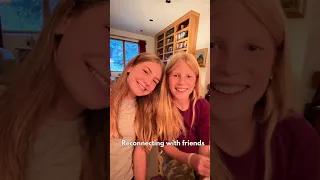
A little piece of home ❤️ #sailingfamily #sailingbiglost #idaholife
A little piece of home. ❤️ We took a quick break from sailing in French Polynesia to return to Idaho and spend time with family and friends. Dogs, cousins, old friends, Finn learning to drive, and those beautiful Idaho sunsets. These are some of the things we miss most while sailing around the wo...