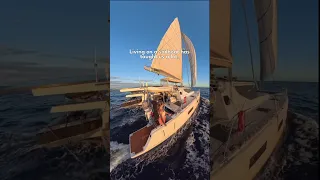
Some Problems Follow You Across Oceans
In Tahiti, Conor and Kelly aboard the catamaran Big Lost faced an electrical puzzle that had followed them across thousands of miles: their engine alternators were still failing to charge reliably. Having navigated from Florida through the Caribbean and over the Pacific, the crew of Sailing Big Lost pulled the alternators off their propulsion engines in Papeete to seek definitive answers after months of intermittent charging.
While their solar panels supply most of the electricity needed during sunny spells, extended cloud cover previously forced them to run their main propulsion engines solely to charge batteries. To resolve recurring power shortfalls, the crew had attempted upgrades, replacements, and professional servicing across multiple ports.
Early Upgrades and Fuse Issues
The alternator saga began in Florida, where the previous owner had planned an upgrade from the stock 70-amp units to high-output Balmar XT90 models. Conor ordered two new alternators from Just Catamarans while in Dania Beach, but shipping delays meant the parts had to be forwarded to St. Thomas. After picking them up in the Virgin Islands, Conor attempted the installation in St. Martin, only to encounter an immediate electrical mismatch.
“The old alternators are 70 amp, so they had 80 amp fuses. The new ones are 90 amp, so they needed 100 amp fuses. And I blew one and fried the alternator.”
Conor
With one unit damaged, the crew sought assistance from Nomad Marine in St. Martin. A technician supplied their final Balmar XT90 in stock, transferring the mounting bracket from the fried unit to fit the engine. The crew ordered a replacement rectifier to rebuild the damaged alternator in Grenada, hoping to establish a working pair plus a functional spare.
Passage Hazards and Panama Redundancy
Underway to Grenada, a burning rubber smell prompted an urgent engine bay inspection. Conor discovered arcing at the alternator cable terminal that had melted through half the mounting bolt. Although Palm Tree Marine in Grenada later serviced the damaged alternator and fitted the new rectifier, trust in the electrical charging system remained low.
By the time Big Lost reached Panama, the alternators still charged intermittently. With the Pacific crossing ahead and knowing cloudy days would leave solar short, the crew chose to install a generator. The auxiliary generator provided independent power redundancy without accumulating excessive runtime and maintenance on the main propulsion engines.
Troubleshooting Across the Pacific to Tahiti
Charging irregularities persisted across the Pacific Ocean. Conor swapped regulators and replaced the wiring harness, but inconsistent power generation continued. The units were eventually disconnected to prevent damage while underway. In Fakarava, Michael from the sister catamaran Meera joined Conor to examine the setup, recommending professional bench testing to isolate whether the root failure lay within the alternators or boat wiring.
Arriving in Papeete, Conor and Kelly delivered both units to D Select for testing. The repair shop was unable to bench test or overhaul the alternators, leaving Conor to resume onboard electrical diagnostics himself.
Onboard Diagnostics and Starboard Resolution
Back aboard the catamaran in Tahiti, a methodical inspection uncovered physical and component defects across both engine bays. Kelly detailed the immediate findings from Conor’s examination:
“So on the starboard alternator, three of these little lug connectors were broken. And on the port, Connor says that the rectifier is bad.”
Kelly
Conor repaired the broken terminals on the starboard unit and reassembled the connections, successfully restoring operational charging from the starboard engine:
“After everything we’ve been through with these alternators, we finally have the starboard side charging the way it’s supposed to.”
Kelly
While the port alternator and spare unit still required attention, having one functional engine charging circuit provided substantial relief for the cruising family in French Polynesia.
Marine Charging Specifications
| Component | Rating |
|---|---|
| Stock engine alternators | 70 amp |
| Stock alternator fuse protection | 80 amp |
| Upgraded Balmar XT90 alternators | 90 amp |
| Upgraded fuse protection required | 100 amp |
Frequently Asked Questions
The original 70-amp alternators used 80-amp fuses. When 90-amp Balmar XT90 alternators were installed without upgrading to 100-amp fuses, an 80-amp fuse blew and fried the alternator.
With alternators charging intermittently and cloudy weather limiting solar output, running propulsion engines solely for power caused extra engine wear and maintenance. A generator provided independent electrical redundancy.
On the starboard alternator, Conor found three broken lug connectors. On the port alternator, he identified a bad rectifier.
Michael from the sister catamaran Meera helped Conor inspect the alternator system in Fakarava and recommended pulling the units for professional bench testing.
Book a trip where this was filmed — near Papeete
Support Sailing Big Lost
At WeBoating.com, we profoundly acknowledge the unwavering dedication that Sailing Big Lost invests in crafting each and every video or voyage. Their passion for delivering exceptional ocean content shines through every frame, and it's a labor of love that deserves your attention.
We invite you to watch their captivating videos here and actively engage with their content, including their social media links above. Liking, commenting, and sharing their work goes a long way in fueling their creative fire.
We're also inviting you to explore the gear, sponsorships, and boat partnerships highlighted in the "Some Problems Follow You Across Oceans" video description, or directly on YouTube. By engaging with these offerings or purchasing services and items, you directly support Sailing Big Lost, their collaborators, and the brands they're associated with.
To ensure you never miss an offshore update, consider visiting their official YouTube Channel to subscribe, like, and join their community directly.
If you have any feedback, corrections, or additional information about Sailing Big Lost or their videos, please use the comment form below to share your thoughts with us.
Thank you for being a part of our community and supporting the creators we cherish. Your time and support truly matter!
We inherited our alternator problems when we bought Big Lost in Florida—and somehow, they've traveled with us through the Caribbean, across the Panama Canal, over the Pacific, and all the way to French Polynesia.
We've fixed things. Broken things. Learned things. Taken steps forward and a few steps backward.
And we're still working on it.
But maybe that's just real life.
Not everything gets wrapped up neatly before you're allowed to move forward. Sometimes you solve what you can, learn what you don't know, ask for help when you need it—and keep going.
Because if we'd waited until everything was perfect, we probably never would have left in the first place.
⛵️ Want to follow our journey or support Sailing Big Lost?
Visit sailingbiglost.com
What’s something in your life you’ve had to keep working at—even when you thought you’d already solved it?
Thanks for watching and being part of this with us.
— Kelly, Conor, Finn & Maddie
Sailing Big Lost
#SailingBigLost #SailingFamily #BoatLife
Sailing Big Lost
Sailing Big Lost follows Conor, Kelly, Finn, and Maddie Malone from Sun Valley, Idaho, living full-time aboard their South African Vision 444 ES catamaran, Big Lost. In 2026, their channel documents transiting the Panama Canal, completing a 3,000-mile Pacific crossing, diving Tuamotu atolls, and raising teenagers offshore.
Channel Information:
Social Media Links:
Some Problems Follow You Across Oceans Location
- Papeete Harbor, Tahiti, French Polynesia (-17.535,-149.5695)
Latest Episodes from Sailing Big Lost
Explore the most recent voyages. Subscribe to the channel to never miss an update!

We Set Out to Sail the World…We Found So Much More
We set out to sail the world. We found so much more. When we traded our life on land for life aboard a sailboat, we knew we wanted to explore the world together. What we didn’t fully appreciate was how much more this adventure would give us. Friends who have become family. A community that looks o...
How Do Kids Make Friends Sailing Around the World? ⛵ #Shorts
What happens to your kids' friendships when you decide to sail around the world? We're raising two teenagers aboard our sailing catamaran, Big Lost, and one of the biggest surprises has been watching them make friends with other cruising kids. From skateboarding to swimming between boats...
After All That Chaos… This Is Why We Sail
The Malone family faces unexpected challenges in Tahiti, from strict anchoring regulations and electrical mishaps to supporting a friend through an emergency appendectomy.
What Living on a Sailboat REALLY Looks Like ⛵ #Shorts
Living on a sailboat full-time isn't always about sailing to beautiful destinations. Sometimes it's boat repairs, unexpected challenges, helping fellow cruisers, and enjoying everyday family life in French Polynesia. We're a family of four sailing around the world aboard Big Lost, s...
One Mistake. Days of Sailboat Repairs. 😅
It only took a moment to break our dinghy davits. Fixing them was another story! Changing sailing plans, coordinating repairs, fabrication, and finally testing whether our solution worked. Just another day of living aboard our sailing catamaran, Big Lost. 🎥 Watch the full episode: We Broke It. No...