Final Push South: Sailing into Grenada!
Before departing Martinique on the final southward push toward Grenada, Connor addressed an urgent masthead issue aboard the catamaran Big Lost. The vessel’s topping lift line had jumped off its masthead pulley wheel and suffered severe chafe against an aluminum flange, forcing Connor to stitch the new line directly to the damaged halyard with needle and thread so he could reeve it cleanly down through the internal mast conduit and back to the helm clutch. Documenting their voyage on Sailing Big Lost, the crew balanced rigging repairs with dockside logistics before beginning their passage toward the southern Caribbean.
To avoid maneuvering into a crowded fuel dock and dropping anchor a second time, Connor decided to haul diesel in jerry cans, explaining, “so we can save ourselves the effort of reanchoring.” A quick stop at the local French boulangerie for fresh baguettes and sweet pastries completed their shore preparations. As the catamaran motored out into open water, the crew evaluated their passage options, balancing a continuous 21-hour voyage against the convenience of splitting the distance with an overnight stop.
Mast Repair and Martinique Departure
Deck preparations in Martinique centered on restoring the topping lift before committing to open water. The line runs from the boom end up to the masthead pulley, down the interior of the spar, through a base turning block, and aft through a line clutch at the helm station. Because the line had slipped off its sheave and rubbed continuously against the masthead metal flange, chafe threatened the integrity of the line. Connor carefully aligned the ends of the replacement line and the old halyard, stitching them securely together to lead the fresh line down through the mast without losing the messenger run.
With the rig secured, the crew completed shore errands. Transporting fuel in handheld jerry cans allowed the catamaran to remain undisturbed at anchor rather than entering a cramped marina fuel berth. After gathering fresh baked bread and pastries from the local French bakery, the family raised anchor and departed the French islands, steering south into the channel between Martinique and Saint Vincent.
Passage Past Saint Vincent and La Soufrière
Underway along the western coastline of Saint Vincent, conditions remained calm as commercial traffic crossed their path. The crew tracked the ship Predator steaming nearby at 11 knots while monitoring their own southward heading. To the east, the towering silhouette of La Soufrière dominated the skyline. Connor and the crew observed the ash scars running down the volcano’s northern slopes, visual remnants left behind by its explosive eruption in 2021.
As the catamaran sailed quietly offshore, a pod of dolphins surfaced at the bows, riding the pressure wave and leaping alongside the twin hulls. The sighting provided a welcome break during an otherwise quiet day sail as the crew calculated their arrival timing and decided to seek shelter along the Saint Vincent coast rather than sailing through the night.
Overnight Anchorage Under the Yellow Flag
Because the crew did not plan to clear customs and immigration in Saint Vincent, they hoisted their yellow quarantine code flag to signal that the vessel remained in transit and had not cleared into the country. Choosing an anchorage required careful consideration of local reports. Rather than dropping anchor near towns, the crew selected an isolated cove along the coast.
“We chose this one because there’s no town or people nearby and there have been reports of thievery and boardings in the area.”
Peering through the clear water at the seabed, the crew noted scattered debris, sticks, and scrap metal below before securing the anchor. The stop offered a peaceful night of rest. Reflecting on their broader journey, the crew noted that their 40-day southward island-hopping campaign had consisted entirely of daytime hops, with no overnight passages since their Atlantic offshore crossing from Eleuthera south to the USVI.
Alternator Electrical Failure Underway
At dawn, the crew hauled anchor from Saint Vincent to begin the final leg toward Grenada. While at the helm, the crew smelled burning rubber coming from the engine compartments. Connor immediately shut down the engines and descended into the starboard engine bay to investigate the source of the smoke.
Connor found that the heavy-gauge electrical cable on the starboard alternator had suffered severe arcing where it bolted to the terminal. The electrical fault had generated extreme heat, burning through half of the threaded mounting bolt while completely disintegrating the nut. Surveying the damaged terminal, Connor remarked, “It’s a welder,” observing how the electrical arcing had melted solid metal away.
To prevent electrical fire or alternator damage, Connor isolated the starboard unit. With an extra Balmar alternator on board that required a new rectifier, Connor investigated whether spare components could be scavenged or if the system needed to remain completely disconnected until arriving in Grenada. With the starboard engine out of commission, the catamaran pressed on under sail and single-engine propulsion, as the crew reported: “We are running just the port engine right now. We have a full main up and our jib up.” Wind speeds hovered at 11 knots, leaving the jib telltales hanging limp as the vessel continued motor-sailing south.
Clearing Customs at Tyrell Bay and Clark’s Court Arrival
Approaching the waters of Grenada, the crew altered their clearance strategy. With Carnival underway in St. George’s, rumors of crowded anchorages, loud celebrations, and packed mooring fields convinced the crew to divert to Tyrell Bay. Clearing customs and immigration in Tyrell Bay proved efficient and calm, allowing the crew to check in without contending with harbor congestion.
After completing border formalities, Big Lost rounded the southern headlands of Grenada, motoring into headwind and opposing current toward Clark’s Court Marina. The crew rigged fenders and prepared dock lines along the gunwales, spotting their cruising friends aboard the sailing vessel Firefly resting in the anchorage as they negotiated the harbor approach.
Clark’s Court Haulout and Shore Lodging
Haulout day at Clark’s Court Marina marked the beginning of a scheduled yard period. Having experienced past complications during a haulout at Harbor Town Marina, Connor and the crew approached the travel lift with caution. To provide an extra set of hands during line handling and haulout positioning, friend Jesse from the vessel McGistra joined them aboard.
The yard crew at Clark’s Court utilized professional precautions. A yard diver entered the water beneath the catamaran, tapping the hull to locate interior structural bulkheads and ensuring protective plastic covered the lifting slings. The primary work list for the haulout included repairing an acrylic escape hatch window that cracked during their offshore passage to the USVI, servicing the starboard propeller, and stripping old cockpit cushions so they could be fitted with quick-drying reticulated foam.
Because the travel lift slip could not place the catamaran directly into its tight yard berth, the boatyard transferred Big Lost onto a tractor trailer to maneuver the multihull between closely spaced vessels. Yard technicians climbed aboard and poured water along the decks to confirm proper rainwater drainage angles. With the catamaran safely blocked on the hard, the crew moved their bags into a villa at Le Phare Bleu for 5 days of shore living, situated right by the historic red lightship that houses the marina showers and shore facilities.
| Passage metric | Documented figure |
|---|---|
| Estimated direct passage time (Martinique to Grenada) | 21 hours |
| True wind speed underway | 11 knots |
| Commercial vessel Predator speed | 11 knots |
| Southbound island cruising duration | 40 days |
| Yard villa stay at Le Phare Bleu | 5 days |
| Eruption of La Soufrière volcano | 2021 |
Frequently Asked Questions
The nonstop passage from Martinique to Grenada requires approximately 21 hours. Having grown accustomed to day sailing during their island hops, the crew decided to split the trip with an overnight rest at Saint Vincent.
The starboard engine alternator electrical terminal suffered severe sparking and electrical arcing, which melted half the mounting bolt and destroyed the securing nut. Connor isolated the starboard engine, and the vessel motor-sailed on the port engine under full main and jib in 11 knots of wind.
The crew hoisted the yellow code flag because they were not formally checking into Saint Vincent customs and immigration, choosing to remain in transit and anchor overnight before continuing to Grenada.
The crew cleared customs in Tyrell Bay because Carnival celebrations in St. George’s created loud noise, packed anchorages, and heavily congested mooring fields.
The haulout was scheduled to repair a cracked escape hatch acrylic window damaged on an offshore passage to the USVI, service the starboard propeller, and replace cockpit cushion foam with quick-drying foam.
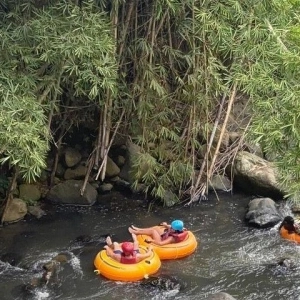
Book a trip where this was filmed — near Grenada
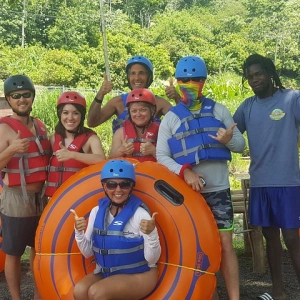
Funtastic 4 x 4 Safari & River Tubing Adventure Grenada
Sold by Funtastic Island Adventures
Support Sailing Big Lost
At WeBoating.com, we profoundly acknowledge the unwavering dedication that Sailing Big Lost invests in crafting each and every video or voyage. Their passion for delivering exceptional ocean content shines through every frame, and it's a labor of love that deserves your attention.
We invite you to watch their captivating videos here and actively engage with their content, including their social media links above. Liking, commenting, and sharing their work goes a long way in fueling their creative fire.
We're also inviting you to explore the gear, sponsorships, and boat partnerships highlighted in the "Final Push South: Sailing into Grenada!" video description, or directly on YouTube. By engaging with these offerings or purchasing services and items, you directly support Sailing Big Lost, their collaborators, and the brands they're associated with.
To ensure you never miss an offshore update, consider visiting their official YouTube Channel to subscribe, like, and join their community directly.
If you have any feedback, corrections, or additional information about Sailing Big Lost or their videos, please use the comment form below to share your thoughts with us.
Thank you for being a part of our community and supporting the creators we cherish. Your time and support truly matter!
After months of island-hopping through the Caribbean, we make our final sail south to Grenada—our home for hurricane season and the place where we’ll tackle some much-needed boat work and cruising projects. We’re excited to reconnect with friends we’ve met along the way and finally slow down to relax and enjoy life in Grenada, the Spice Island.
On the way south, we pass stunning Caribbean islands, dramatic volcanoes, and even get a surprise visit from a playful pod of dolphins. This journey marks the end of one chapter and the beginning of another as we prepare for an exciting season of sailing, exploring, and living aboard.
⚓ Come along as we share what it’s really like sailing to Grenada, preparing for hurricane season in the Caribbean, and settling into life on a boat in one of the most popular cruising destinations in the world.
⚓️ Subscribe to follow our journey as we tackle the challenges of boat life, explore new destinations, and chase freedom one nautical mile at a time.
Follow along — from land to sea and back again — with Sailing Big Lost.
📸 Instagram: https://www.instagram.com/sailingbiglost/
🏝️ TikTok: https://www.tiktok.com/@UCgQWjtfYowV40rQK87XtzKQ
🌎 Website: https://www.sailingbiglost.com
🎥 Patreon: https://www.patreon.com/c/Biglost
Thanks for Watching! We appreciate you! 💕
Don't forget to order your SBL swag at our store:
https://www.sailingbiglost.com/store
#SailingBigLost #SailingFamily #Vision444 #CatamaranLife #BoatLife
🎵 Music licensed from Lickd. The biggest mainstream and stock music platform for content creators. Lonesome Drifter by Charley Crockett, https://lickd.lnk.to/cGU7nvID!Sailing+Big+Lost License ID: VMr3wvP5rp5

Sailing Big Lost
Sailing Big Lost follows Conor, Kelly, Finn, and Maddie Malone from Sun Valley, Idaho, living full-time aboard their South African Vision 444 ES catamaran, Big Lost. In 2026, their channel documents transiting the Panama Canal, completing a 3,000-mile Pacific crossing, diving Tuamotu atolls, and raising teenagers offshore.
Channel Information:
Social Media Links:
Final Push South: Sailing into Grenada! Location
- Clark's Court Marina, Grenada (12.002,-61.728)
- Le Phare Bleu, Grenada (12,-61.719)
- Tyrell Bay, Carriacou (12.455,-61.488)
- Saint Vincent (13.25,-61.19)
- Martinique (14.47,-60.875)
Latest Episodes from Sailing Big Lost
Explore the most recent voyages. Subscribe to the channel to never miss an update!
The Ordinary Days Are the Ones We’ll Remember ❤️ #Shorts
Not every day sailing the world is an adventure. Some days it’s homeschooling, boat chores, baking, board games, and spending time with friends. These are the ordinary moments of raising a family aboard a sailboat in French Polynesia. And they might just be the ones we remember most. We’re Sailing...
What Living on a Sailboat Is REALLY Like ⛵ #sailingfamily
Living on a sailboat isn’t all beautiful anchorages and sunset sails. There’s plenty of cleaning, hauling groceries by dinghy, and everyday chores. But there’s also adventure, incredible friendships, and moments that remind us why we love this life. A little glimpse of what sailing around the worl...
We Left Idaho… To Come Home to This
The crew of Big Lost returns to their Vision 444 catamaran in Tahiti, navigating from Phaeton Bay past Marina Taina to Airport Anchorage.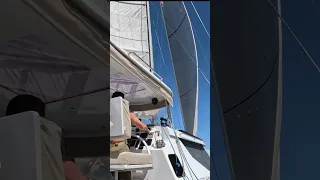
This Never Gets Old ⛵ | Sailing in Tahiti #Shorts
There's nothing quite like raising the sails, turning off the engines, and letting the wind take over. ⛵ After a couple of weeks away from Big Lost, we're finally back sailing the beautiful waters of Tahiti, French Polynesia. Our next sailing adventure drops tomorrow! #SailingBigLost #S...
A little piece of home ❤️ #sailingfamily #sailingbiglost #idaholife
A little piece of home. ❤️ We took a quick break from sailing in French Polynesia to return to Idaho and spend time with family and friends. Dogs, cousins, old friends, Finn learning to drive, and those beautiful Idaho sunsets. These are some of the things we miss most while sailing around the wo...