Choosing the Window | Leaving San Blas & Sailing to Shelter Bay
Morning arrives at the Swimming Pool anchorage in the San Blas islands as Connor and the crew aboard Sailing Big Lost prepare their catamaran for departure. After weeks stationed in the archipelago, the family needs to make passage west toward Shelter Bay Marina to schedule their Panama Canal transit, organize shipboard gear, receive packages shipped ahead for their upcoming Pacific crossing, and rendezvous with visiting guests.
Low water over the surrounding reefs reveals the nearby sandbar the family explored in previous weeks. Navigating out through the shallows requires continuous visual awareness and constant cross-checking between Bauhaus charts and Navionics data, as coral heads and shifting shoals throughout Guna Yala are not always charted accurately.
Departing the Swimming Pool and Sailing the Cays
Once clear of the shallow reef pass, the diesel engines are shut down to transition into steady sailing under canvas. As Connor sets the course on a starboard tack, the catamaran settles into a relaxed rhythm, tracking alongside an XS catamaran sailing on a parallel line. The crew notes the quiet satisfaction of shutting down the engines: “Feels so good to have the motor turned off. Just quiet.”
Under a 120-degree wind angle, the boat registers true wind speeds between 11 and 12 knots, gliding at 6.8 knots through the water while the crew plans to clean the paddlewheel sensor at the next stop. During the transit across the cays, Connor hooks and lands a cero mackerel off the stern. Before settling into their next anchorage, the crew drops anchor for a brief swim to stretch and cool off.
Christmas Gathering at Anchor
Before pushing farther west toward Colón, the family pauses to celebrate Christmas at anchor alongside the cruising fleet. The holiday aboard the catamaran unfolds without a traditional tree, stockings, or wrapped commercial gifts, focusing instead on community and camaraderie.
Four other cruising boat families gather together for a shared holiday lunch. The cruising children exchange handmade gifts created aboard their respective boats, sharing a festive afternoon of games, food, and a shared cheese ball before preparing for the offshore passage ahead.
Evaluating the Passage Window to Linton Bay
At 6:30 in the morning at the Chichime anchorage, Connor and the crew begin hoisting and preparing the mainsail for the planned 60-nautical-mile passage toward Linton Bay. A stiff breeze greets them early, indicating that the open ocean leg will expose the catamaran to heavy swells directly on the beam.
Cruising schedules frequently require balancing sea conditions against upcoming weather systems. Rather than holding out for a calm sea that might not materialize, the crew elects to take an active window while winds remain moderate. As the crew reflects on the routing decision: “Weather Windows aren’t always perfect. We knew the seas would be rolly on this passage, but the winds were lighter, and waiting meant facing even bigger seas and stronger winds ahead.”
Ocean Rollers and High-Speed Offshore Sailing
Stepping out past the protective reefs into the open ocean, the catamaran meets rolling swells on the beam. With one reef tucked into the mainsail, the boat powers forward under 15 knots of apparent wind and 20 knots of true wind, holding a 100-degree wind angle on a starboard tack.
Speeds remain steady at 8 knots over the ground and 8 knots through the water, allowing the vessel to eat up the miles quickly despite the uncomfortable rolling motion. Underway at 9 knots, Connor hooks another fish on the trolling line. Because the boat is moving too fast under sail to easily decelerate, the fish shakes the hook and escapes before it can be brought aboard.
Commercial Shipping Lanes and Motoring into Bahía Limón
As the catamaran closes the coast near Colón, the crew prepares to enter the busy approaches of Bahía Limón, the Atlantic gateway to the Panama Canal. Navigating this sector involves adhering to designated commercial shipping traffic lanes where massive container ships, bulk carriers, and tankers maneuver in and out of the canal.
Turning into the bay places the wind dead astern. Without their Code downwind sail hoisted, the crew attempts running wing-on-wing, but the catamaran bounces erratically in the following seas. To maintain precise control and maximum safety in congested commercial waters, Connor drops the sails and engages the engines to motor the final 21 nautical miles past Linton Bay, making 6 to 7 knots toward the harbor.
During the rough offshore leg, taking rolling seas on the beam takes its toll on the two children below deck. Absorbed in reading books and playing games on tablets instead of looking out at the horizon, both children experience seasickness. Once the boat turns into the sheltered approach and runs downwind under power, their motion sickness subsides.
Arrival and Securing at Shelter Bay Marina
Entering the outer harbor through the West Breakwater between the channel markers, the crew holds position outside Shelter Bay Marina. Two monohulls that just concluded their transit of the Panama Canal are actively docking and hold priority assistance from the marina dock crew. While Connor holds the catamaran steady in the breeze behind the breakwall, lines and fenders are prepared and arranged neatly along the lifelines.
To avoid last-minute confusion when approaching the docks, the crew contacts the marina in advance to confirm which side to fender. In addition to the pre-rigged docklines, a spare roving fender is positioned on the foredeck net, ready to be deployed instantly by hand if needed to cushion against an unexpected dock obstruction or another vessel. After docking temporarily alongside the fuel dock pending a permanent slip assignment on Monday, the family secures their lines, ready to begin preparing for the canal transit.
| Passage Leg | Wind and Sail Configuration | Recorded Telemetry and Distance |
|---|---|---|
| Swimming Pool to Cays | 11 to 12 knots true wind (120° wind angle) | 6.8 knots through water |
| Chichime to Linton Bay Approach | 15 knots apparent, 20 knots true (1 reef in main) | 8 to 9 knots over ground (60 NM planned) |
| Bahía Limón Approach to Shelter Bay | Motoring downwind through traffic lanes | 6 to 7 knots under power (21 NM remaining) |
Frequently Asked Questions
The crew needed to arrive at Shelter Bay Marina to organize their Panama Canal transit schedule, sort shipboard gear, receive packages ordered for their Pacific crossing, and meet incoming guests.
The crew chose the window because winds were manageable at 15 to 20 knots. Waiting would have meant encountering significantly larger seas and stronger winds building in the days ahead.
Entering Bahía Limón put the catamaran dead downwind in heavy commercial shipping lanes. After trying wing-on-wing without a downwind sail and experiencing uncomfortable bouncing, they dropped sails and motored for greater safety and maneuverability.
They waited outside the West Breakwater while two canal-transiting monohulls docked, rigged fenders and lines over the lifelines in advance, kept a roving fender ready on the net, and tied up temporarily by the fuel dock until their slip opened on Monday.
Book a trip where this was filmed — near Panama City
Support Sailing Big Lost
At WeBoating.com, we profoundly acknowledge the unwavering dedication that Sailing Big Lost invests in crafting each and every video or voyage. Their passion for delivering exceptional ocean content shines through every frame, and it's a labor of love that deserves your attention.
We invite you to watch their captivating videos here and actively engage with their content, including their social media links above. Liking, commenting, and sharing their work goes a long way in fueling their creative fire.
We're also inviting you to explore the gear, sponsorships, and boat partnerships highlighted in the "Choosing the Window | Leaving San Blas & Sailing to Shelter Bay" video description, or directly on YouTube. By engaging with these offerings or purchasing services and items, you directly support Sailing Big Lost, their collaborators, and the brands they're associated with.
To ensure you never miss an offshore update, consider visiting their official YouTube Channel to subscribe, like, and join their community directly.
If you have any feedback, corrections, or additional information about Sailing Big Lost or their videos, please use the comment form below to share your thoughts with us.
Thank you for being a part of our community and supporting the creators we cherish. Your time and support truly matter!
After weeks anchored in the San Blas islands, it was time to move again.
In this episode, we leave the Swimming Pool anchorage and begin our passage toward Shelter Bay. The weather window wasn’t perfect — the seas were rolly — but with lighter winds and tougher conditions building ahead, it was the right choice for us.
This is a slower, quieter look at life underway: steady sailing, a brief stop to get in the water, Christmas aboard, and the simple rhythm of moving from one chapter to the next.
Thanks for following along with our journey. If you enjoy this calmer side of sailing, we’d love to have you along for what comes next.
New episodes every week — thanks for sailing along with us.
🌊 Patreon (early access & extras): https://www.patreon.com/sailingbiglost
📸 Instagram: https://www.instagram.com/sailingbiglost
🎵 TikTok: https://www.tiktok.com/@sailingbiglost
🌐 Website & resources: https://www.sailingbiglost.com
⏱️ Chapters
00:00 Choosing the window
00:32 Leaving the Swimming Pool
02:28 Sailing toward Chichime
07:15 A break to get in the water
08:14 Christmas aboard
08:59 Passage toward Shelter Bay
18:47 Arrival at Shelter Bay
#familysailing #sailinglife #catamaransailing

Sailing Big Lost
Sailing Big Lost follows Conor, Kelly, Finn, and Maddie Malone from Sun Valley, Idaho, living full-time aboard their South African Vision 444 ES catamaran, Big Lost. In 2026, their channel documents transiting the Panama Canal, completing a 3,000-mile Pacific crossing, diving Tuamotu atolls, and raising teenagers offshore.
Channel Information:
Social Media Links:
Choosing the Window | Leaving San Blas & Sailing to Shelter Bay Location
- Shelter Bay Marina, Colón, Panama (9.3693,-79.9509)
- Chichime Cays, Guna Yala, Panama (9.5859,-78.8788)
- The Swimming Pool Anchorage, Holandes Cays, Guna Yala, Panama (9.578,-78.784)
Latest Episodes from Sailing Big Lost
Explore the most recent voyages. Subscribe to the channel to never miss an update!
What Living on a Sailboat Has Taught Our Family ⛵
Living on a sailboat has taught our family lessons we never expected. From crossing oceans and learning to make our own repairs to worldschooling our kids and finding community in the most remote places. Turns out, some of life's greatest lessons happen outside your comfort zone. ⛵ We'r...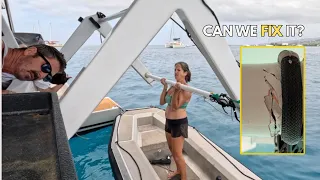
We Broke It Now We Have to Fix It
A lowering mishap between Tahiti and Moorea cracks the aluminum davits aboard Big Lost. Conor, Kelly, and the crew return to Tahiti for emergency metalwork, structural epoxy bonding, and provisioning before sailing for the Tuamotus.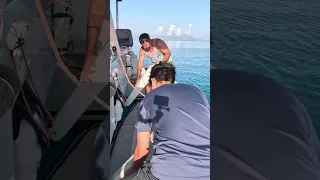
We Finally Left Tahiti… Then Everything Changed #Shorts
We finally left Tahiti, French Polynesia, with plans to sail to the Tuamotus. But one mistake damaged our dinghy davits and changed everything. Now we're working together to make repairs and figure out our next move aboard our sailing catamaran, Big Lost. ⛵ Watch the full adventure: **We Fina...
Our Sailboat Had TWO Problems in One Morning 💩 #Shorts
Just another day living on a sailboat! 🙃 We'd finally left Tahiti for Moorea, preparing to sail to the Tuamotus in French Polynesia. Then one mistake lowering our dinghy damaged the aluminum davits, and we discovered our toilet was leaking onto the floor. Two boat problems. One very crappy mo...
Swimming with Sharks & Rays in Moorea 🦈 #Shorts
Sharing the water with the locals in Moorea, French Polynesia! 🦈💙 Swimming alongside blacktip reef sharks and stingrays in the crystal-clear lagoons of Moorea is an experience that never gets old. We're Sailing Big Lost, a family sailing around the world and discovering the incredible places,...