How to use a Drone to keep your boat in safe water. Review of the Ruko R11Mini 4k.
Aboard a waterway in Florida, Clark from Emily & Clark’s Adventure evaluates whether an inexpensive consumer drone can solve one of cruising’s perennial hazards: determining whether shallow water ahead of a boat is deep enough to enter safely. While navigating uncharted canals and narrow creeks frequently threatens groundings, conventional aerial drones often prove cumbersome or risky on cruising sailboats. Clark approaches the challenge not with expensive electronics, but by engineering a physical depth-sounding rig suspended from a lightweight quadcopter.
The practical friction of flying drones from boats has historically kept Clark skeptical of aerial quadcopters. Software updates, battery recalibration routines, and strict return-to-home algorithms make launches frustrating and perilous on the water. When friends offered to capture footage in the past, delays often derailed the flight window: “Let’s do it at noon and like at 3:00 the drone finally flies.” More critically, factory failsafes designed for land-based operators pose catastrophic risks over open water. Many premium drones automatically track back to their original takeoff coordinates when battery reserves dip low. Because an anchored sailboat swings across its anchor radius while a boat underway continuously moves, an automated return sends the quadcopter straight down into seawater. For visual aerial masthead angles, Clark long favored a carbon-fiber selfie stick fitted with a 360-degree camera.
The Sub-250-Gram Drone Platform
Clark’s perspective shifted when manufacturer Ruko supplied an R11Mini 4K quadcopter package for evaluation. Costing between $230 and $300 depending on the battery configuration, the hardware represents an accessible price point where accidental water loss does not devastate a cruising budget. Crucially, the aircraft weighs under 250 grams, placing it below the threshold where FAA regulations impose registration and broadcast tracking requirements.
The package arrives with three modular batteries, each rated for roughly 30 minutes of flight time. Flight control relies on a handheld transmitter paired with a smartphone displaying the manufacturer application and a live camera transmission. Unlike high-end alternatives laden with complex autonomous firmware, the R11Mini lacks automated collision avoidance sensors and heavy battery management software. Rather than viewing the absence of safety sensors as a drawback, Clark considers the mechanical simplicity an asset for marine field operations, noting that “This thing will just kind of fly when you say fly.” Piloting operates on standard stick controls, providing altitude hold and directional maneuvering, accompanied by the high-pitch acoustic hum of the quadcopter propellers.
The Patron Request and Mechanical Solution
The sounding project took shape after a Patreon supporter contacted Clark to ask: “could you design something that I could hang for my drone and it could fly out in front and dip into the water and tell me how deep the water is.” While the patron anticipated an electronic sonar transducer beaming acoustic soundings through radio transmitters, Clark immediately recognized the operational flaw of deploying complex electronics into saltwater.
Instead, Clark devised a purely mechanical depth sounder built from basic materials that eliminate electrical failure modes. As Clark concluded upon working out the geometry, “I know how to solve this, and I love the solution. It is so simple. It can’t fail.” The rig requires no batteries, software pairing, or signal telemetry, relying entirely on buoyant forces and visual verification from the drone’s onboard camera feed.
Rigging the Neutral-Density Sounding Line
Constructing the sounding assembly began with identifying the quadcopter’s balance point. A small rib running along the underside of the R11Mini fuselage coincides precisely with its center of gravity. Clark tied a small attachment loop at this point to bear the suspended payload without upsetting flight trim.
For the suspension line, Clark selected ultra-high-molecular-weight polyethylene line, commercially known as Spectra. Sized at half a millimeter in diameter, the synthetic line provides a 200 lb breaking strength while remaining thin enough to handle easily. More importantly, UHMWPE possesses a specific gravity nearly identical to water, preventing the line itself from dragging the aircraft down or floating erratically on the water surface. Clark fastened the line around the folded drone using a large bowline loop.
At the working end of the line, Clark mounted two critical components: a visual indicator and a sinker. For the visual indicator, he cut a strip of brightly colored polypropylene webbing. Because polypropylene is less dense than water, it naturally floats on the surface. Clark hemmed the edge of the webbing, burned a clean hole, and threaded the Spectra line through twice with an overhand friction knot. This friction hitch allows quick manual adjustment along the line to match a boat’s required draft plus a safety margin, holding its position firmly once tensioned. Below the floating ribbon, Clark attached a 1/8 ounce tungsten fishing sinker. Tungsten provides double the density of lead, providing concentrated weight in a compact footprint while avoiding the powdery oxidation common to soft lead weights.
Mechanical Logic and Depth Interpretation
The operating logic of the aerial sounding line relies on a simple binary visual readout. The operator sets the distance between the tungsten sinker and the polypropylene ribbon to equal the vessel’s required draft plus a modest safety buffer. When approaching an unknown channel, the operator flies the drone ahead of the boat and gently lowers the aircraft toward the water surface, keeping the airframe safely elevated on the long suspension line.
When the sounding assembly enters the water, one of two visual outcomes occurs: – If water depth is shallower than the preset clearance, the tungsten sinker strikes the seabed or lake bottom. Relieved of the sinker’s downward pull, the line goes slack and the buoyant polypropylene webbing rests flat on the surface, clearly visible on the drone monitor. This provides an immediate visual warning that water is too shallow for passage. – If water depth exceeds the preset clearance, the tungsten weight hangs suspended in the water column. The downward gravitational pull of the tungsten overcomes the slight buoyancy of the ribbon, dragging the bright marker beneath the surface out of sight. A submerged ribbon confirms sufficient water depth ahead.
Lake and Canal Field Trials
Clark tested the assembled rig across two distinct environments in Florida. Initial flight maneuvers took place in an open park clear of trees to confirm stick sensitivity, hover stability, and basic orientation. After confirming basic handling, Clark borrowed a friend’s aluminum utility boat to evaluate the sounding assembly on open water.
The water trial coincided with typical Florida afternoon weather, producing gusty 15 to 20 mph winds ahead of convective thunderstorms. On the open lake, choppy conditions and shifting gusts made simultaneous boat control and drone operation uncomfortable, especially when attempting to land the aircraft manually back onto a narrow aluminum bench seat. To conduct controlled depth measurements, Clark moved the aluminum boat into a sheltered canal system.
Inside the canal, the mechanical sounding rig performed as engineered. Lowering the drone allowed the tungsten weight to probe the canal bottom, providing clear visual confirmation of draft clearance as the bright ribbon floated or submerged according to bottom contours. While Clark noted minor operational quirks—such as the controller interface requiring the drone to be airborne before activating camera recording—the flight confirmed that a sub-250-gram quadcopter paired with a mechanical line provides practical, low-cost depth reconnaissance without delicate marine electronics.
Technical Specifications and Field Data
| Parameter or Hardware Element | Recorded Specification | Functional Role in Field Testing |
|---|---|---|
| Ruko R11Mini acquisition cost | $230 to $300 | Hardware cost dependent on modular battery package |
| Aircraft takeoff weight | Under 250 grams | Complies with FAA threshold avoiding registration |
| Battery operating life | 30 minutes per battery | Operating duration across 3 supplied battery modules |
| Suspension cordage | 200 lb breaking strength | Half-millimeter Spectra line with neutral water density |
| Sounding sinker | 1/8 ounce tungsten weight | High-density lead-free ballast that overcomes ribbon buoyancy |
| Testing wind velocities | 15 to 20 mph gusts | Atmospheric conditions during Florida lake and canal trials |
Frequently Asked Questions
Clark avoided complex drones due to lengthy software update delays, high costs, and automated return-to-home algorithms that land at the takeoff point in the ocean after a boat swings at anchor or moves.
The Ruko R11Mini costs between $230 and $300, weighs under 250 grams to comply with FAA registration exemptions, includes 3 batteries lasting about 30 minutes each, and features no collision avoidance sensors.
If the tungsten weight touches bottom, the line goes slack and the polypropylene webbing floats on the surface; if the water is deeper than the set clearance, the weight pulls the ribbon underwater.
The rig uses a half-millimeter Spectra UHMWPE line with a 200 lb breaking strength, a floating polypropylene webbing ribbon with an adjustable overhand knot, and a 1/8 ounce tungsten fishing weight.
Clark encountered typical Florida thunderstorm conditions with gusty 15 to 20 mph winds, making initial open-lake testing rough before moving into a sheltered canal.
Book a trip where this was filmed — near Daytona Beach

Support Emily & Clark’s Adventure (Clark’s Adventure)
At WeBoating.com, we profoundly acknowledge the unwavering dedication that Emily & Clark’s Adventure (Clark’s Adventure) invests in crafting each and every video or voyage. Their passion for delivering exceptional ocean content shines through every frame, and it's a labor of love that deserves your attention.
We invite you to watch their captivating videos here and actively engage with their content, including their social media links above. Liking, commenting, and sharing their work goes a long way in fueling their creative fire.
We're also inviting you to explore the gear, sponsorships, and boat partnerships highlighted in the "How to use a Drone to keep your boat in safe water. Review of the Ruko R11Mini 4k." video description, or directly on YouTube. By engaging with these offerings or purchasing services and items, you directly support Emily & Clark’s Adventure (Clark’s Adventure), their collaborators, and the brands they're associated with.
To ensure you never miss an offshore update, consider visiting their official YouTube Channel to subscribe, like, and join their community directly.
If you have any feedback, corrections, or additional information about Emily & Clark’s Adventure (Clark’s Adventure) or their videos, please use the comment form below to share your thoughts with us.
Thank you for being a part of our community and supporting the creators we cherish. Your time and support truly matter!
This video is a review of the Ruko R11Mini 4k drone and how you can use it to know the depth of water ahead of your boat.
Links to parts used in this video
https://amzn.to/47vGwg5 Ruko R11Mini 4k Drone
https://amzn.to/4p6cGFv UHMWPE String
https://amzn.to/3HKHw5J Webbing
https://amzn.to/4m6anzb Tungsten Weight
https://amzn.to/4gfoIIu Insta360 x5
https://amzn.to/47wcWXY 3 meter selfie stick
Have questions or comments? Leave them below! We do our best to read and answer all comments on our channel.
-----------
LINKS TO PRODUCTS WE LOVE (Affiliate links to things we actually own, use, and recommend. We are almost never paid by companies to endorse products. If we are, we will tell you in the video): https://www.amazon.com/shop/emilyclarksadventure
PLEASE SUBSCRIBE and click the BELL to see new videos every week, and more content like this.
CONNECT & SUPPORT OUR CHANNEL
Patreon: https://www.patreon.com/emilyandclark
PayPal: https://www.paypal.me/emilyandclark
Buy S/V Temptress shirts and swag: https://teespring.com/stores/emily-clarks-sailboat-swag
Check out our favorite products on Amazon: https://www.amazon.com/shop/emilyclarksadventure
#emilyandclark #emilyandclarksadventure #svtemptress
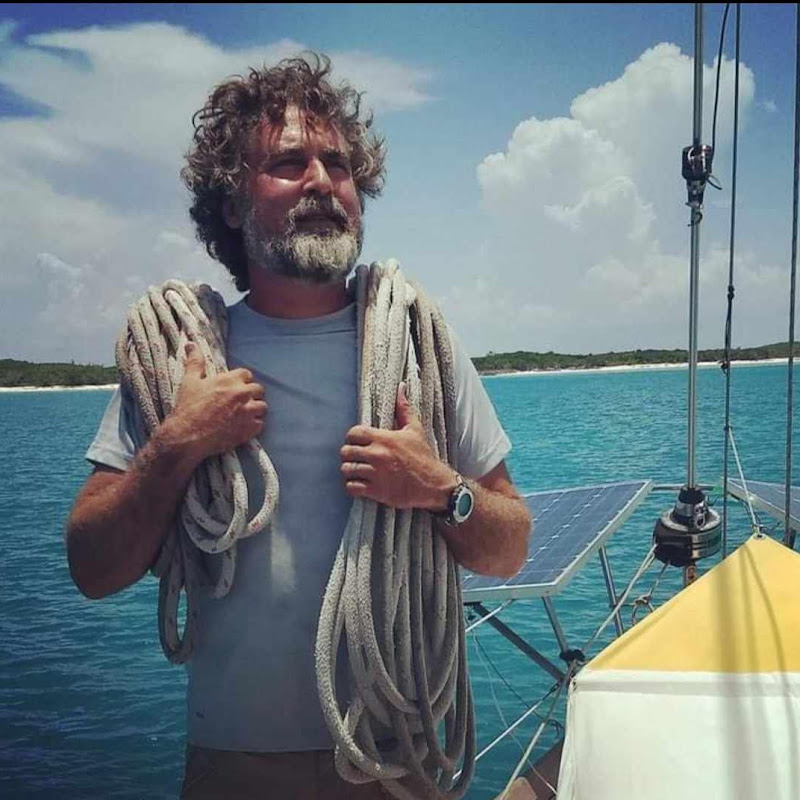
Emily & Clark’s Adventure (Clark’s Adventure)
Join Clark of Clark’s Adventure as he documents his 2026 return to solo offshore racing following a successful recovery from cancer aboard his Creekmore 45.
Channel Information:
Social Media Links:
How to use a Drone to keep your boat in safe water. Review of the Ruko R11Mini 4k. Location
- St. Augustine Canal Testing, Florida (29.89,-81.31)
Latest Episodes from Emily & Clark’s Adventure (Clark’s Adventure)
Explore the most recent voyages. Subscribe to the channel to never miss an update!
Datou Boss 48v 100ah Rack Mount Battery Review
Clark tests and disassembles the budget Datou Boss 48V 100Ah server rack LiFePO4 battery, evaluating cell compression, BMS safety, and marine wiring.
LiThink 334ah Review
Clark conducts a bench test and full internal teardown of the LiThink 334 Ah LiFePO4 battery, measuring 347 Ah of usable capacity, verifying genuine EVE cells, and evaluating thermal performance under a 113-amp continuous discharge.
BLUETTI Apex 200 Review: The Best Power Station for RVs & Home Backup?
Clark from Emily & Clark’s Adventure reviews the Bluetti Apex 200 power station, evaluating its 3,600 W inverter, camper air conditioning loads, AC charging speeds, and 48 V bench solar input.
WirenTech 100ah 48v Rack Mount Review (second look)
Clark tests the WirenTech 48-volt 100Ah server rack battery in Florida, teardown inspecting REPT cells, verifying UL 1973 certification, diagnosing BMS balancing rates, and confirming 105.6Ah capacity under load.
WirenTech 100ah 48v Rack Mount Review
Clark puts two WirenTech 48V 100Ah rack mount lithium batteries through forensic bench testing, uncovering Grade B cells and slow balancing despite solid build quality.