
Sailing the Gulf Islands requires navigating the protected but current-heavy waters of the Salish Sea between Vancouver and Vancouver Island. This region is ideal for families due to short distances between anchorages, but skippers must be competent in reading tide tables and handling tidal rapids. Most charters depart from Sidney, Nanaimo, or Granville Island (Vancouver).
| Data Point | Requirement |
|---|---|
| Best Time to Sail | June to September |
| Avg. Weekly Cost | $3,500 – $6,000 CAD (40ft Monohull) |
| Difficulty Level | Beginner to Intermediate |
| Top Activity | Stern-tie anchoring & Wildlife viewing |
| License Required? | Yes (PCOC or ICC equivalent) |
Expect generally calm sea states during summer, with prevailing Northwest winds rising in the afternoon (15–20 knots). However, navigational hazards like floating logs (“deadheads”) and strong currents in narrow passes require constant vigilance. This guide covers the essential logistics for a safe family charter.
Navigation and Safety: What the Charts Don’t Tell You
While the Gulf Islands sailing destination is often marketed as “easy,” the currents are serious. The islands act as a funnel for the massive tides of the Pacific.
Managing Tidal Gates
You cannot simply plot a straight line. You must time your transit through key passes. Active Pass and Porlier Pass can see currents exceeding 5 knots. Attempting these against the current is fuel-inefficient and dangerous; attempting them wind-against-tide creates steep, confused standing waves.
- Action: Consult the Ports and Passes tide guide daily. Plan to hit narrow channels at slack water.
- Warning: BC Ferries run frequently through Active Pass. They have right of way. Monitor VHF Channel 16 and stay close to the shore to give them the center channel.
The Cold Water Reality
The water clarity is excellent, often a deep emerald green, but it is cold (around 10-12°C / 50-54°F year-round). Hypothermia is a genuine risk if you fall overboard, even in July. Always ensure children wear PFDs while on deck and use a dinghy for shore transfers rather than swimming from the boat.
Anchoring and Mooring Logistics
The seabed in the Gulf Islands is generally mud or sand, offering good holding, but rocky shelves exist near shore. A stern-tie is often necessary in tight anchorages like Wallace Island or deeply indented coves on shorelines.
Top Anchorages and Marinas
Montague Harbour (Galiano Island): The most popular anchorage. It offers extensive mooring buoys and good holding ground. It is protected from most winds, though a strong Northwest wind can fetch into the outer harbour.
Ganges Harbour (Salt Spring Island): This is your primary provisioning stop. You can anchor in the harbour, but pay attention to the seaplane landing lanes. The marina requires advance booking in July and August. There is a “dinghy dock” for public access to the Saturday Market.
Beaumont Marine Park (Pender Island): Excellent hiking, but anchoring is tricky due to steep drop-offs. Use the mooring buoys if available. If anchoring, ensure you have enough scope (4:1 minimum) and set the hook hard.
Skipper’s Tip: Avoid anchoring in eelgrass beds. It damages the ecosystem and offers poor holding for your anchor. Look for sandy patches or use established mooring balls.
Cost Breakdown for a 7-Day Charter
Budgeting for a Gulf Islands yacht charter involves more than just the boat fee. Prices below are estimates in CAD.
- Mooring Buoys: ~ $14 per night (Parks Canada buoys). Payment is usually via cash envelope or app.
- Marina Slips: $1.75 – $2.50 per foot/night. A 40ft boat will cost roughly $70-$100/night for power and water.
- Fuel: If sailing efficiently, budget $150 – $250 for diesel. If motoring against currents, double this.
- Provisions: Grocery prices on the islands (Salt Spring, Galiano) are 15-20% higher than on the mainland. Provision heavily at the start base.
Recommended 5-Day Itinerary (Intermediate)
This route assumes a departure from Sidney, BC. Check WeBoating Sidney Boat Rentals for availability.
- Day 1: Sidney to Portland Island (Princess Margaret Marine Park). Short sail. Anchor in Royal Cove. Stern-tie required if busy.
- Day 2: Portland Island to Ganges (Salt Spring). Time your arrival for the market. Fill water tanks here.
- Day 3: Ganges to Montague Harbour (Galiano). Easy passage. Rent scooters near the marina to explore the island.
- Day 4: Montague to Winter Cove (Saturna Island). Pass through the “Boat Passage” only at high slack tide. Warning: Very shallow and narrow.
- Day 5: Return to Sidney. Cross Haro Strait. Watch for commercial freighter traffic heading to Vancouver.
Top Attractions and Sailing Experiences in the Gulf Islands
The Gulf Islands sailing destination offers a mix of gentle sea days and vivid shoreside discoveries. Because the islands sit close together, you can visit many highlights on short hops. Families enjoy safe anchorages, easy hikes, and tidy beaches. Moreover, the natural world is always on show, with seals, porpoises, and eagles performing near the boat.
Key Water and Land Experiences
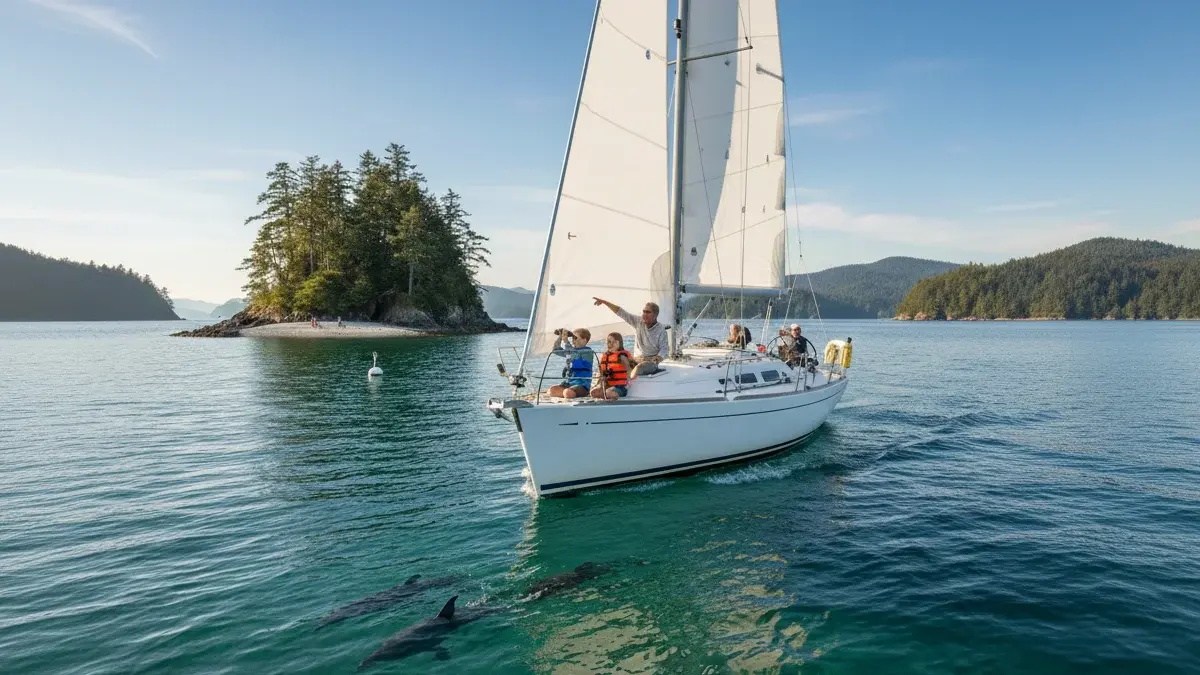
- Wildlife Watching: Scan rocky shorelines for harbour seals and keep an eye out for porpoises playing at the bow. In summer you might spot killer whales far offshore, so bring binoculars and patience. Skipper’s Note: Whale watching boats operate in the area — give them space and avoid crowding pods.
- Sheltered Anchorages: Relax in calm coves and protected bays such as those found around Galiano and Saturna. These anchorages offer quiet nights and easy shore access. Warning: Many fill by mid‑afternoon in July and August — arrive early to secure a buoy.
- Marine Parks and Floats: Explore shallow kelp beds and tide pools in marine parks. Many parks provide small craft floats, buoys, and picnic spots, which is ideal for families. Mooring buoys cost about $14 per night via BC Parks.
- Beaches and Short Hikes: Step ashore for gentle trails that lead to panoramic viewpoints. For example, short trails often end at dramatic rocky bluffs or sunny pebble beaches. Note: Some beaches have strong currents at ebb tide — supervise children closely.
- Cultural Visits and Local Flavours: Visit small harbours for coffee roasters, local wineries, and family‑friendly restaurants. These stops combine maritime charm with fresh regional food. See official visitor information at HelloBC Gulf Islands Travel Guide.
- Cycling and Discovery: Rent bikes on larger islands, then cycle inland to farm stands and artisan shops. Rentals average $25–$35 CAD per day. Skipper’s Tip: Roads can be narrow with local traffic — use caution when cycling with children.
For official park details and maps visit Parks Canada Gulf Islands National Park Reserve. Each experience pairs gentle sailing with memorable moments, making this region perfect for first‑time boaters and curious families.
Gulf Islands Sailing Destination: Popular Route Comparison
Plan smarter with this quick table of popular routes in the Gulf Islands sailing destination. Each route lists length, difficulty, highlights, and the ideal season. Use this at‑a‑glance guide to pick family‑friendly legs with short hops and calm anchorages.
| Route Name | Length (nautical miles) | Difficulty Level | Key Highlights | Ideal Season |
|---|---|---|---|---|
| Nanaimo to Ganges (Salt Spring Island) | 20–25 nm | Easy | Protected channels, seaside villages, sandy beaches, wildlife sightings | Late spring to early fall |
| Ganges to Mayne Island via Prevost Harbour | 9–11 nm | Easy | Calm coves, family beaches, local wineries and cafes | Summer |
| Pender Island loop (North and South Pender) | 8–12 nm | Easy | Sheltered anchorages, short hikes, tide pools, kayaking | Spring to fall |
| Galiano to Saturna and Sidney short hop | 15–20 nm | Moderate | Dramatic cliffs, marine parks, panoramic lookouts, good anchorages | Summer and early fall |
Each route keeps daily passages short. Families enjoy more time ashore and less time motoring, while skippers benefit from predictable currents and sheltered waters.
Conclusion: Gulf Islands Sailing Tips & Charter Advice
The Gulf Islands offer a world-class cruising ground, provided you respect the tides and logs. It is less about open ocean sailing and more about precise navigation and enjoying the quiet isolation of the Pacific Northwest. For current boat listings and skipper availability, search our Gulf Islands Yacht Charters page.
Gulf Islands Sailing FAQ: Licenses, Mooring & Safety
Yes. If you are a Canadian resident, you need a Pleasure Craft Operator Card (PCOC). International visitors generally need an ICC (International Certificate of Competence) or an ASA 104 Bareboat Cruising or RYA Day Skipper certification to bareboat charter.
Yes, but they are spread out. Pump-outs are available at Ganges, Sidney, Bedwell Harbour, and Montague Harbour. Expect line-ups on Sunday afternoons; plan mid-week pump-outs. Discharge of black water is illegal within 3 nautical miles of land under Canadian Vessel Sewage Regulations, which covers almost the entire Gulf Islands area.
Safe, but cold. Summer water temperatures rarely exceed 15°C (59°F). Short dips are refreshing, but prolonged swimming without a wetsuit is not recommended due to hypothermia risks.
A stern-tie involves anchoring off the bow and tying a long line from the stern to a ring or tree on shore. It is mandatory in many small coves in the Gulf Islands to prevent swinging into other boats or rocks. Ensure your charter boat comes equipped with a stern reel (min 300ft line).
Keep a respectful distance and do not feed animals. Use binoculars for close views. Also slow down near seals and porpoises to avoid disturbance.
Late spring through early fall is best. Summer gives the warmest water and calmer seas. However shoulder seasons are quieter and still pleasant. Always check Environment Canada Marine Forecasts before departure.
Pack layered clothing, waterproof jackets, hats, sunscreen, and properly fitted lifejackets. Bring binoculars, a first aid kit, spare lines, tools, and extra fuel. Headlamps and dry bags for electronics are highly recommended.
Carry a VHF radio, paper charts, and GPS. File a float plan and monitor tides and currents. For children, always use properly fitted lifejackets. Check bilge pumps daily and carry spare fuses.
Yes, especially for July and August. Book busy summer dates early. Alternatively, choose sheltered anchorages for quieter nights. Support local cafes and shops when you land.
Most marinas charge $1.75–$2.50 per foot per night. A 40ft yacht costs $70–$100, including power and water. Advance booking is essential in peak season.